
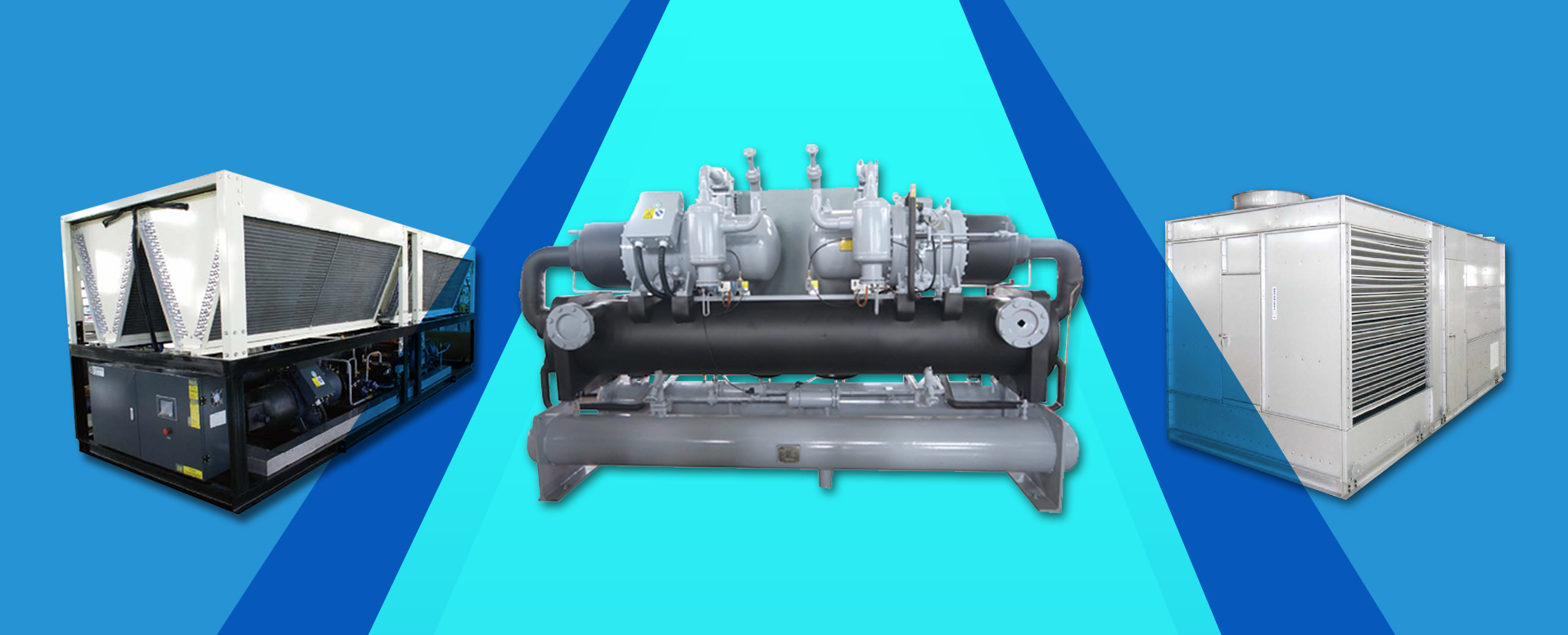
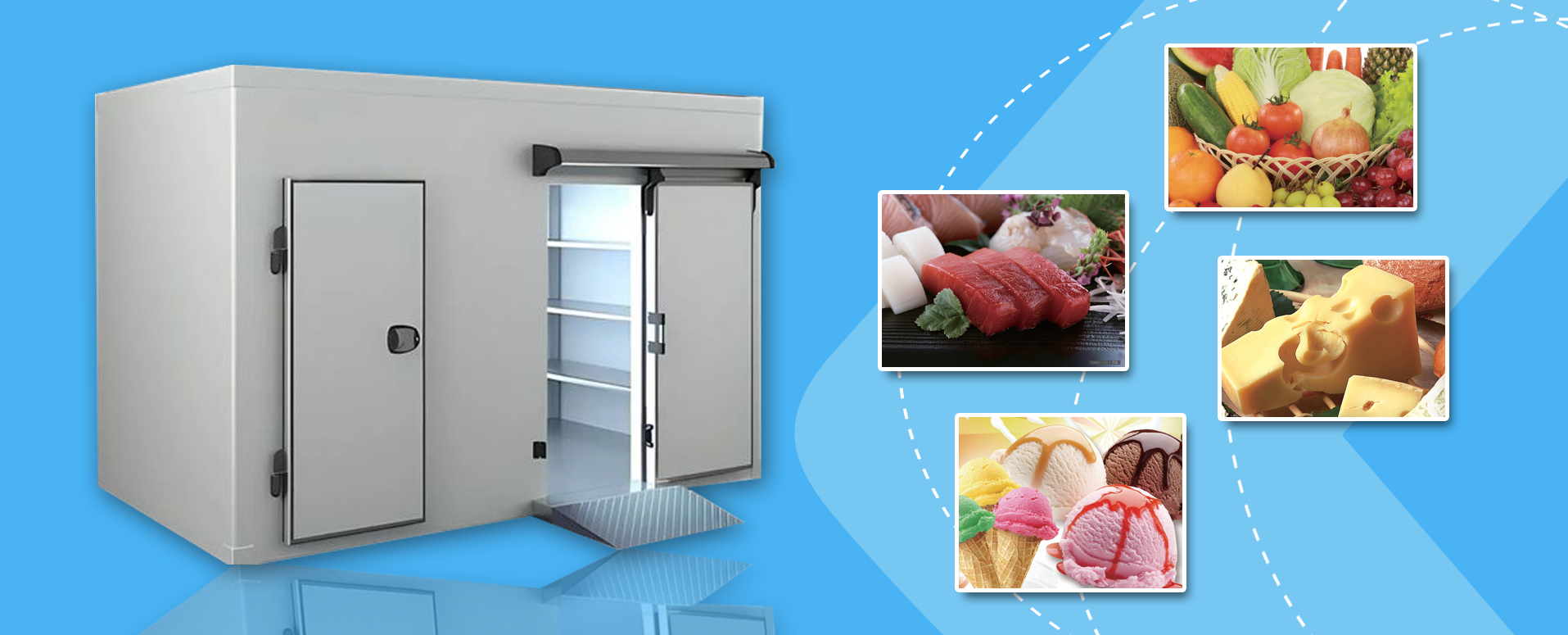

Size & Layout
Size & Layout
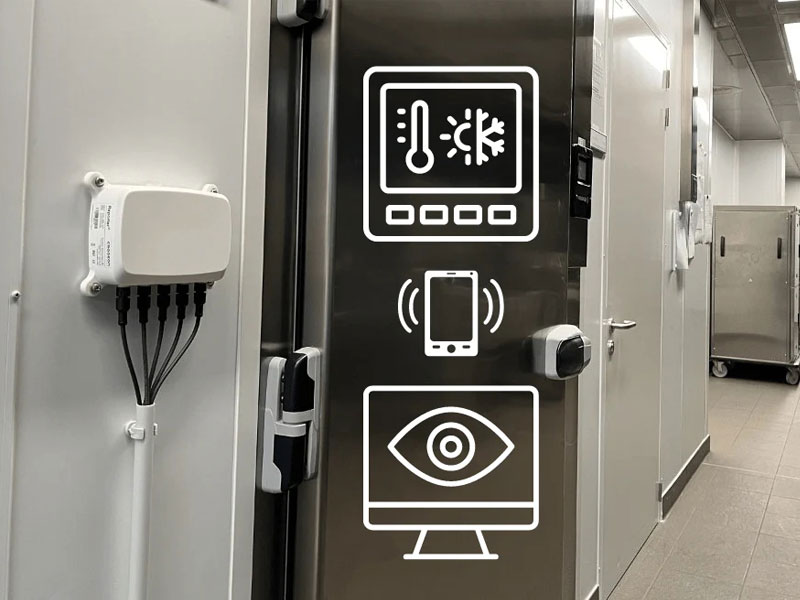
Temperature Controls
Temperature Controls

Door & Flooring Options
Door & Flooring Options
Sliding or hinged doors for space efficiency.
Insulated, reinforced, anti-slip stainless steel flooring for kitchen safety.
Strip curtains to minimize temperature fluctuation.

Shelving & Accessories
Shelving & Accessories

The Ultimate FAQ Guide to Restaurant Walk-in Coolers and Freezers
Q1: What are the ideal temperature ranges for commercial cold storage?
Answer:
Maintaining the correct temperature is a legal requirement and a safety necessity.
-
Walk-in Coolers: The standard operating temperature should be between 35°F and 38°F (1.6°C to 3.3°C). While the "Danger Zone" technically begins at 41°F (5°C), setting your unit slightly lower provides a buffer for when the door is opened during service.
-
Walk-in Freezers: These should be maintained between -10°F and 0°F (-23°C to -18°C). Ice cream specifically requires temperatures closer to -10°F to maintain proper texture, while general frozen foods are safe at 0°F.
Q2: How should I organize the shelving to prevent cross-contamination?
Answer:
Proper shelving organization is critical to preventing foodborne illness. You should follow the hierarchy of internal cooking temperatures (from top to bottom). Gravity causes fluids to drip down, so foods requiring the highest cooking temperature must go at the bottom.
-
Top Shelf: Ready-to-eat foods (Pre-cooked meals, produce, cheese, cakes).
-
Second Shelf: Seafood and whole cuts of beef or pork.
-
Third Shelf: Ground meats (beef, pork) and injected meats.
-
Bottom Shelf: Poultry (Chicken, turkey, duck).
Note: Never store food directly on the floor. Health codes typically require food to be stored at least 6 inches off the ground to allow for cleaning and pest control.
Q3: What is the FIFO method, and why is it important in cold storage?
Answer:
FIFO stands for First-In, First-Out. It is an inventory management method where the oldest stock (first in) is used before newer stock.
-
Procedure: When restocking, place new items behind existing items. Ensure all items are dated.
-
Importance: This reduces food waste by ensuring products are used before they expire. It also ensures consistent food quality for customers.
Q4: Can I place hot food directly into the walk-in cooler?
Answer:
Generally, no. Placing a large pot of boiling stock or hot food directly into a walk-in cooler is dangerous for two reasons:
-
Ambient Temperature Rise: The heat from the food can raise the overall temperature of the cooler, putting other foods at risk of entering the temperature "Danger Zone" (41°F–135°F).
-
Condensation: Steam from hot food creates excess moisture, which can overwork the evaporator coils (leading to ice buildup) and promote mold growth.
-
Best Practice: Use an ice bath or a blast chiller to bring food down to 70°F (21°C) before placing it in the walk-in. If you must put warm food in, divide it into shallow, metal pans to allow for rapid cooling.
Q5: How much clearance (airflow) is needed inside the unit?
Answer:
Refrigeration works by removing heat, which requires air circulation.
-
Internal: Do not overstuff the shelves. Leave at least 3 inches of space between boxes and walls. Never stack boxes so high that they block the evaporator fans.
-
External: If the compressor is located outside or on top of the box, ensure it has ample space to "breathe" and expel heat.
Q6: How often should the walk-in be cleaned?
Answer:
-
Daily: Sweep the floors to remove food debris that can attract pests. Wipe up spills immediately to prevent slip hazards and bacterial growth.
-
Weekly: Mop the floors with a cleaner formulated for cold temperatures (standard water may freeze). Wipe down door gaskets and handles.
-
Monthly: Clean the shelving units and walls. Inspect the evaporator and condenser coils.
-
Quarterly/Bi-Annually: Professional HVAC inspection and deep cleaning of coils and drain lines.
Q7: Why are the condenser coils important, and how do I clean them?
Answer:
The condenser coils (usually located on the top of the unit or outside the building) are responsible for releasing the heat pulled from inside the cooler. If they are covered in dust and grease, they cannot release heat efficiently.
-
Consequence: The compressor runs continuously, electricity bills skyrocket, and the compressor eventually burns out.
-
Cleaning: Use a stiff bristle brush and a vacuum, or compressed air (blowing from the inside out) to remove dust. If there is heavy grease, a chemical coil cleaner may be required.
Q8: What is the "Dollar Bill Test" for door gaskets?
Answer:
The door gasket is the rubber seal that prevents cold air from escaping. To test if it needs replacing:
-
Close the door on a dollar bill (or a piece of paper).
-
Try to pull the bill out.
-
If there is resistance, the seal is good. If it slides out easily, the gasket is failing and needs to be replaced immediately to save energy.
Q9: Why is there water dripping on the floor of my walk-in cooler?
Answer:
Water on the floor is usually caused by a clogged condensate drain line.
-
The Process: As the unit cools, moisture condenses on the evaporator coils and drips into a pan, then drains out through a tube.
-
The Problem: Algae, slime, or debris can block this tube.
-
The Fix: A maintenance technician can blow out the line with CO2 or use a wet-vac to clear the blockage. Regular treatment with algae tablets in the drain pan can prevent this.
Q10: How do I prevent mold growth in the walk-in?
Answer:
Mold thrives in moist, stagnant environments.
-
Control Humidity: Ensure door gaskets are sealing tight.
-
Clean Spills: Acidic foods (tomatoes, citrus) can damage floors and encourage growth if not cleaned.
-
Check the Drain: Ensure the condensate line is draining properly.
-
Cleaning Solution: Do not use bleach on the metal components (it causes corrosion). Use a mild detergent or a specialized quaternary sanitizer.
Q11: My walk-in cooler is freezing products. What is wrong?
Answer:
If your lettuce is freezing in the cooler, check the following:
-
Thermostat Setting: Is it set too low?
-
Sensor Location: Is the temperature probe touching a cold wall or located directly in the airflow of the fans? This can give false readings.
-
Stuck Relay: A mechanical relay (contactor) might be stuck in the "closed" position, causing the compressor to run non-stop regardless of the temperature setting. This requires a professional technician.
Q12: Why is there ice building up on the evaporator coils?
Answer:
Ice buildup acts as an insulator, preventing the coils from cooling the air.
-
Cause 1 (Snowy/Frosty Ice): This indicates air infiltration. Warm, moist air is leaking in through a door left ajar, a bad gasket, or a hole in the wall.
-
Cause 2 (Solid/Clear Ice): This usually indicates a mechanical failure, such as a broken defrost timer, a bad heater (in freezers), or low refrigerant levels.
-
Immediate Action: You must defrost the unit (turn off the compressor but leave fans on) before a technician can properly diagnose the leak.
Q13: The temperature is rising, but the fans are running. What do I do?
Answer:
This is a "high-temp alarm" scenario.
-
Check the Condenser: Is the outside unit running? Is the coil blocked by a plastic bag or heavy dirt?
-
Check for Ice: Look at the evaporator inside. Is it a block of ice? (See Q12).
-
Check the Door: Was the door left open during a delivery?
-
Listen: Do you hear the compressor humming? If you hear clicking but no humming, the start capacitor or compressor may have failed. Call a pro.
Q14: Why is the compressor making a loud noise?
Answer:
-
Rattling: Loose panels or screws.
-
Squealing: A worn-out fan belt or fan motor bearing.
-
Grinding/Clanking: This is serious. It could indicate internal damage to the compressor or that liquid refrigerant is hitting the compressor (slugging). Turn the unit off and call a technician immediately to prevent total failure.
Q15: Do I really need those plastic strip curtains?
Answer:
Yes. Strip curtains (PVC curtains) are one of the most cost-effective energy-saving devices.
-
Function: They create a thermal barrier when the main door is open. Without them, cold air (which is heavy) rushes out the bottom, and warm air rushes in the top instantly.
-
Benefit: They can extend the life of your compressor by reducing the workload and can lower energy costs by 15-20%.
Q16: How much electricity does a walk-in consume?
Answer:
This varies by size, insulation quality, and local climate. However, a standard 8x10 foot freezer can cost between $250 and $400 per month in electricity.
-
To reduce costs: Install LED lighting (which produces less heat than incandescent bulbs), install automatic door closers, replace worn gaskets, and clean coils regularly.
Q17: Should I turn off the walk-in cooler at night to save money?
Answer:
Absolutely not. Commercial refrigeration is designed to maintain temperature, not to pull down temperature from ambient levels every day. Turning it off would cause food spoilage and force the unit to work overtime in the morning to cool back down, likely consuming more energy than simply maintaining the temperature.
Q18: What type of lighting is best for cold storage?
Answer:
Vapor-proof LED fixtures are the industry standard.
-
Incandescent bulbs generate heat (bad for cooling) and shatter easily (food safety hazard).
-
Fluorescent tubes struggle to start in cold temperatures.
-
LEDs love the cold, turn on instantly, generate almost no heat, and last significantly longer.
Q19: What should I do if the power goes out?
Answer:
-
Do Not Open the Door: Keep the cold air sealed inside.
-
Monitor Time:
-
Coolers: Food will generally stay safe for 4 hours if the door remains closed.
-
Freezers: A full freezer will hold temperature for roughly 48 hours. A half-full freezer will last about 24 hours.
-
-
Check Food Temperatures: When power returns, check the internal temperature of perishable foods. If food in the cooler has been above 41°F for more than 4 hours, it must be discarded.
Q20: Is it possible to get locked inside a walk-in?
Answer:
Modern walk-ins are required by law to have an internal safety release mechanism (often a glow-in-the-dark push plunger or turn knob) that works even if the door is padlocked from the outside.
-
Safety Check: Test this release mechanism monthly to ensure it functions smoothly.
-
Training: Ensure all staff know where the release is and how to use it.
Q21: What are the risks of refrigerant leaks?
Answer:
Refrigerants (like Freon/R-404A or newer eco-friendly options) are asphyxiants. In a confined space, a massive leak could displace oxygen.
-
Signs: A chemical smell, oily residue on pipes, or the unit not cooling.
-
Action: If you suspect a major leak in a small, unventilated area, evacuate the immediate area and call a technician.
Q22: Do I need an insulated floor for my walk-in?
Answer:
-
Walk-in Coolers: Often do not require an insulated floor if installed on a concrete slab on grade (ground floor). However, an insulated floor is better for energy efficiency.
-
Walk-in Freezers: MUST have an insulated floor. Without it, the extreme cold will freeze the moisture in the concrete slab below, causing the ground to expand and crack (a phenomenon called "frost heave"), which can destroy the freezer structure and the building foundation.
Q23: What is "R-Value" regarding walk-in panels?
Answer:
R-Value measures the thermal resistance of the insulation (how well it keeps heat out).
-
The higher the R-value, the better the insulation.
-
Current US Energy Dept regulations generally require an R-value of roughly R-25 for coolers and R-32 for freezers. Panels are typically made of foamed-in-place polyurethane.
Q24: Remote vs. Self-Contained Refrigeration: Which is better?
Answer:
-
Self-Contained (Drop-in): The compressor and evaporator are all one unit (like a window AC).
-
Pros: Cheaper, easier to install.
-
Cons: Dumps heat into the kitchen, louder, limited to smaller sizes.
-
-
Remote: The compressor is located on the roof or outside.
-
Pros: Removes heat and noise from the kitchen, more efficient for large units.
-
Cons: More expensive installation (requires running copper lines), potential for leaks in long pipe runs.
-
Conclusion
Managing a restaurant's cold storage requires vigilance, discipline, and regular maintenance. By adhering to the FIFO method, maintaining strict cleaning schedules, and understanding the mechanical basics of your walk-in cooler and freezer, you can extend the lifespan of your equipment and ensure the safety of your customers.
Tiempo de publicación:Sep-25-2020
