


Flower Cold Room Temperatures
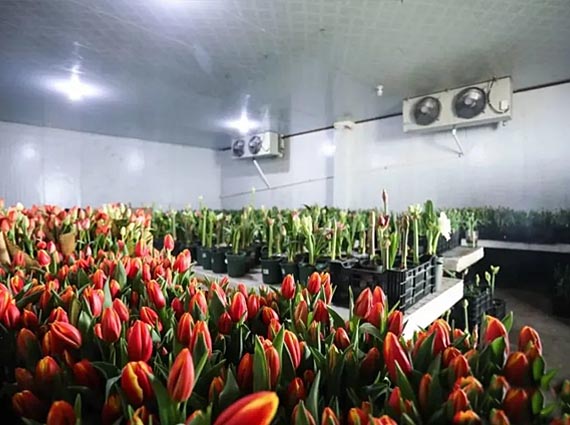
Walk-in Flower Cold Room
Walk-in Flower Cold Room
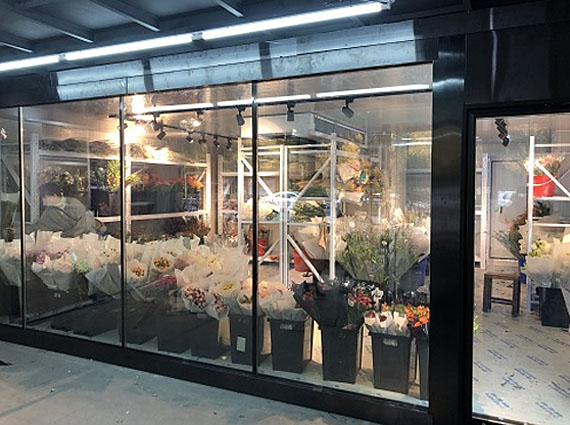
Florist Shops
Florist Shops
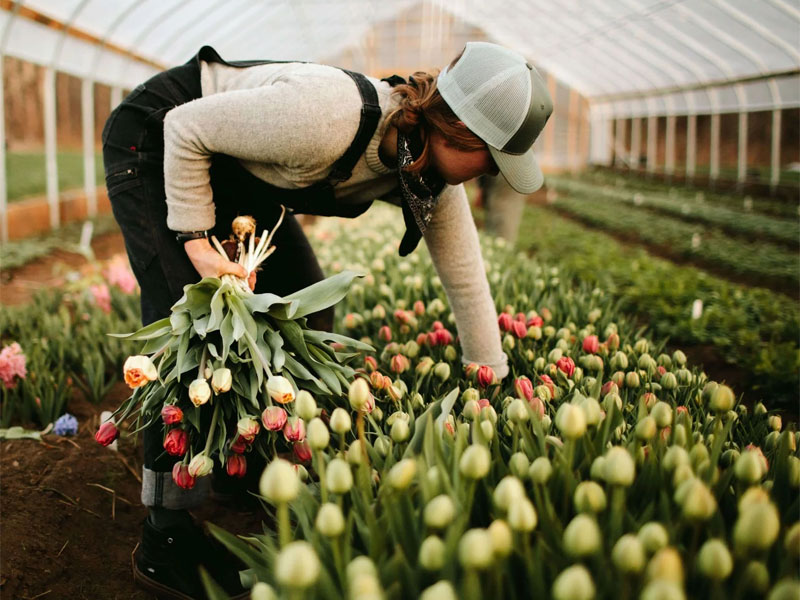
Flower Farms
Flower Farms
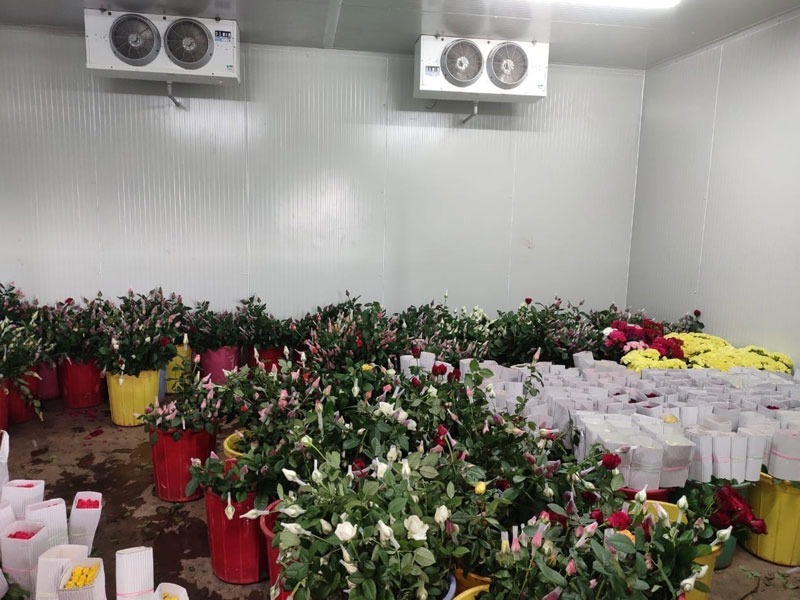
Our cold rooms cool flowers quickly after harvest, preserving quality and extending shelf life, helping farms deliver fresher blooms to customers.
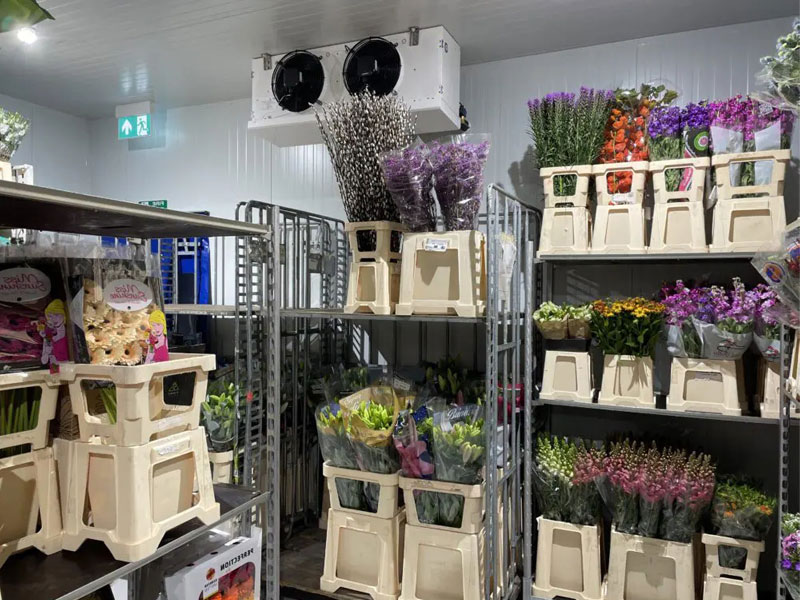
Event Planners
Event Planners
Wholesale Flower Markets
Wholesale Flower Markets

Comprehensive Guide to Floral Cold Storage: Frequently Asked Questions
1. Why do cut flowers need to be stored in the cold?
Cut flowers are still living, breathing organisms even after being separated from the parent plant. They continue to respire (consume energy) and transpire (lose water).
-
Respiration: Flowers burn stored sugars (carbohydrates) to stay alive. Higher temperatures accelerate this process, causing the flower to "burn out" and die quickly. Cooling slows down metabolism.
-
Aging: Cold temperatures delay the development of the bud into a full bloom, extending the sales window.
-
Water Loss: Cold air holds less moisture capacity but reduces the rate of evaporation from the petals, keeping the flower turgid (crisp).
2. What is the "Respiration Rate" and why does it matter?
The respiration rate is the speed at which the flower consumes oxygen and releases carbon dioxide.
-
The Rule of Thumb: For every 10°C (18°F) rise in temperature, the respiration rate acts roughly 3x to 4x faster.
-
Implication: A rose stored at 30°C ages nearly 10 times faster than a rose stored at 2°C. This is why the "Cold Chain" is non-negotiable for longevity.
3. What is the ideal temperature for storing most cut flowers?
For the vast majority of "temperate" flowers (Roses, Carnations, Chrysanthemums, Tulips, Lilies), the ideal range is 0°C to 2°C (32°F to 36°F). Keeping the temperature just above freezing ensures maximum metabolic suppression without freezing the tissues.
4. What is "Chill Injury" and which flowers are at risk?
Chill injury is physiological damage caused by low temperatures that are above freezing but too cold for certain tropical species. It damages the cell membranes, leading to blackening petals, discoloration, and failure to open.
-
Tropical Flowers: Anthurium, Bird of Paradise (Strelitzia), Ginger, Heliconia, and many Orchids (like Phalaenopsis) should never be stored below 10°C - 13°C (50°F - 55°F).
-
Action: These must be stored in a separate "warm cooler" or near the door of a general cooler where it is warmer.
5. What is the role of Ethylene gas?
Ethylene ($C_2H_4$) is a gaseous plant hormone known as the "aging hormone." It is colorless and odorless.
-
Effects: It causes "sleepiness" in carnations (petals curl in), shattering in snapdragons (florets fall off), and transparency in orchids.
-
Sources: Ripening fruits (bananas/apples), car exhaust, cigarette smoke, and decaying plant matter (fungus/bacteria).
6. What is "Pre-Cooling" and why is it distinct from standard storage?
Pre-cooling is the rapid removal of field heat immediately after harvest or transport.
-
Standard Storage: Putting warm boxes into a cold room (passive cooling) is too slow. It can take 24-48 hours for the center of a dense flower box to cool down, during which the flowers are aging rapidly.
-
Pre-Cooling: This uses active methods (like Forced Air Cooling) to drop the temperature from 20°C to 2°C in usually 30 to 60 minutes.
7. How does "Forced Air Cooling" work?
This is the industry standard. Cold air is sucked through the boxes rather than just blowing around them.
-
Mechanism: Boxes have ventilation holes. A fan creates a pressure difference that pulls cold air directly across the stems and petals inside the box.
-
Efficiency: This is 8 to 10 times faster than passive cooling.
8. Can I store flowers in a standard food refrigerator?
It is not recommended for professional use.
-
Humidity: Food fridges often have low humidity (to keep food dry), which dehydrates flowers.
-
Ethylene: If food (especially fruits or vegetables) is stored in the same unit, the ethylene released will kill the flowers.
-
Airflow: Food fridges lack the gentle, high-volume airflow needed to penetrate flower buckets.
9. What is the "Temperature Safety Zone"?
The safety zone for temperate flowers is strictly 0.5°C to 3°C.
-
Below 0°C: Risk of frost damage (petals turn translucent and mushy).
-
Above 5°C: Botrytis (gray mold) spores can germinate, and bacterial growth in the water buckets accelerates significantly.
10. How do I monitor temperature effectively?
Do not rely on the thermostat on the wall.
-
Pulp Temperature: Use a probe thermometer to measure the temperature inside a flower bud or stem. The air might be 2°C, but the flower might still be 10°C.
-
Data Loggers: During transport, use USB data loggers to prove the "Cold Chain" was maintained.
11. What is the ideal Relative Humidity (RH) for a flower cooler?
The ideal RH is 90% to 95%.
-
Why? Flowers are 90% water. If the air is dry (e.g., 50% RH), the physics of Vapor Pressure Deficit (VPD) will pull water out of the flower petals rapidly to hydrate the air, causing wilting.
-
Warning: If RH hits 100%, you get condensation (water droplets) on petals, which triggers Botrytis (mold).
12. What is "Wet Storage" vs. "Dry Storage"?
-
Wet Storage: Flowers are stored upright in buckets of water/preservative solution. This is for short-term storage (wholesalers/florists) where the flowers need to be turgid and ready for sale.
-
Dry Storage: Flowers are packed in boxes (often lined with plastic) without water. This is for long-term storage or transport. The flowers are kept near freezing (0-1°C) to induce a "coma." They will look dehydrated but will rehydrate (harden) once put in water.
13. Does water quality matter in the cooler?
Yes, water quality is critical.
-
pH: Flowers drink best when water is acidic (pH 3.5 - 5.0). Acidic water travels up the xylem (water tubes) faster.
-
TDS (Total Dissolved Solids): Pure water is best. Hard water (high mineral content) can block stems.
-
Temperature: Start with cool water. Warm water drives faster uptake but can also promote faster aging if not cooled down quickly.
14. Why do flower stems get blocked?
Three main reasons:
-
Air Embolism: An air bubble enters the stem when cut. (Solution: Re-cut stems underwater).
-
Bacteria: Bacteria in dirty buckets form a "plug" of slime at the base of the stem.
-
Physiological Plugging: The plant heals the wound by secreting its own substances.
15. What is Botrytis cinerea (Gray Mold)?
This is the #1 enemy of cold-stored flowers. It is a fungus that thrives in cool, damp, stagnant air.
-
Signs: Small brown spots on petals (measles) which grow into fuzzy gray mold.
-
Triggers: Condensation (wet petals) and temperature fluctuations. If you open the cooler door often, warm air hits cold flowers, creating dew. Botrytis spores need free water to germinate.
16. How often should buckets be cleaned?
Every single time they are rotated.
-
Protocol: Scrub with a stiff brush and a detergent/sanitizer mix (like Quaternary Ammonium Compounds or bleach).
-
Why? Bacteria left in a bucket will multiply exponentially. Even if you use fresh water, the residue on the plastic will contaminate the new batch immediately.
17. What is the importance of removing foliage below the water line?
Leaves rotting in the water are a feast for bacteria. As leaves decay, they release organic matter that feeds microbes, which then block the flower stems. Always strip leaves that would sit inside the bucket.
18. Should I use bleach in the flower water?
Household bleach (sodium hypochlorite) is effective at killing bacteria, but it is volatile (evaporates quickly) and can damage plant tissues if too strong. Professional "slow-release" chlorine pills or specialized commercial floral cleaners are safer and more stable.
19. How do I store Roses?
-
Temp: 0.5°C to 2°C.
-
Specifics: Roses are very susceptible to Botrytis and dehydration. Leave the "guard petals" (outer petals) on until the point of sale to protect the inner head.
-
Bent Neck: If a rose head droops, it is usually due to an air bubble or bacteria. Re-cut under water and place in a warm hydration solution for an hour before returning to the cooler.
20. What is "Geotropism" and why does it affect Snapdragons and Gladiolus?
Geotropism is the response to gravity.
-
The Issue: If you store Snapdragons or Gladiolus horizontally (laying flat) in a box, the tips will try to grow "upward" (away from gravity), resulting in curved, bent stems that cannot be straightened.
-
Solution: These species must always be stored and transported upright (vertical) in hampers or buckets.
21. Why do Gerbera Daisies need special racks?
Gerberas have hollow stems and heavy heads. They are prone to bending and bacterial blockage.
-
Storage: They are often suspended in cardboard grids so the stems hang straight down into the water without touching the bottom of the bucket (where bacteria settle). Chlorinated water is essential for Gerberas.
22. How do I handle Tulips in cold storage?
-
Growth: Tulips continue to grow (elongate) even after cutting. A bouquet that is even today might have tulips towering over roses tomorrow.
-
Bending: They bend towards light (Phototropism).
-
Storage: Wrap them tightly in paper to keep stems straight and store at 0°C to 1°C to halt the elongation.
23. Why do Alstroemeria and Lilies develop yellow leaves?
This is often a reaction to darkness and ethylene.
-
Prevention: Commercial growers treat these with a gibberellin-based hormone to keep leaves green. In the cooler, ensure they have sufficient carbohydrate supply (flower food) to maintain leaf color.
24. What are the three types of flower solutions?
-
Hydration Solution: (Acidic, Wetting Agents). Used immediately after harvest to unclog stems and restore water flow. No sugar.
-
Holding Solution: (Biocide + minimal Sugar). Used in the cooler by wholesalers. Keeps the flower alive but does not encourage it to pop open fully.
-
Vase/Flower Food: (Biocide + High Sugar). Used by the end consumer. The high sugar gives the flower energy to open fully and develop color.
25. Can I use homemade sugar and vinegar?
It is risky.
-
Sugar: Feeds the flower, but also feeds bacteria. Without a precise biocide (germ killer), adding sugar will turn your water into a bacterial swamp in 24 hours.
-
Vinegar: Lowers pH, but is not stable.
-
Verdict: Commercial packets are chemically balanced and safer.
26. What is "1-MCP" treatment?
1-Methylcyclopropene (often branded as EthylBloc).
-
Function: It is a gas or powder treatment that blocks the ethylene receptors in the flower. It essentially "immunizes" the flower against ethylene gas.
-
Usage: Highly recommended for ethylene-sensitive crops like Carnations, Delphiniums, and Lilies before they go into storage.
27. Why should I re-cut stems before putting them in the cooler?
When a stem is out of water, the cut end dries out and seals over (scabs). Also, air enters the xylem. Removing the bottom 2-3 cm opens fresh tissue and removes the air block, allowing water to flow freely.
28. How should I arrange flowers in the cooler?
-
Airflow: Do not pack buckets too tightly. Leave 2-3 inches between buckets to allow cold air to circulate.
-
Placement: Do not place flowers directly in front of the blower fan unit. The high-velocity air can dehydrate them (windburn) and freeze them if the output temp is too low.
29. Should the cooler lights be left on?
Generally, no.
-
Heat: Lights generate heat, which the refrigeration system must fight against.
-
Photosynthesis: Cut flowers do minimal photosynthesis.
-
Exceptions: Some leafy crops or specific flowers (like Chrysanthemums or Alstroemeria) may benefit from low light to prevent leaf yellowing, but for most, darkness is fine and saves energy.
30. What causes "Shattering" in flowers?
Shattering is when petals fall off the receptacle unexpectedly (common in Roses and Snapdragons).
-
Causes: Ethylene exposure, rough handling, or physical shock when frozen.
-
Prevention: Ethylene inhibitors (STS/1-MCP) and gentle handling.
31. Why do my flowers look transparent/water-soaked?
This is a classic sign of Freezing Damage.
-
Diagnosis: If the temperature dipped below -1°C, the ice crystals ruptured the cells. When thawed, the cell contents leak out, making the petal look wet and see-through.
-
Recovery: There is no recovery for frozen flowers. They must be discarded.
32. How do I maintain the "Cold Chain" during delivery?
-
Pre-cool: Ensure flowers are cold before loading.
-
Insulation: Use refrigerated trucks. If using a van, use insulated boxes or thermal blankets.
-
Speed: Minimizing the time on the loading dock is crucial. The loading dock is often the "weakest link" in the cold chain.
33. Can I mix fruits and flowers in the same cold storage?
Absolutely NOT.
-
Reason: Fruits (apples, pears, bananas) release high levels of ethylene as they ripen. Even a small amount can destroy an entire inventory of Carnations or Orchids within 24 hours.
-
Separation: They require separate air handling systems, not just separate rooms.
34. What maintenance does the cooling unit need?
-
Evaporator Coils: Clean regularly. Dust and debris reduce cooling efficiency.
-
Drains: Ensure condensate drains are clear. Standing water raises humidity too high and breeds mold.
-
Door Seals: Check gaskets. Leaky seals let warm moist air in, causing ice buildup on the coils and temperature spikes.
35. What is the maximum storage life of cut flowers?
It varies by species and method:
-
Carnations: 3-4 weeks (Dry storage, near 0°C).
-
Roses: 1-2 weeks (Dry storage), 5-7 days (Wet storage).
-
Tulips: 2-4 weeks (Dry storage, bulbs attached).
-
Tropicals: 1-2 weeks (Warm storage).
-
Greenery/Foliage: Can often be stored for months if packaged correctly to prevent dehydration.
36. How do I know if a flower is "old" before buying/selling?
-
Touch: Squeeze the flower he
Время публикации:Sep-25-2020
