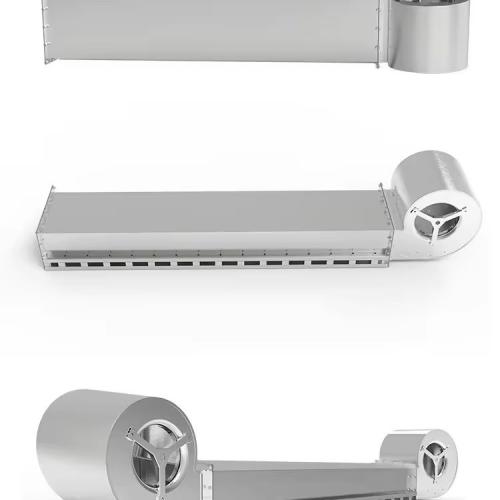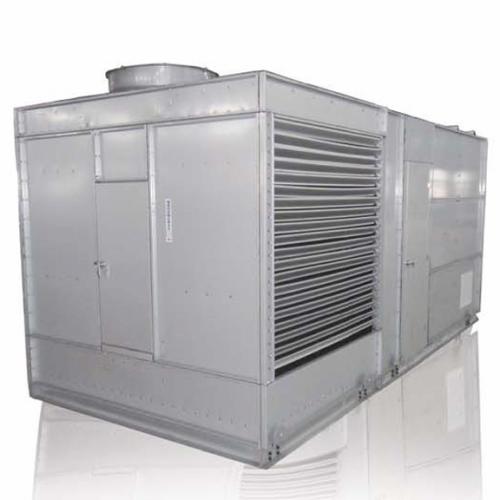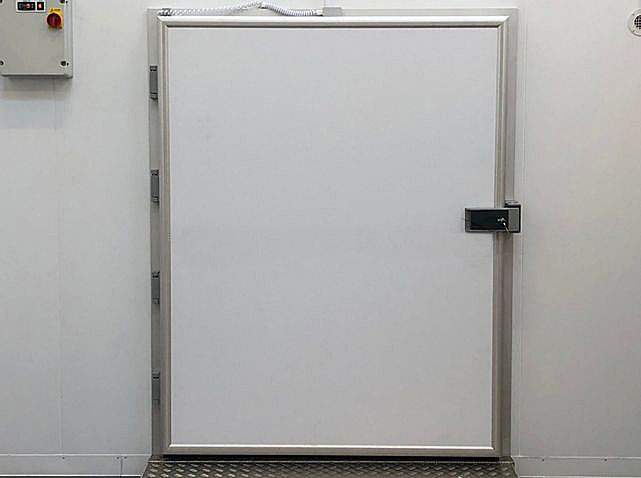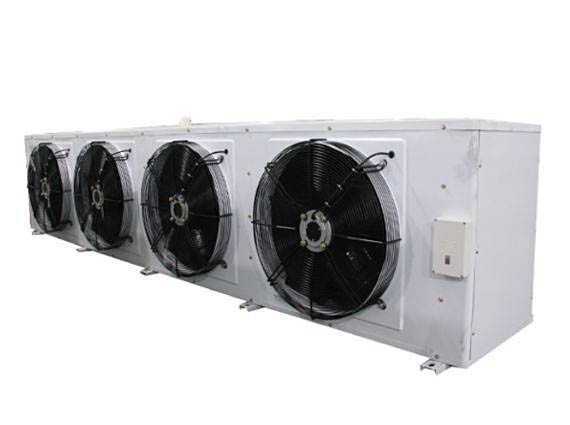
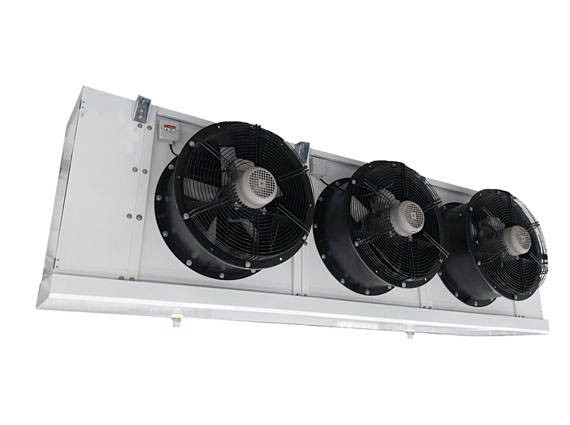
Floor standing evaporator indoor unit
Description of Floor standing evaporator indoor unit
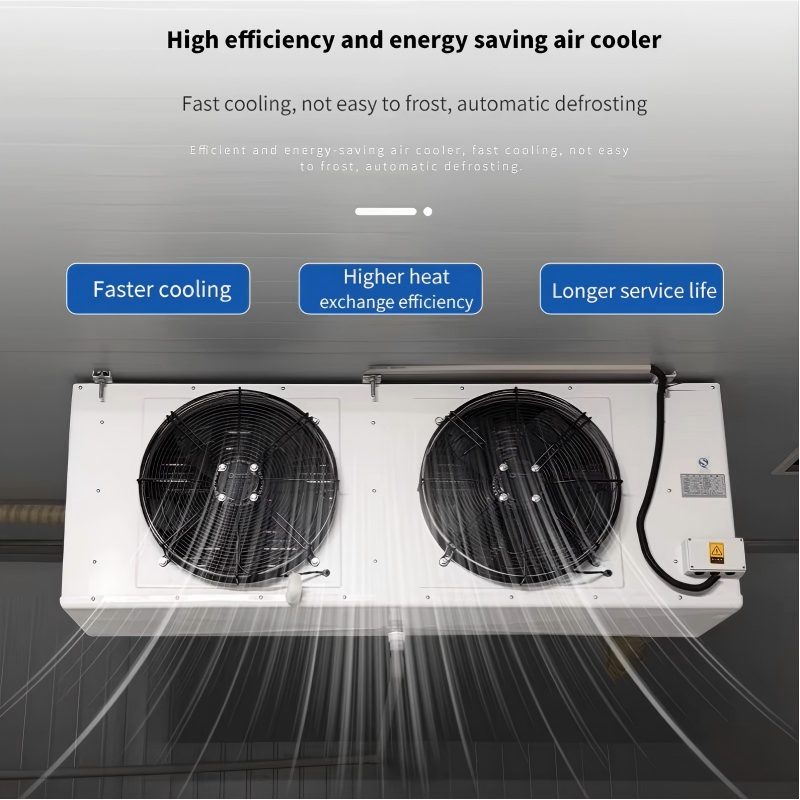
This floor standing evaporator indoor unit is a high-efficiency, space‑saving climate solution engineered for reliable cooling, dehumidification, and heat exchange in commercial, industrial, and large residential spaces. Built with a robust galvanized steel casing and premium hydrophilic fin‑and‑tube evaporator coils, it delivers stable performance, low noise, and easy maintenance in a free‑standing layout that requires no ceiling or wall suspension.
Designed for flexible installation, the unit features optimized airflow with wide‑angle air distribution and long air throw to ensure uniform temperature throughout the room. Its high‑efficiency heat exchanger boosts energy utilization while reducing operational cost, supported by quiet fan motors and a stable, vibration‑dampened structure. The user‑friendly control panel supports adjustable fan speeds, temperature setting, auto‑restart, and fault self‑diagnosis for safe, unattended daily operation.
With a sleek, compact profile and durable anti‑corrosion finish, this floor standing evaporator indoor unit integrates seamlessly into offices, shops, hotels, factories, and server rooms. It combines strong cooling capacity, steady evaporation performance, and long‑term durability, making it a dependable choice for consistent indoor comfort and professional climate control.
Characteristics of the Floor standing evaporator indoor unit
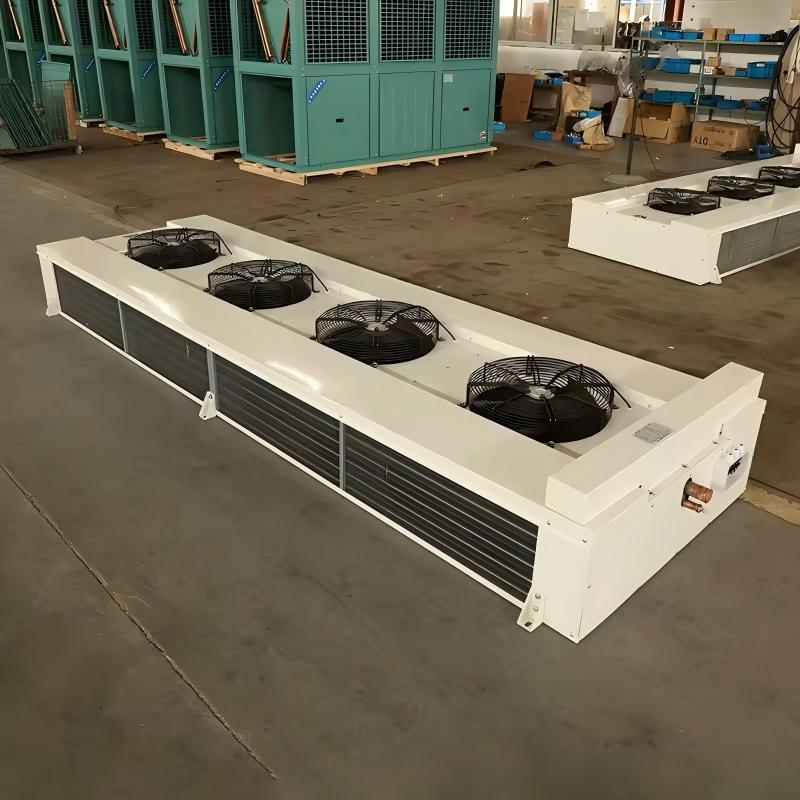
Stable and Efficient Heat Exchange Performance
The floor standing evaporator indoor unit adopts a high-efficiency heat exchanger structure, usually using high-quality copper tubes and aluminum fins to ensure full heat exchange between refrigerant and indoor air. The optimized tube and fin layout improves heat transfer efficiency, reduces energy loss, and enables rapid cooling or heating. Whether in high-temperature summer or cold winter, the unit can quickly reach the set temperature and maintain stable operation. The high-efficiency evaporator design effectively improves the energy efficiency ratio of the entire air conditioning system, reduces energy consumption during long-term operation, and helps users save electricity costs. The unit can adapt to different load changes, maintain stable output under various working conditions, and avoid large temperature fluctuations, providing a constant and comfortable indoor environment.
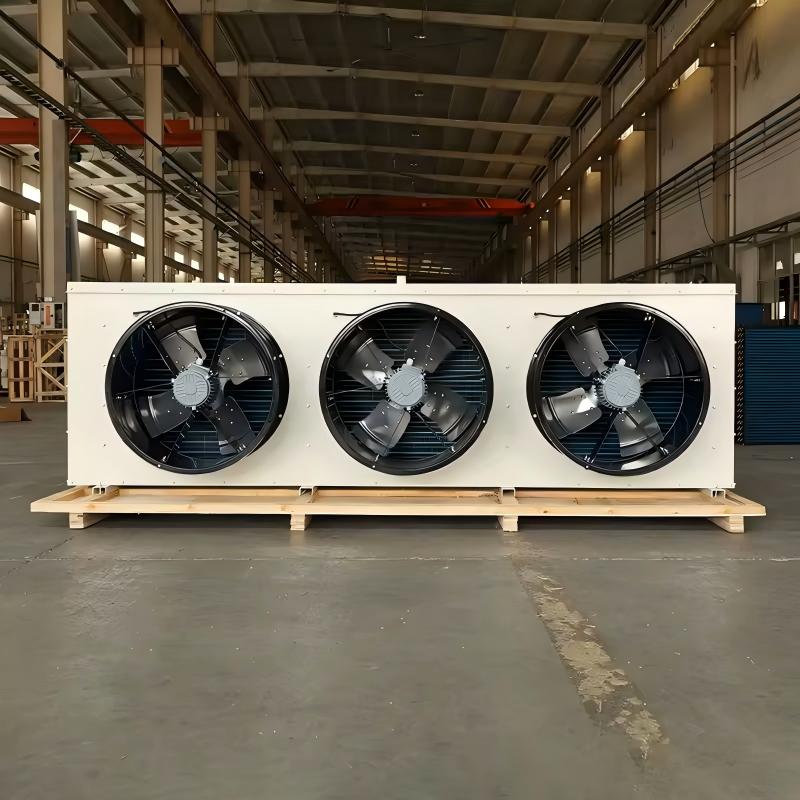
Strong Air Supply and Wide Air Coverage
One of the significant advantages of the floor standing evaporator indoor unit is its powerful air supply capacity. Equipped with high-performance, low-noise fans, the unit can produce large air volume and long air supply distance, covering a wide indoor area without dead ends. The reasonable air duct design ensures uniform air distribution, avoiding local overcooling or overheating. Compared with other types of indoor units, the floor standing model is more suitable for large spaces with high ceilings or large areas, such as factory workshops, large halls, and shopping mall atriums. Users can adjust the air volume and air supply angle according to actual needs, achieving flexible air distribution and improving overall comfort. The strong air supply ensures rapid temperature balance in the entire space, especially in areas with frequent personnel activities or large heat generation.
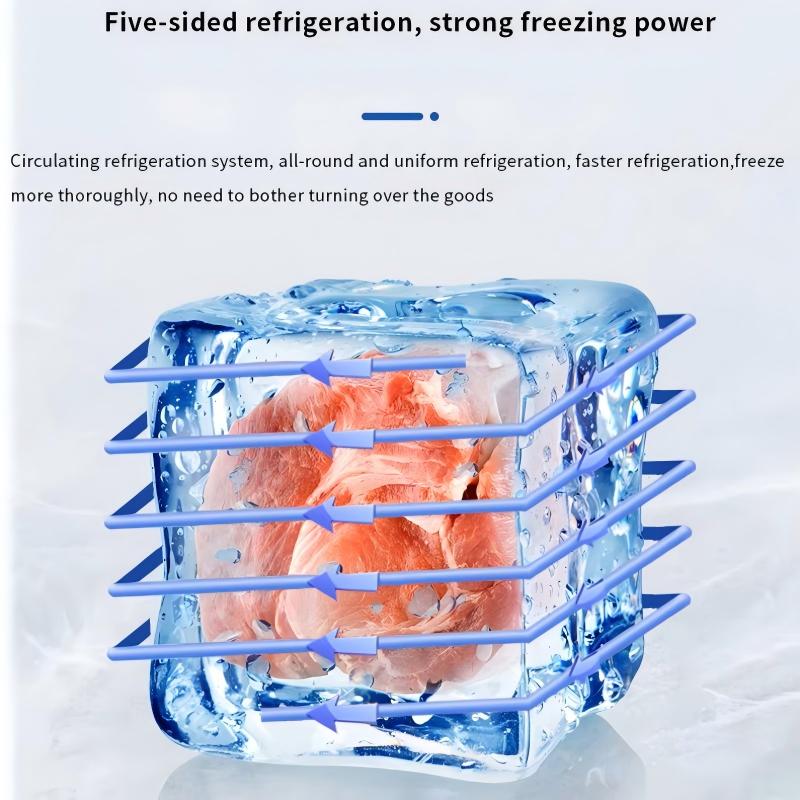
Flexible Installation and Space Saving
The floor standing evaporator indoor unit features a vertical, compact structure that supports direct placement on the indoor ground without complex hoisting or wall-mounted installation. This installation method greatly reduces construction difficulty and shortens the installation cycle, making it very suitable for places where ceiling installation is not convenient or for renovation projects. The unit has a small footprint and can be placed against the wall, effectively saving indoor space and maintaining the overall aesthetics of the interior decoration. It can be installed in different positions according to the indoor layout and air conditioning needs, with strong adaptability to various architectural structures. Whether it is a new building or an old building renovation, the floor standing unit can be easily integrated into the environment without affecting the normal use and layout of the space.

Quiet Operation and Comfortable Experience
The unit is designed with a focus on low noise, using noise reduction technology in the fan system, motor, and internal air duct. The optimized internal structure reduces airflow noise and mechanical vibration, ensuring quiet operation even at high air volume. Low-noise operation is particularly important in places such as offices, hotels, hospitals, and conference rooms, where a quiet environment can improve work efficiency and rest quality. The unit runs smoothly without obvious noise interference, creating a quiet and comfortable indoor atmosphere for users. At the same time, the soft air supply mode avoids strong direct airflow, reduces discomfort caused by wind blowing, and further enhances the comfort experience.

· PrFood processing workshops
· Cold stores and freezer rooms
· Cold chain logistics centres and distribution warehouses
· Pharmaceutical factories and cleanrooms
· Biological laboratories and sample repositories
· Flower preservation chambers
· Low-temperature storage for

| Model | LAC35-10.0 |
Inlet refrigerant(mm) |
22 |
|
Power supply |
3N/380V/50HZ |
Outlet refrigerant(mm) |
35 |
| Temperature used | -10°C ~ -40°C |
Defrost |
Electric defrost |
| Refrigeration capacity(kw) | 34.8 |
Defrost heating(kw) |
16.0 |
| Fin spacing(mm) | 10.0 |
Air delivery(m) |
13 |
| Heat transfer area(m2) | 78.5 |
Weight(kg) |
225 |
|
Number of fans |
5 | Operating weight(kg) | 250 |
|
Motor power(w) |
1850 |
Length(mm) |
3350 |
|
Fan diameter(mm) |
500 |
Width(mm) |
440 |
|
Air volume(m3/h) |
24600 |
Height(mm) |
1060 |
Description of Unit Cooler Control
Unit Cooler Control:
Control encompasses both fan and defrost functions. The evaporator fan operates continuously within the system. Upon initiation of defrosting, the fan shuts off whilst the defrost heater activates.
When the defrost timer reaches the preset time, the defrost heating element ceases operation
when the defrost timer reaches the preset time and the internal temperature of the cooling unit reaches the target temperature, the fan commences operation.
Defrost time setting of Unit Cooler:
Defrosting occurs four times daily, with an initial default defrost duration of 50 minutes per cycle (adjustable based on actual frost thickness). Following each defrost cycle, the compressor and fan operation is determined by the storage temperature. Electric heating ceases when the interior reaches 15°C; the fan activates when the interior temperature drops to -8°C.
Comprehensive FAQ: Refrigerated Cabinet
I. Fundamentals and Components
1. What is the primary function of a Cold Room Indoor Unit (Evaporator)?
The primary function of the Cold Room Indoor Unit, commonly called the Evaporator or Unit Cooler, is to absorb heat from the cold room air. It achieves this by causing the low-pressure, low-temperature refrigerant within its coils to undergo a phase change (evaporation from liquid to gas), which is a highly endothermic (heat-absorbing) process, thereby lowering the temperature of the circulating air.
2. What are the key components of a typical Unit Cooler?
The main components are:
-
Evaporator Coil: The heat exchanger (copper/aluminum tubes with fins) where the refrigerant evaporates.
-
Fan Assembly: Uses axial or centrifugal fans to force air circulation across the coil and distribute cooled air throughout the room.
-
Defrost System: Typically electric heaters or hot gas lines to melt accumulated frost/ice.
-
Drain Pan (Drip Tray): Collects condensate and meltwater during the defrost cycle.
-
Casing: Corrosion-resistant enclosure (e.g., powder-coated steel, aluminum, stainless steel).
3. Why is the fin spacing (fin pitch) important, and how does it relate to the room temperature?
The fin pitch (distance between fins) affects both the heat transfer area and the rate of frost accumulation.
-
High-Temperature Rooms (e.g., above $0^\circ\text{C}$): Smaller fin pitches (e.g., $4.5-6 \text{ mm}$) are used to maximize heat transfer efficiency, as frost formation is minimal.
-
Low-Temperature Rooms (e.g., below $-18^\circ\text{C}$): Wider fin pitches (e.g., $8-12 \text{ mm}$) are necessary to accommodate a thicker frost layer before it significantly impedes airflow, thereby prolonging the time between necessary defrost cycles.
4. What material is commonly used for evaporator coils and why?
Copper tubing and aluminum fins are the most common combination due to their excellent thermal conductivity and cost-effectiveness. Stainless steel is sometimes used in highly corrosive environments (e.g., seafood processing) but is more expensive. The fins are bonded to the tubes to ensure maximum heat transfer area.
5. What is "superheat," and why is it monitored at the evaporator outlet?
Superheat is the amount of heat added to the refrigerant vapor after it has fully evaporated. It is measured as the temperature of the vapor leaving the evaporator coil minus the saturation temperature (boiling point) of the refrigerant at the evaporator pressure. Maintaining a controlled level of superheat (typically $4 \text{K}$ to $7 \text{K}$) ensures that no liquid refrigerant (liquid slugging) returns to the compressor, which would cause severe damage.
II. Operation and Performance
6. How is the cooling capacity (refrigeration capacity) of an evaporator rated?
The cooling capacity is rated in kW or BTU/hr and is primarily determined by:
-
The temperature difference between the cold room air and the refrigerant evaporation temperature ($\Delta t$).
-
The airflow rate of the fans ($\text{m}^3/\text{h}$ or $\text{CFM}$).
-
The heat transfer surface area (coil size, fin pitch, and design).
-
Crucially: Evaporator capacity is always specified for a given TD (Temperature Difference).
7. What is the "TD" (Temperature Difference) in relation to the evaporator?
The TD is the difference between the cold room air temperature and the refrigerant's evaporation temperature ($\text{TD} = T_\text{air} - T_\text{evaporation}$). A smaller TD generally results in higher air humidity and better product quality (less dehydration), but requires a physically larger and more expensive evaporator. A larger TD leads to higher dehydration rates and potentially better energy efficiency but can stress the stored product.
8. How does frost formation impact the efficiency of the evaporator?
Frost formation has two major negative impacts:
-
Insulation: The layer of ice acts as an insulator, significantly reducing the heat transfer rate from the air to the refrigerant.
-
Airflow Restriction: The frost clogs the spaces between the fins, dramatically increasing the fan's static pressure and reducing the airflow, leading to poor heat absorption and temperature gradients in the room.
9. What are the common types of defrost systems used in cold room evaporators?
The three most common types are:
-
Electric Defrost: Uses electric resistance heaters (sheathed stainless steel elements) embedded within the coil and drain pan. It is the most common and reliable method but consumes significant electrical energy.
-
Hot Gas Defrost: Diverts the high-pressure, high-temperature discharge gas from the compressor into the evaporator coil, using the refrigerant's heat to melt the frost. This is highly efficient and quick but adds complexity to the piping and control system.
-
Air Defrost: Used only in high-temperature rooms (above $0^\circ\text{C}$), where the fans are simply run without refrigeration, allowing the warmer room air to melt the light frost.
10. Why is it important to insulate the drain pan?
Insulating or adopting a double-skin design for the drain pan prevents external condensation (sweating) on the pan's underside. If the pan's outer surface is exposed to the humid, slightly warmer room air, water will condense and drip onto the floor or product, which is a major hygiene and safety concern.
III. Selection and Installation
11. What is "air throw" or "air projection," and why is it important during installation?
Air throw is the distance the cooled air jet can effectively travel from the evaporator fans before its velocity and cooling effect diminish. A Unit Cooler must be selected with sufficient air throw to ensure the cooled air reaches the furthest wall of the cold room and promotes uniform air distribution, preventing the formation of warm spots or temperature gradients.
12. What factors must be considered when selecting an evaporator model?
Selection must be based on:
-
Required Cooling Capacity: Must match the total calculated heat load (kW).
-
Cold Room Temperature: Dictates the TD and required fin pitch/defrost type.
-
Air Throw/Fan Type: Must suit the dimensions of the room (especially length).
-
Defrost Type: Electric, hot gas, or air defrost.
-
Refrigerant Type: Must be compatible with the system (e.g., R-404A, R-448A, $\text{CO}_2$).
-
Installation Height/Access: Physical size and maintenance clearances.
13. What is the role of the expansion valve (TXV/EEV) in relation to the indoor unit?
The Expansion Valve (TXV - Thermostatic Expansion Valve or EEV - Electronic Expansion Valve) is typically installed just before the evaporator. Its role is to:
-
Throttle (Reduce) the pressure of the liquid refrigerant from the condensing unit.
-
Meter (Control) the flow rate of liquid refrigerant into the evaporator coil.
-
It ensures the evaporator coil is fed with the correct amount of refrigerant to maintain the desired superheat (ensure all liquid evaporates before leaving the coil).
14. How should the drain line be installed to prevent freezing in a freezer room?
In low-temperature rooms, the drain line must be installed with a continuous downward slope and equipped with heat tracing cable (electric heating wire) along its entire length, especially where it exits the cold room boundary. A trap (U-bend) may be necessary but must also be heated to prevent the meltwater from freezing and blocking the line.
15. What are the advantages of using variable speed fans on the indoor unit?
Variable speed fans (often controlled by EC motors) offer several benefits:
-
Energy Savings: The fan speed can be reduced once the setpoint temperature is reached, drastically cutting power consumption.
-
Humidity Control: Lower fan speeds result in a smaller TD, which helps maintain higher relative humidity, reducing product dehydration (weight loss).
-
Noise Reduction: Lower speeds significantly decrease operational noise.
IV. Maintenance and Troubleshooting
16. What is the most common reason for a cold room to be running warm despite the unit running continuously?
The most common reasons are:
-
Severe Frosting: Excessive frost on the coil due to a defrost system failure or inadequate frequency, severely blocking airflow and heat transfer.
-
Low Refrigerant Charge: Insufficient refrigerant in the system reduces the capacity of both the condenser and evaporator.
-
Dirty Coil: Dust, dirt, or debris on the coil surface acting as an insulator.
-
Air Leakage: Excessive infiltration of warm, humid ambient air through poorly sealed doors or panels.
17. Why is regular cleaning of the evaporator coil necessary?
Regular cleaning is vital because dust, dirt, or mold can settle on the fins. This debris acts as an insulator, reducing the coil's heat transfer efficiency. In food storage, it is also a critical hygiene requirement to prevent the growth of bacteria and cross-contamination.
18. How often should the defrost cycle be initiated?
The frequency depends on the room temperature, the product stored, and the ambient conditions (how frequently the doors open).
-
General Practice: Typically 2 to 6 defrost cycles per 24 hours.
-
High-Humidity Applications: More frequent defrosts (e.g., every 3-4 hours) may be required to prevent rapid frost buildup. The goal is to defrost before the frost layer causes a $20-30%$ reduction in cooling capacity.
19. What should be done if water is dripping from the evaporator casing outside of the defrost cycle?
This is usually caused by sweating (external condensation). The solution involves:
-
Checking Drain Pan Insulation: Ensure the drain pan's exterior surface is not exposed to the room air.
-
Checking Casing Integrity: Ensure the main unit casing is well-insulated, and no cold air is leaking through seams to cool the external surface.
-
Inspecting for Blockages: Ensure the drain line is not partially blocked, causing water to back up and overflow.
20. What is the distinction between a 'Unit Cooler' and a 'Coil Unit'?
While often used interchangeably:
-
Coil Unit (Evaporator Coil): Refers specifically to the heat exchanger component (tubes and fins) itself.
-
Unit Cooler (Cold Room Indoor Unit): Refers to the complete assembly, which includes the coil, fans, casing, drip tray, and often the defrost heaters—a functional, ready-to-install product.