

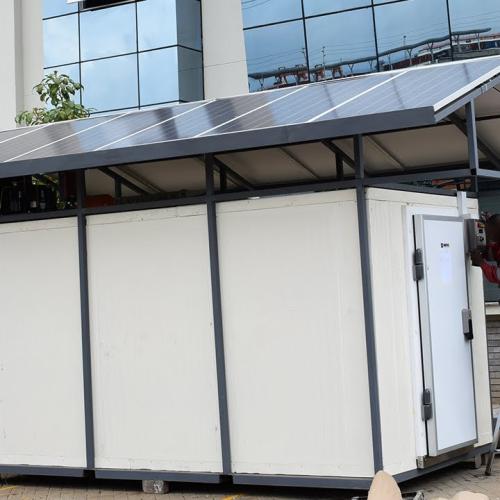

Introduction to Solar Cold Storage
Solar cold storage systems are innovative refrigeration solutions designed to provide reliable cooling using renewable solar energy. These systems are particularly valuable in regions with limited or unreliable electricity supply, such as rural areas, farms, and remote locations. By utilizing solar power, these cold storage units help reduce dependence on traditional energy sources while ensuring the preservation of perishable goods.
With the global push toward sustainability and energy efficiency, solar-powered cold storage has emerged as a key solution for agriculture, food distribution, pharmaceuticals, and off-grid applications. These systems not only reduce operational costs but also minimize environmental impact by lowering carbon emissions.
What is Solar Cold Storage?
Solar cold storage is a refrigeration system powered primarily by solar energy. It uses photovoltaic (PV) panels to convert sunlight into electricity, which powers the refrigeration unit and maintains a controlled temperature inside the cold room.
Key Components Include:
-
Solar panels (PV modules)
-
Inverter and controller
-
Battery storage system (optional)
-
Refrigeration unit (compressor, condenser, evaporator)
-
Insulated cold room structure
-
Monitoring and control system
These components work together to provide consistent cooling even in areas without grid electricity.
Working Principle
Solar cold storage systems operate through the following process:
-
Solar panels capture sunlight and convert it into electricity.
-
The inverter converts DC power into AC power (if required).
-
Electricity powers the refrigeration system.
-
The compressor circulates refrigerant to remove heat from the storage space.
-
Excess energy is stored in batteries for use during nighttime or low sunlight conditions.
This ensures continuous operation and temperature stability.
Types of Solar Cold Storage Systems
1. Off-Grid Solar Cold Storage
-
Fully independent from the power grid
-
Uses batteries for energy storage
-
Ideal for remote areas
2. Hybrid Solar Cold Storage
-
Combines solar power with grid electricity or generators
-
Ensures uninterrupted operation
3. Direct Solar-Powered Systems
-
Operate directly from solar panels during daylight
-
Minimal or no battery usage
Key Features and Advantages
1. Renewable Energy Utilization
Solar cold storage uses clean energy, reducing reliance on fossil fuels.
2. Cost Savings
Significant reduction in electricity costs over time.
3. Ideal for Remote Areas
Provides reliable cooling in off-grid locations.
4. Environmental Sustainability
Reduces carbon footprint and supports green initiatives.
5. Reliable Temperature Control
Maintains stable storage conditions for perishable goods.
6. Low Operating Costs
Minimal energy expenses after installation.
7. Scalable and Modular Design
Systems can be expanded based on storage needs.
Applications
Agriculture
-
Storage of fruits and vegetables
-
Post-harvest preservation
Fisheries
-
Fish and seafood storage
-
Remote coastal operations
Dairy Industry
-
Milk storage and cooling
Pharmaceutical Industry
-
Vaccine and medicine storage
Food Distribution
-
Cold chain logistics
-
Rural storage hubs
Technical Specifications
Typical specifications include:
-
Temperature range: 0°C to 10°C (chilling) or -18°C (freezing)
-
Storage capacity: 5 m³ – 200 m³
-
Solar panel capacity: customizable (3 kW – 50 kW+)
-
Battery type: lithium or lead-acid
-
Refrigerant: R134a, R404A, R290
Solar Power System Details
Solar Panels
-
High-efficiency photovoltaic modules
-
Long lifespan (20–25 years)
Battery Storage
-
Stores excess energy
-
Ensures continuous operation
Inverter and Controller
-
Converts and regulates power
-
Optimizes system performance
Customization Options
We offer tailored solutions based on customer requirements:
-
Storage capacity
-
Temperature range
-
Solar system size
-
Battery capacity
-
Climate conditions
-
Hybrid or off-grid configuration
Installation and Deployment
Installation Process:
-
Site assessment and solar analysis
-
System design
-
Equipment installation
-
Electrical connections
-
Testing and commissioning
Advantages:
-
Quick deployment
-
Minimal infrastructure requirements
-
Suitable for remote areas
Maintenance and Operation
Routine Maintenance:
-
Cleaning solar panels
-
Checking battery performance
-
Inspecting refrigeration components
-
Monitoring system performance
Energy Efficiency and Sustainability
Solar cold storage systems contribute to:
-
Reduced greenhouse gas emissions
-
Lower energy consumption
-
Sustainable agricultural practices
Why Choose Our Solar Cold Storage Solutions?
Advantages:
-
Advanced solar technology
-
High-efficiency refrigeration systems
-
Custom engineering solutions
-
Competitive pricing
-
Global export experience
Certifications:
-
ISO certified
-
CE certified
-
Energy efficiency compliant
Challenges and Solutions
Challenge 1: Limited Sunlight
Solution: Battery storage and hybrid systems
Challenge 2: Initial Investment Cost
Solution: Long-term savings and ROI
Challenge 3: Technical Complexity
Solution: Professional design and support
Future Trends in Solar Cold Storage
-
Integration with IoT systems
-
AI-based energy optimization
-
Advanced battery technologies
-
Expansion in developing regions
Conclusion
Solar cold storage systems represent a sustainable and cost-effective solution for modern refrigeration needs. By harnessing renewable energy, these systems provide reliable cooling in both urban and remote environments. With their environmental benefits, operational efficiency, and adaptability, solar cold storage units are an essential part of future cold chain infrastructure. Investing in solar-powered refrigeration ensures long-term savings, improved product preservation, and a reduced environmental footprint.
FAQ (10 Common Questions)
1. What is solar cold storage?
It is a refrigeration system powered by solar energy to store perishable goods.
2. Can it work without electricity?
Yes, off-grid systems operate entirely on solar power.
3. What happens at night?
Energy stored in batteries powers the system during nighttime.
4. What industries use solar cold storage?
Agriculture, fisheries, pharmaceuticals, and food distribution.
5. Is it suitable for remote areas?
Yes, it is ideal for locations without reliable grid power.
6. What temperature range can it provide?
Typically from 0°C to -18°C, depending on the system.
7. Is it cost-effective?
Yes, it reduces long-term energy costs significantly.
8. Can the system be customized?
Yes, based on capacity, temperature, and solar requirements.
9. What maintenance is required?
Cleaning panels, checking batteries, and inspecting components.
10. Do you provide installation support?
Yes, we offer full installation and technical support.
Send Your Message
Feel free to contact with us. We are ready to assist you.
