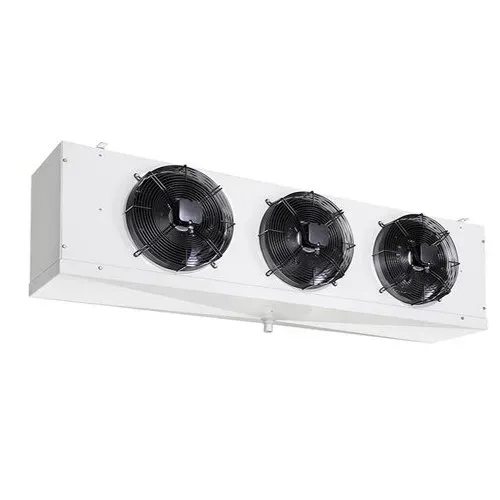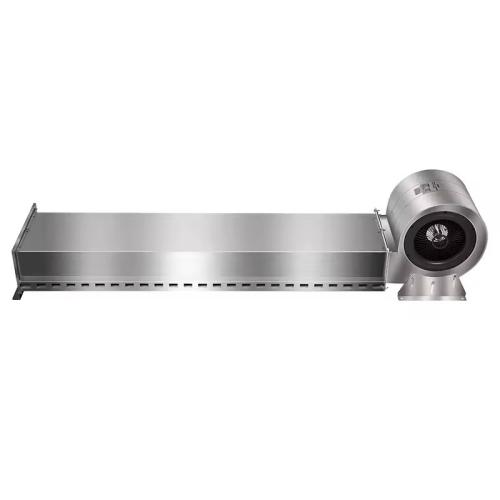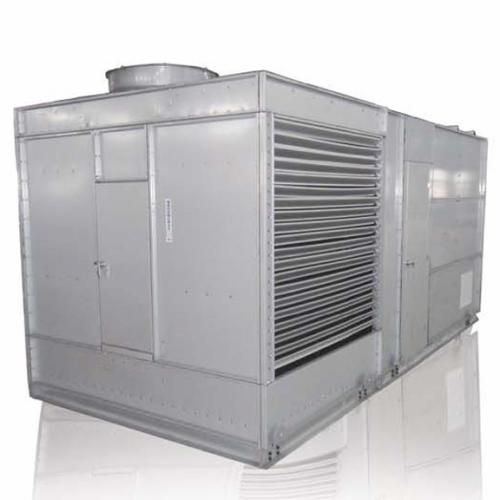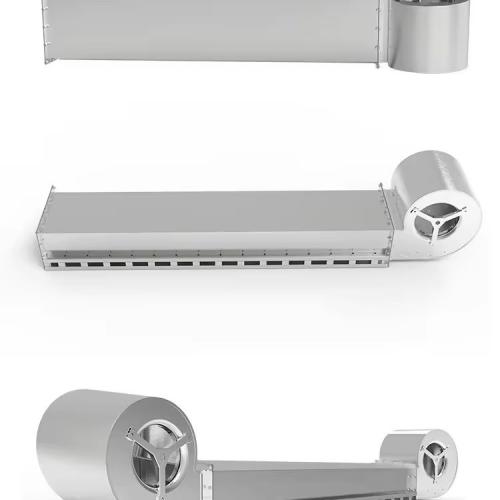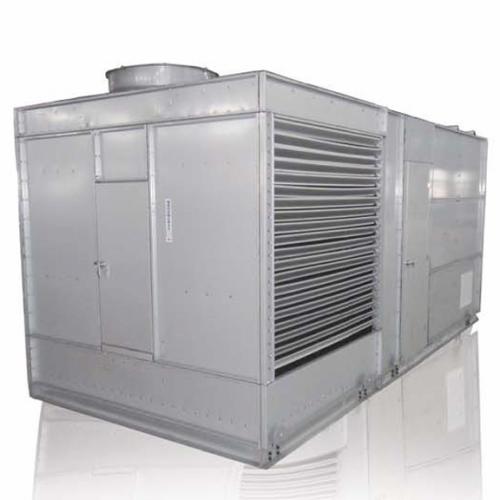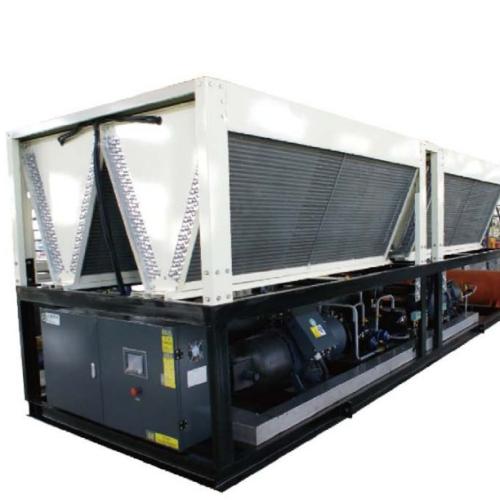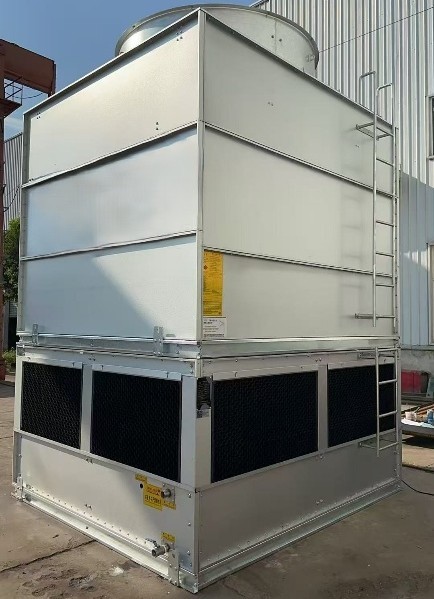
Food processing evaporative condenser
Description of Food processing evaporative condenser

In many high-tech industries, the fluid being cooled is not just water; it could be a glycol mixture, deionized water, or hydraulic oil. You cannot afford to expose these fluids to the atmosphere where they would pick up oxygen, dust, and bacteria. Our Closed-Circuit Fluid Cooler solves this by using a high-quality coil as the heat exchanger. Your process fluid stays inside the sealed coil, while a secondary "spray water" system evaporates on the outside of the coil to provide cooling. This isolation creates a "closed-loop" system that remains pristine for the life of the equipment. By keeping your internal heat exchangers clean, you maintain $100\%$ thermal efficiency and eliminate the need for costly internal chemical flushes of your chillers or induction furnaces.
Product Characteristics of Food processing evaporative condenser
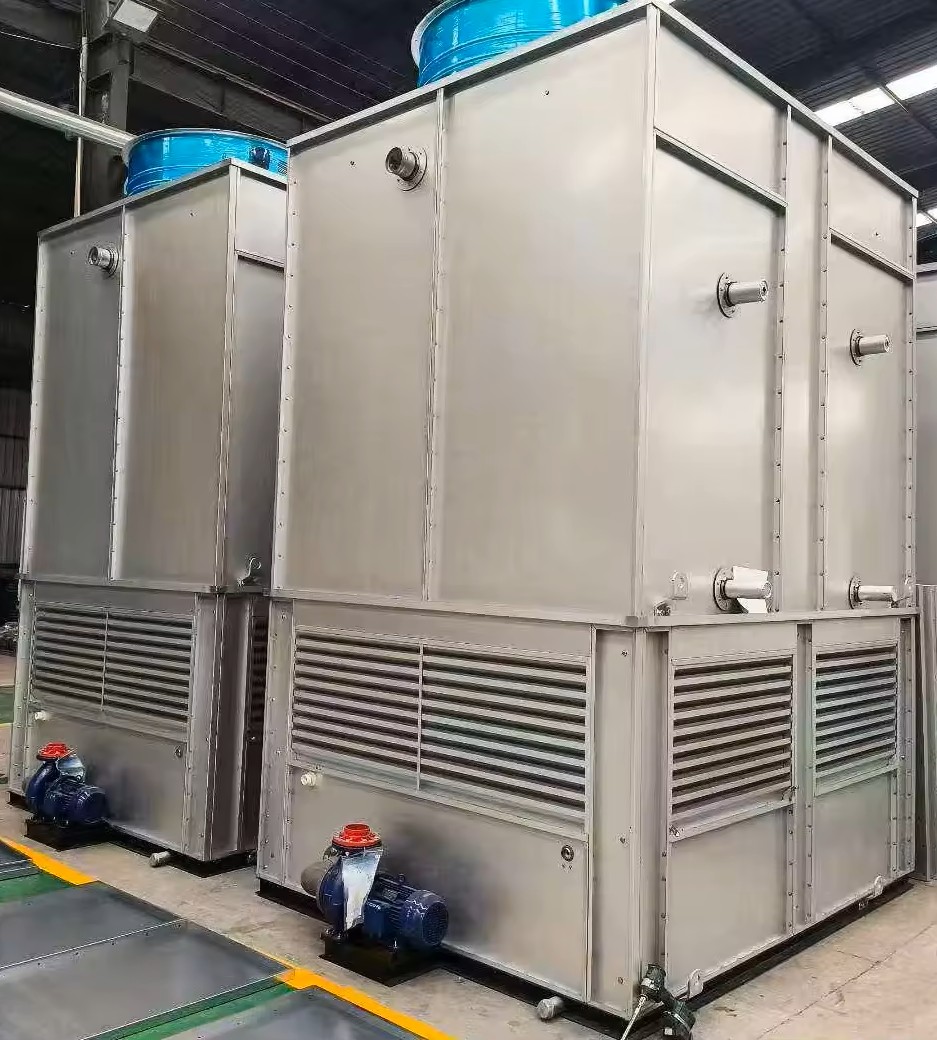
Premium Coil Technology and Materials
The coil is the most vital component of a closed-circuit unit. Our coils are manufactured from high-grade carbon steel and then "Hot-Dip Galvanized" after fabrication. This ensures that every inch of the coil—including the areas between the tubes—is coated in a thick layer of protective zinc. For more aggressive environments, we offer Type 304 or 316 stainless steel coils or copper coils for superior thermal conductivity. Each coil is pressure-tested at 350 psi (2.4MPa) under water to ensure absolute integrity. We also utilize a "sloped" serpentine design that allows the coil to be completely drained of fluid, which is a critical feature for preventing freeze-bursting during winter shutdowns.
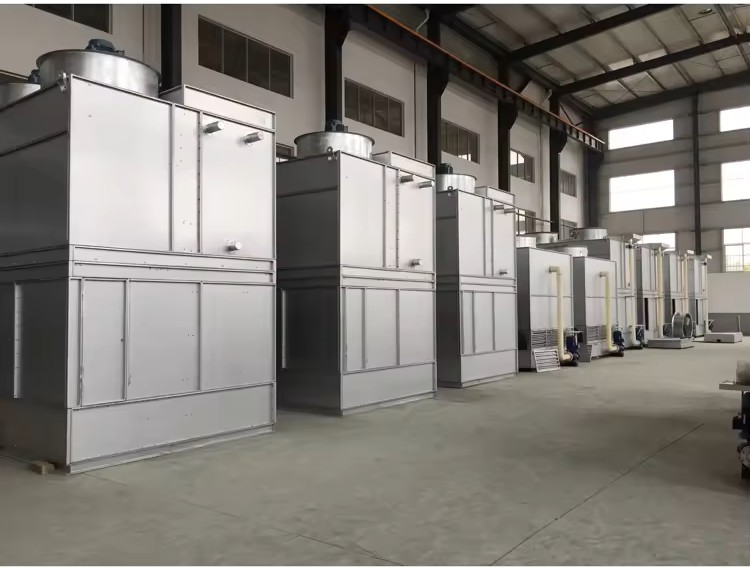
Hybrid Operational Modes: Water and Energy Savings
Our Closed-Circuit towers are "Smart" systems capable of operating in two distinct modes. In the heat of summer, they operate in Evaporative Mode, using the spray pump to achieve maximum cooling. However, during the winter or in cool weather, the system can switch to Dry Mode. In Dry Mode, the spray pump is turned off, and the unit acts as a massive air-cooled radiator. This allows you to save $100\%$ of your water usage during the colder months. For many of our clients, this hybrid capability allows them to meet strict environmental water-usage permits while still having the "muscle" to handle the hottest summer days.
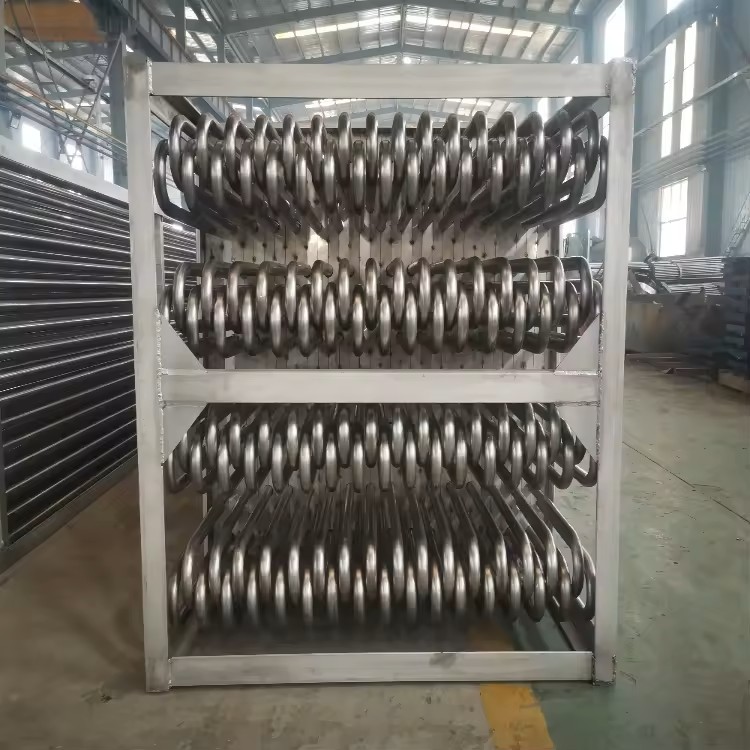
Reduced Scaling and Fouling
In an open cooling tower, the "bleed-off" or "blowdown" water volume is significant because you are constantly trying to manage mineral concentration. In a closed-circuit system, the spray water volume is much smaller. Because the spray water is only hitting the outside of the smooth coils (rather than intricate fill media), it is much easier to manage. If scale does form on the outside of the coils, it can be easily cleaned with a pressure washer or mild chemical solution without affecting the internal process loop. This ensures that your process temperatures stay stable year-round, regardless of the quality of the local makeup water.
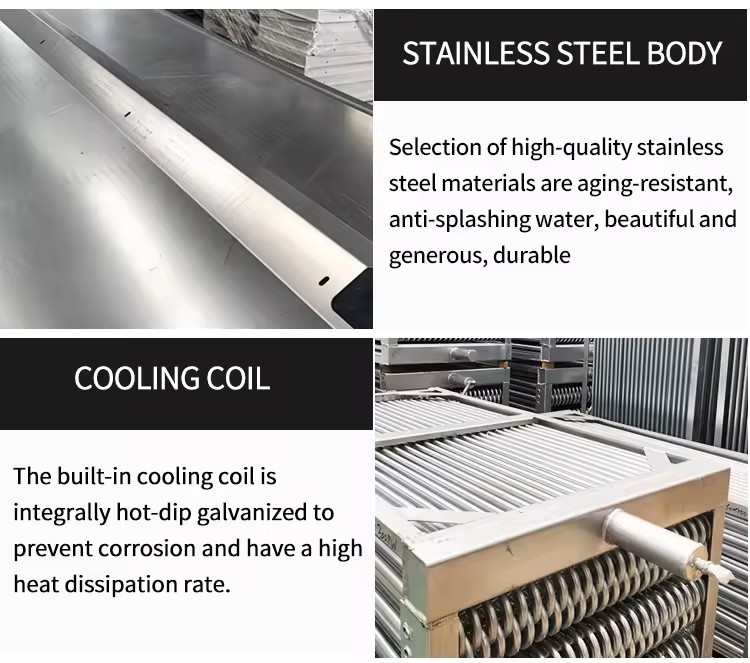
Fire Retardant and UV-Stabilized Resins
Safety is paramount in industrial settings. All of our FRP components are manufactured using specialized resins that include fire-retardant additives. Our structures meet the Class 1 flame spread rating according to ASTM E-84 standards. Furthermore, we include a high-concentration of UV inhibitors and a "synthetic veil" on the surface of our profiles. This prevents "fiber-bloom" (where the sun breaks down the resin and exposes the glass fibers) and ensures that the tower maintains its structural integrity and aesthetic appearance even under the punishing tropical sun.
Zero Painting: You never need to scrape or paint an FRP tower. The color is "baked in" to the resin.
Long Life-Cycle: These towers routinely last 30 to 40 years with minimal structural maintenance.
Recyclability and Footprint: Because they last twice as long as steel towers, the environmental impact of manufacturing and replacement is halved over the life of the facility.

| Model | CEC-600 |
| Discharge heat(KW) |
600 |
| Airflow of axial fans(m3/h) | 87000 |
| Axial fan power(KW) | 7.5 |
| Flow rate of the circulating water pump(m3/h) | 78 |
| Power of the circulating water pump(KW) | 1.5 |
|
R22 charge quantity(Kg) |
88 |
| Length | 2280 |
| Width | 2900 |
| Height | 3810 |
|
Mounting hole dimensions A(mm) |
2600 |
| Mounting hole dimensions B(mm) | 2240 |
| Inlet and outlet pipe dimensions E(mm) | 1635 |
| Inlet and outlet pipe dimensions F(mm) | 740 |
|
Intake manifold a |
2x90 |
|
Discharge pipe b |
2x90 |
| drainpipe | DN50 |
| overflow pipe | DN50 |
|
Feed pipe |
DN25 |
This is a comprehensive FAQ guide for Evaporative Condensers, covering working principles, performance, maintenance, and troubleshooting.
Part 1: Fundamental Concepts
1. What is an evaporative condenser and how does it differ from a cooling tower?
An evaporative condenser is a heat rejection device that combines a cooling tower and a refrigerant condenser into a single unit. Its primary function is to condense hot refrigerant vapor into a liquid by rejecting heat to the atmosphere.
-
How it works: Hot refrigerant gas flows through a coil. Water is sprayed over the outside of this coil while a fan blows air across it. The water absorbs heat from the refrigerant and evaporates, removing the latent heat of vaporization. This cools the refrigerant inside the coil, turning it back into a liquid.
-
Difference from a Cooling Tower: A cooling tower cools water. It takes warm water from a separate heat exchanger (like a water-cooled chiller), cools it via evaporation, and pumps it back. In contrast, an evaporative condenser cools the refrigerant directly inside the coil, eliminating the need for an intermediate heat exchanger (shell-and-tube condenser) and water piping between the tower and the plant.
2. What are the main advantages of using an evaporative condenser over an air-cooled condenser?
The primary advantage is energy efficiency due to lower condensing temperatures.
-
Lower System Pressure: Evaporative condensers operate based on the ambient wet-bulb temperature, which is typically 10-15°F (5-8°C) lower than the dry-bulb temperature used by air-cooled condensers. This allows the refrigeration system to operate at a lower condensing pressure (head pressure).
-
Energy Savings: For every 1°F drop in condensing temperature, compressor energy consumption typically drops by about 1.5% to 2%. Consequently, evaporative condensers can reduce compressor energy usage by 15% to 30% compared to air-cooled systems, especially in hot climates.
-
Space Saving: Because water is a more efficient medium for heat transfer than air, evaporative condensers typically have a smaller footprint than air-cooled condensers of the same capacity.
3. What is the difference between "Counterflow" and "Combined Flow" evaporative condensers?
-
Counterflow: In this design, the air moves vertically upward through the unit while the spray water flows vertically downward over the coil. This provides excellent heat transfer but requires powerful fans to overcome the static pressure of the air moving against the falling water.
-
Combined Flow (or Hybrid Flow): This design uses both a condensing coil and a separate "fill" surface (like in a cooling tower). The water is cooled partly by the air moving over the coil and partly by the air moving through the fill media. The air moves parallel to the water over the coil and cross-flow through the fill. This design reduces the tendency for scale formation on the coil (since the water is cooler when it hits the coil) and often allows for a lower refrigerant charge.
4. Why is the "Wet Bulb" temperature so critical for evaporative condenser sizing?
The Wet Bulb (WB) temperature represents the lowest temperature that water can reach by evaporation in the current ambient air. Since evaporative condensers rely on evaporation to reject heat, their capacity is strictly limited by the local WB temperature, not the dry air temperature (Dry Bulb).
-
Sizing Impact: If a unit is sized for a region with a design WB of 78°F, but it is installed in a region with a WB of 82°F, it will not be able to reject enough heat, causing the system's head pressure to rise.
-
Performance: A lower WB temperature means the air is drier or cooler, allowing for more evaporation and better cooling performance.
Part 2: Operation & Performance
5. How much water does an evaporative condenser consume?
Water consumption is primarily driven by three factors: Evaporation, Bleed-off (Blowdown), and Drift.
-
Evaporation: Roughly 1.8 gallons of water are evaporated per hour for every ton of refrigeration (approx. 1.6 to 2.0 liters per kWh of heat rejection). This is the water that actually does the cooling work.
-
Bleed-off: To prevent mineral buildup, a portion of the water must be drained (bled) and replaced with fresh water. This is typically equal to the evaporation rate or slightly less, depending on water quality and cycles of concentration.
-
Total Usage: A general rule of thumb is that total water make-up is about 3 to 4 gallons per hour per ton of capacity. While this uses water, it is often offset by the massive electricity savings at the compressor.
6. Can evaporative condensers operate in sub-freezing winter conditions?
Yes, but they require specific freeze protection strategies.
-
Remote Sump: The best method is to locate the water basin (sump) indoors in a heated space. When the pump turns off, all water drains by gravity into the indoor tank, preventing freezing outdoors.
-
Basin Heaters: If a remote sump isn't possible, electric immersion heaters or steam coils must be installed in the outdoor basin to keep the water from freezing when the unit is idle.
-
Capacity Control: In winter, the unit often has too much capacity. Operators must use Variable Frequency Drives (VFDs) on fans to slow them down or cycle them off to maintain proper condensing pressure without over-cooling or freezing the water on the coil.
7. What is "White Rust" and why is it a concern for new units?
White rust is a premature, rapid corrosion of galvanized steel surfaces that resembles a white, waxy powder. It occurs primarily on new units that haven't properly "passivated."
-
Cause: If the water pH is too high (above 8.2) or the water chemistry is aggressive during the first 6-8 weeks of operation, the protective zinc layer on the galvanized steel corrodes instead of forming a stable barrier.
-
Prevention: New evaporative condensers require a strict "passivation" water treatment protocol for the first month or two. This usually involves keeping pH between 7.0 and 8.0 and avoiding high alkalinity until the steel surfaces turn a dull gray color.
8. How does altitude affect the selection of an evaporative condenser?
Air density decreases as altitude increases. Since fans move a constant volume of air, the mass of air moved (which actually does the cooling) is less at higher altitudes.
-
Derating: A condenser sized for sea level will be undersized in a city like Denver (5,000 ft elevation) or Mexico City.
-
Correction Factor: Engineers must apply an altitude correction factor during selection. This usually means selecting a slightly larger unit or increasing fan motor horsepower to compensate for the thinner air and ensure adequate heat rejection.
Part 3: Maintenance & Troubleshooting
9. How often should the coil be cleaned and how?
The frequency depends on air and water quality, but inspections should be monthly, and deep cleaning is typically required annually.
-
Scale: If scale builds up on the coil, it acts as an insulator, drastically reducing heat transfer and raising system pressure.
-
Cleaning Method: Light scale can be removed with pressure washing. Heavy scale often requires chemical descaling (acid cleaning). However, acid cleaning must be done carefully to avoid corroding the galvanized coating. Always consult the manufacturer's guidelines before applying acid to galvanized coils. Stainless steel coils are more resistant to aggressive cleaning.
10. What is "Drift" and how is it minimized?
Drift refers to small water droplets that are entrained in the discharge air stream and blown out of the unit. This is different from evaporation (which is pure vapor); drift contains chemicals, minerals, and bacteria (potentially Legionella) from the recirculating water.
-
Drift Eliminators: These are zig-zag shaped plastic blades installed above the spray nozzles. They force the air to change direction rapidly. The water droplets, being heavier than air, hit the blade surface and drip back into the basin rather than escaping.
-
Maintenance: Drift eliminators must be checked regularly for cracks, gaps, or clogging to ensure they are effective.
11. What are the signs of a failing water distribution system?
Uniform water coverage over the coil is vital. If the coil has dry spots, scale will form rapidly at the edges of the dry area, and capacity will drop.
-
Symptoms: High condensing pressure, uneven scale formation on the tubes, or visible dry patches on the coil bundle.
-
Troubleshooting: Check spray nozzles for clogging (a common issue). Inspect the pump for cavitation or loss of pressure. Ensure the strainers/filters in the water loop are clean. Clogged nozzles should be removed and cleaned, not just poked with a wire, to avoid damaging the spray pattern.
12. How do I treat the water to prevent biological growth (Legionella)?
Evaporative condensers are potential breeding grounds for Legionella bacteria due to the warm, wet environment.
-
Biocides: You must dose the water with biocides. A dual approach is standard: an oxidizing biocide (like chlorine or bromine) for continuous kill and a non-oxidizing biocide added periodically as a "shock" treatment.
-
Monitoring: Regular dip-slide tests for total bacteria count (TBC) are necessary. If counts rise, the biocide program must be adjusted immediately.
-
Stagnation: Avoid dead legs in piping and ensure water circulates continuously when the unit is in operation.
13. What causes high discharge pressure (Head Pressure) in an evaporative condenser?
High head pressure is the most common performance complaint and usually indicates the unit is not rejecting heat efficiently.
-
Potential Causes:
-
Fan/Pump Failure: Fans running too slow (belt slip) or pump not delivering enough water.
-
Air Recirculation: Hot, moist discharge air is being sucked back into the air intake (common if the unit is placed too close to a wall or under an overhang).
-
Scale: Dirty coils preventing heat transfer.
-
Non-condensables (Air): Air trapped in the refrigeration system (inside the coil).
14. When should I choose Stainless Steel over Galvanized Steel construction?
-
Galvanized Steel: The standard, cost-effective option. Suitable for neutral water environments and general HVAC applications. Life expectancy is 15-20 years with good maintenance.
-
Stainless Steel (304 or 316): Recommended for corrosive environments (coastal areas, industrial fumes) or where water quality is poor/aggressive.
-
Hybrid Construction: A popular middle ground is using a stainless steel basin (which is most prone to corrosion) and a galvanized upper section.
-
Decision: If the water has high chloride levels or if the plant requires a 20+ year lifespan with lower maintenance risk, stainless steel is worth the premium cost (often 30-50% higher).
15. How do I properly tension the fan belts?
Loose belts cause slippage, which reduces airflow and wears out the sheaves (pulleys). Overtight belts destroy bearings.
-
Checking: You should check tension after the first 24 hours of operation (new belts stretch) and then monthly.
-
Method: Ideally, use a tension gauge. If doing it manually, there should be about 1/2 inch to 3/4 inch of deflection when pressing firmly on the belt span. Listen for a "chirp" at startup—a short chirp is okay, but a long squeal means it's too loose.
Part 4: Advanced Topics & Selection
16. What is a "Desuperheater" and does an evaporative condenser need one?
A desuperheater is a coil section that removes the "superheat" from the refrigerant gas before it enters the condensing phase.
-
In Evaporative Condensers: The evaporative process naturally handles desuperheating, condensing, and subcooling all in one coil. However, some specialized units add an air-cooled desuperheating coil on the discharge side.
-
Why use it? It uses the hot dry air leaving the unit to remove the initial heat from the gas. This can reduce the visible plume (steam) in winter and save a small amount of water since that portion of heat rejection doesn't require evaporation.
17. What is "Plume" and can it be eliminated?
Plume is the visible cloud of condensed water vapor leaving the unit, similar to your breath on a cold day.
-
Concern: While harmless, it can obscure visibility (dangerous near highways or airports) or look like smoke to neighbors.
-
Plume Abatement: "Coil/Fill" hybrid units or units with "plume abatement" coils use a dry heating coil to warm the discharge air, lowering its relative humidity so the water vapor is invisible when it hits the ambient air. These units are significantly more expensive but necessary in sensitive locations.
18. How does a Variable Frequency Drive (VFD) save energy on these units?
Evaporative condensers are sized for the hottest day of the year (design day). For 90% of the year, they have excess capacity.
-
Fixed Speed: A standard fan turns on and off. This causes pressure fluctuations and wears out belts/motors.
-
VFD: A VFD allows the fan to run at partial speed (e.g., 50%). Since fan power follows the cube law (Power ∝ Speed³), running a fan at 50% speed uses only 12.5% of the energy. This provides massive electrical savings and maintains a stable condensing pressure.
19. What are the installation clearance requirements?
Proper airflow is non-negotiable.
-
Intake: There must be sufficient space (usually equal to the width of the unit) around the air inlets. If the unit is too close to a wall, it will "starve" for air, reducing capacity.
-
Recirculation: If multiple units are placed next to each other, or if the unit is in a pit/enclosure, the hot moist discharge air can be sucked back into the intake. This artificially raises the entering wet-bulb temperature, killing efficiency. Discharge cowls or elevating the units can help preventing this.
20. Can an evaporative condenser be used for "Free Cooling"?
Yes, in specific configurations.
-
Concept: In winter, the ambient air is cold enough to cool the fluid without running the mechanical compressors.
-
Application: While the evaporative condenser itself cools refrigerant, it can be part of a system where the refrigerant circulates via a thermosyphon (refrigerant pump) to cool the process load directly, bypassing the compressors. This is often called "thermosyphon free cooling" and yields massive energy savings in cold climates.