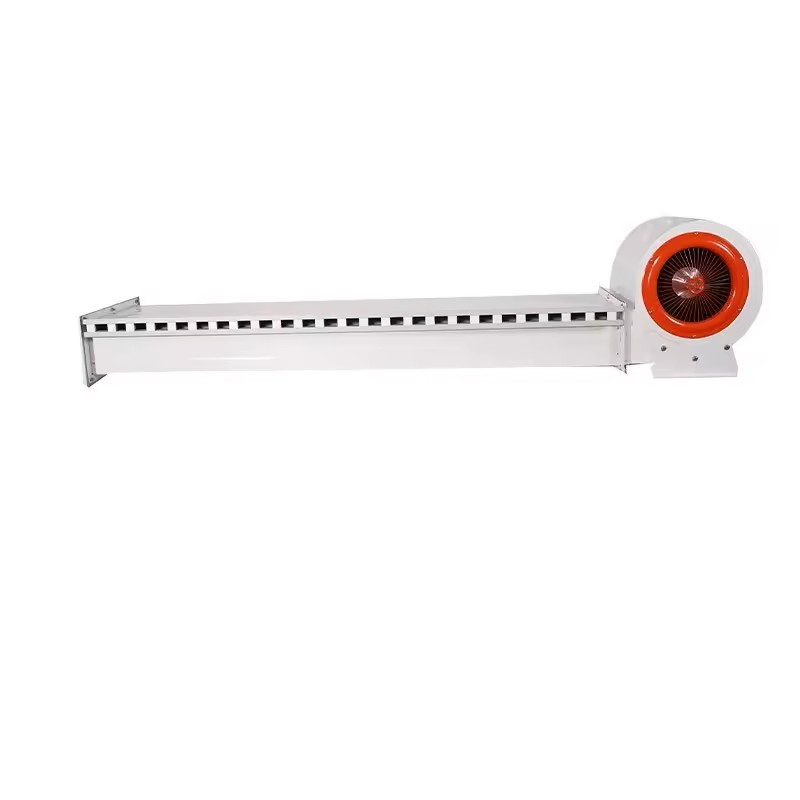
High velocity air curtain for refrigerated warehouses
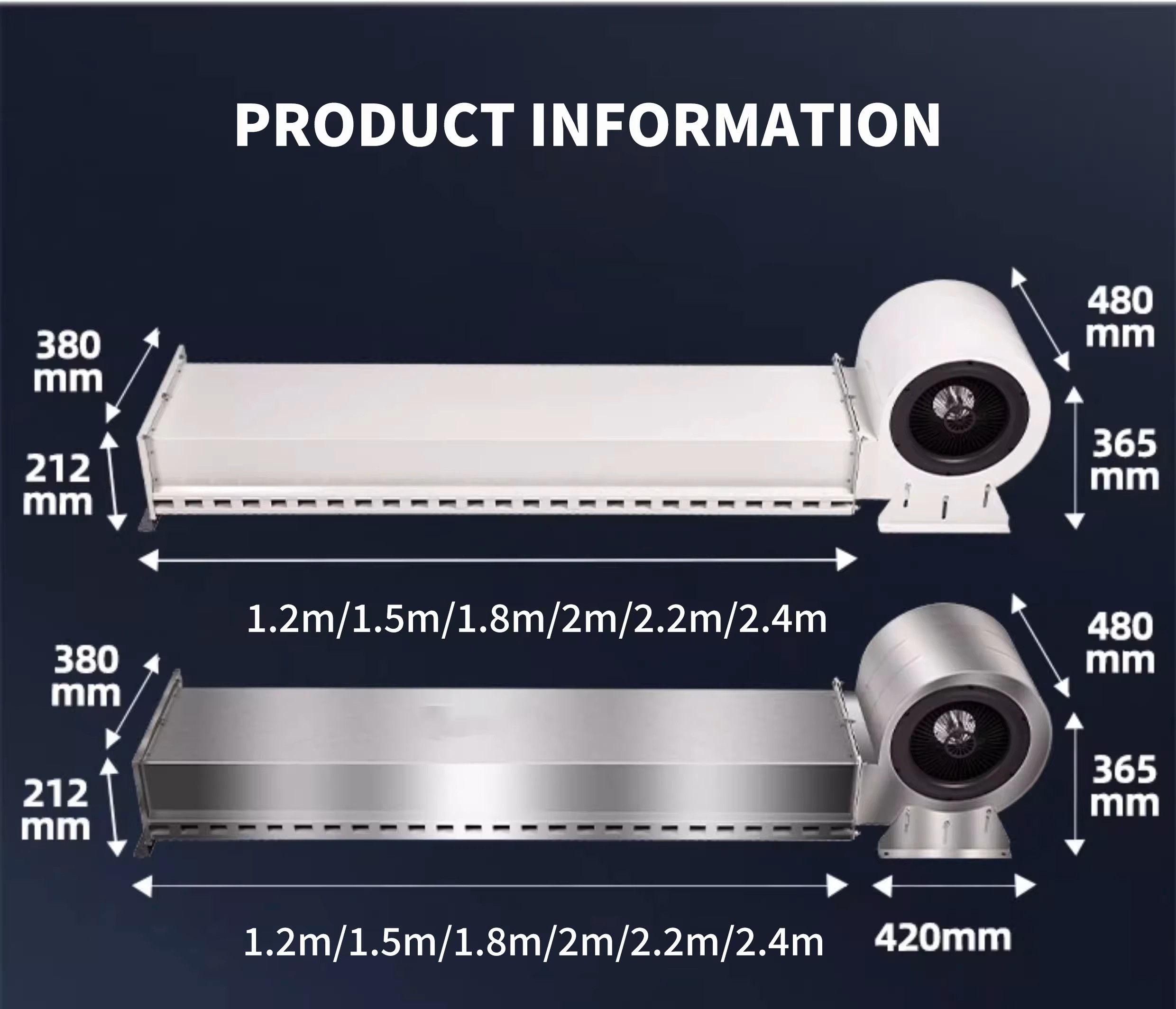
Designed with industrial-grade high-static fans and precision-engineered air nozzles, it generates a dense, high-speed air stream across door openings to maintain stable internal temperatures, reduce frost and ice buildup, and improve workplace safety. Built with durable, corrosion-resistant casing and heavy-duty motors, it supports 24/7 continuous operation in high-demand logistics and cold chain facilities.
Ideal for loading docks, cold room entrances, and freezer access ways, this air curtain enhances operational efficiency, preserves product quality, and lowers long-term maintenance expenses for commercial refrigerated warehouses.
Core Airflow Performance
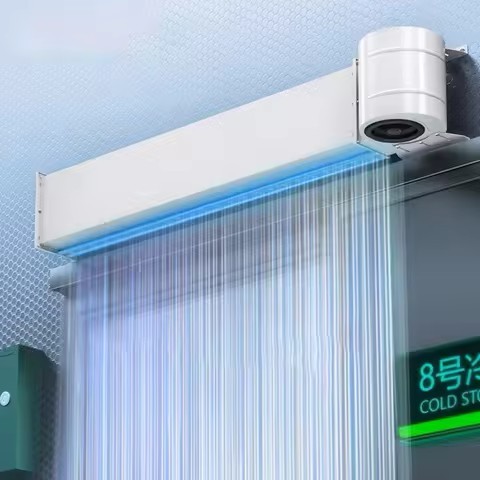
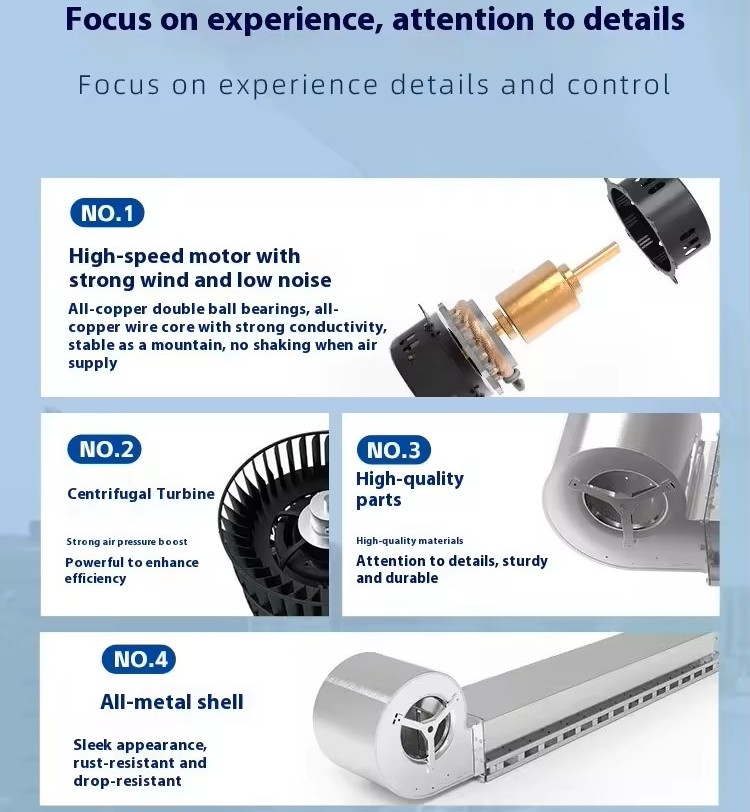
High velocity air curtains for refrigerated warehouses are engineered to generate a powerful, consistent, and uniform vertical air barrier across full door openings. Equipped with high-performance centrifugal fans and precision-engineered air nozzles, these units deliver stable high-velocity airflow that forms an invisible yet robust shield between cold storage interiors and external environments. The optimized airflow design ensures complete coverage from the top of the doorway to the floor, eliminating gaps that could allow temperature exchange. This dedicated airflow structure maintains strong barrier integrity even in high-traffic scenarios with frequent door openings and closings, supporting continuous operation in busy logistics and cold chain environments. By sharply reducing air mixing, the system limits temperature fluctuations inside the warehouse, preserving stable low-temperature conditions required for frozen and refrigerated goods
Energy Saving and Temperature Control
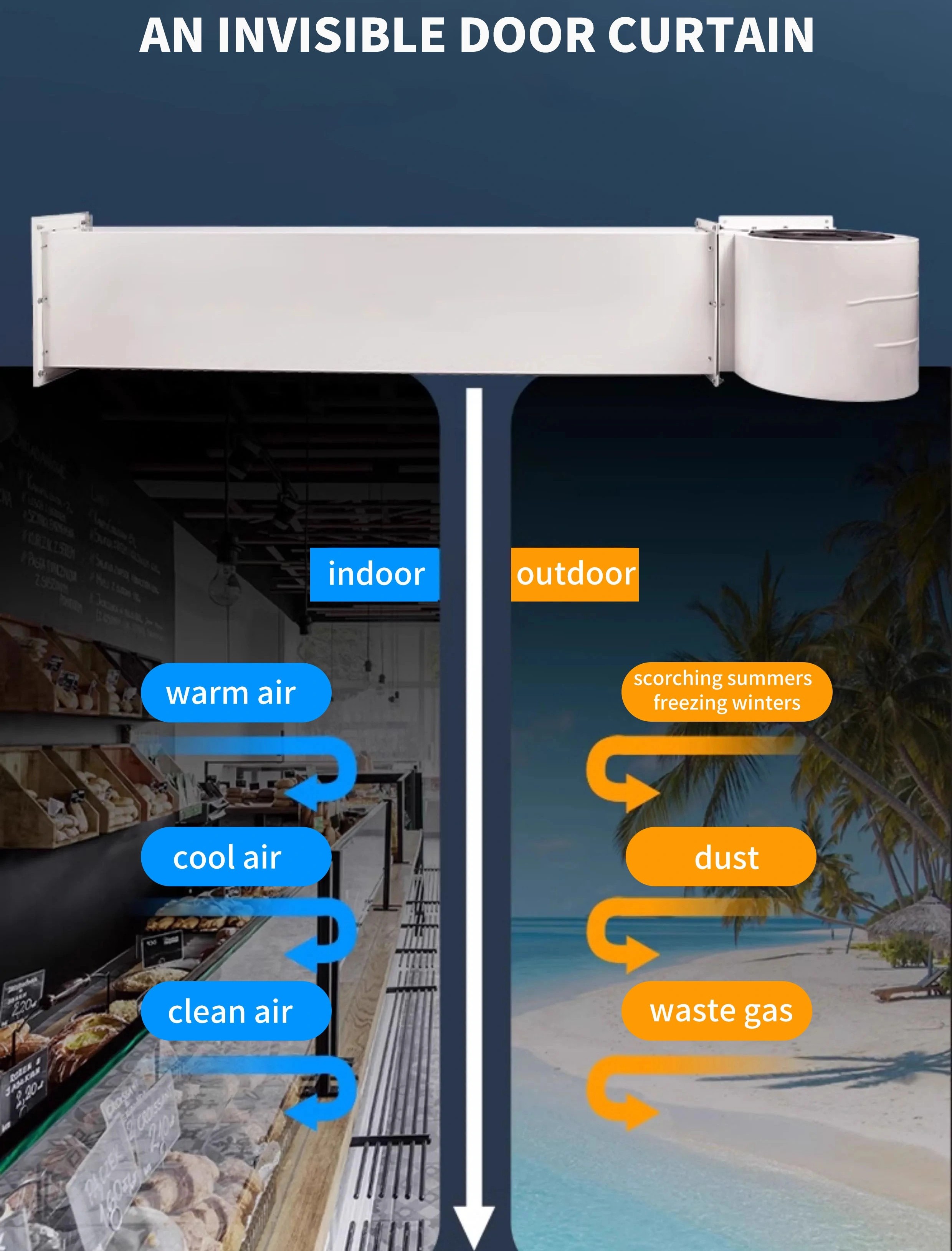
A primary feature of high velocity air curtains is their exceptional energy-saving capability for refrigerated warehouses. By blocking cold air from escaping and warm humid air from entering, these units drastically reduce the load on refrigeration systems. Less cold air loss means compressors and cooling units run shorter cycles and experience less wear, directly lowering power consumption and long-term operational costs. Effective thermal separation also minimizes temperature spikes during door access, helping maintain consistent storage temperatures and protect product quality. For temperature-sensitive cargo such as food, pharmaceuticals, and biochemical goods, this stability extends shelf life, reduces spoilage, and supports compliance with cold chain standards. The energy-efficient design aligns with sustainable facility operations, lowering carbon output while improving economic efficiency.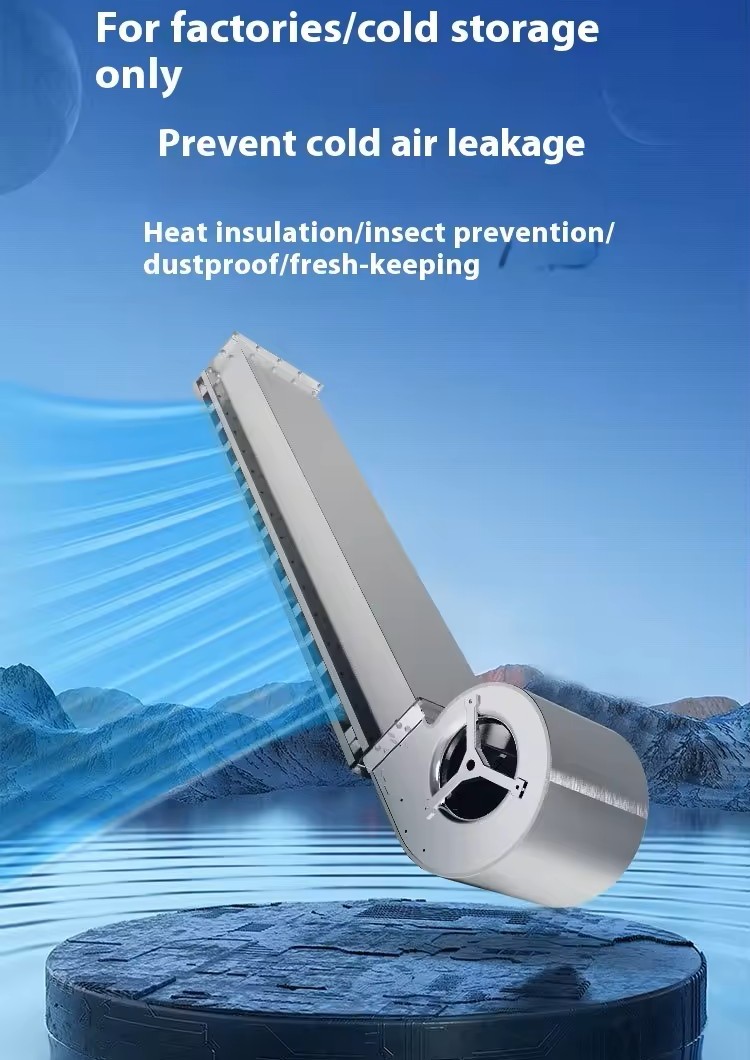
Frost and Condensation Control
Specialized for low-temperature environments, high velocity air curtains effectively suppress condensation, fogging, and ice buildup at warehouse doorways. By blocking warm moist external air from contacting cold internal surfaces, the system reduces water vapor accumulation that causes frost on floors, walls, and cooling equipment. Reduced ice formation improves safety by eliminating slippery surfaces and lowering the risk of workplace falls. Less frosting also cuts down on manual defrosting work and extends the service life of evaporators and other refrigeration components. Many models include dedicated defrost functions and timers to maintain stable performance during prolonged operation in freezing conditions, preventing component freezing or blockage and ensuring uninterrupted daily use.

· PrFood processing workshops
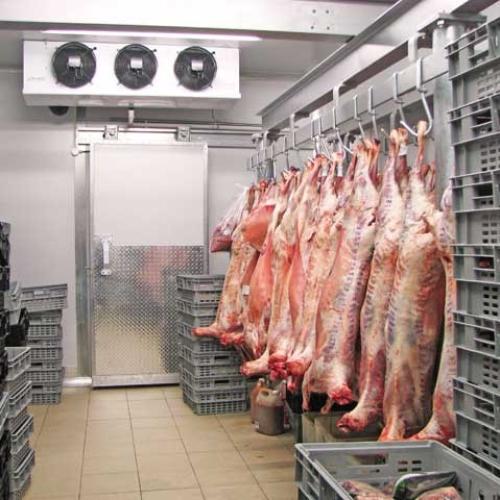
· Cold stores and freezer rooms
· Cold chain logistics centres and distribution warehouses
· Pharmaceutical factories and cleanrooms
· Biological laboratories and sample repositories
· Flower preservation chambers
· Low-temperature storage for
|
Product Name |
High velocity air curtain for refrigerated warehouses |
||
| Shell Material |
|
||
| Suitable Door Height |
2.0m - 2.5m |
||
| Available Widths |
900mm / 1200mm / 1500mm (Customizable) |
||
| Motor Type | Pure Copper Core, Low Temp Lubrication | ||
| Voltage/Frequency | 220V / 50Hz (Single Phase) | ||
| Power Input | 160W - 230W (Depending on width) | ||
| Air Velocity |
|
||
| Air Volume |
1200 - 1900 m³/h |
||
| Noise Level |
|
||
| IP Rating |
IP44 |
||
| Control Method |
Mechanical Button / Optional Door Switch |
Frequently Asked Questions (FAQ)
1. What is the main purpose of a cold storage air curtain?
Its primary function is to create an invisible air barrier that prevents cold air from escaping and warm air from entering when the cold room door is open. This maintains the internal temperature and reduces the load on your cooling compressor.
2. Do air curtains actually cool the room?
No. An air curtain is not an air conditioner. It does not generate cold air. Instead, it acts as a "seal" or a "door" made of air to keep the existing cold air inside the room.
3. Can an air curtain replace a physical door?
No. Air curtains are designed to work when the physical door is open (during loading/unloading). When the facility is closed for the night, the physical insulated door should still be closed for maximum security and insulation.
4. Why is an air curtain better than PVC strip curtains?
Air curtains offer a touchless solution, meaning no physical barrier touches your food or goods (better hygiene). They also don't scratch or fog up like PVC strips (better safety/visibility) and don't require frequent replacement due to wear and tear.
5. How much energy can I save?
While results vary based on usage and temperature differences, a properly installed air curtain can retain 80-90% of the conditioned air, potentially reducing your energy costs by 30-50% compared to an unprotected open door.
6. Does it prevent insects and dust?
Yes. The high-velocity airflow (usually above 15 m/s for industrial units) is strong enough to physically repel flying insects (flies, mosquitoes) and airborne dust, keeping your cold storage hygienic.
7. Should I install the air curtain inside or outside the cold room?
For the best results, we recommend installing the unit on the "warm side" (outside the cold room/freezer), blowing air downwards. This prevents the motor from freezing and stops warm air before it even enters the doorway.
8. Can I install the air curtain vertically?
Yes. If you lack headroom above the door, you can install units vertically on the sides of the door. For very wide doors, we recommend installing vertical units on both sides to create a meeting airflow in the center.
9. What is the ideal installation height?
It depends on the model. Commercial units are usually effective up to 2.5 - 3.0 meters. Heavy-duty industrial units can seal doors up to 5.0 - 6.0 meters high. Always check the "Effective Discharge Distance" in the specs.
10. Do I need a door switch?
We highly recommend it. A mechanical or magnetic door switch turns the air curtain on only when the door opens and turns it off when the door closes. This saves electricity and extends the motor's lifespan.
11. My door is wider than the largest air curtain. What should I do?
You can modularly install multiple units side-by-side. For example, if your door is 2.4 meters wide, you can install two 1.2-meter units together to cover the full width.
12. Will the motor freeze if I install it inside a freezer?
Standard motors will freeze. If you must install it inside (on the cold side), you need to order our specialized Cold Room Motor, which features low-temperature grease (-40°C) and anti-freeze cabling.
13. What is the difference between Single Phase and 3-Phase?
-
Single Phase (220V/50Hz): Used for smaller commercial units (cafes, restaurants, small walk-ins). Easier to wire.
-
3-Phase (380V-415V): Required for large industrial units. It provides the power needed for high-velocity centrifugal fans to blow air down from 4+ meters.
14. Are these units waterproof?
Our Cold Storage series comes with IP54 protection or higher. This means the motor and electrical components are protected against splashing water and dust, which is essential for humid or wash-down environments.
15. What material is the casing made of?
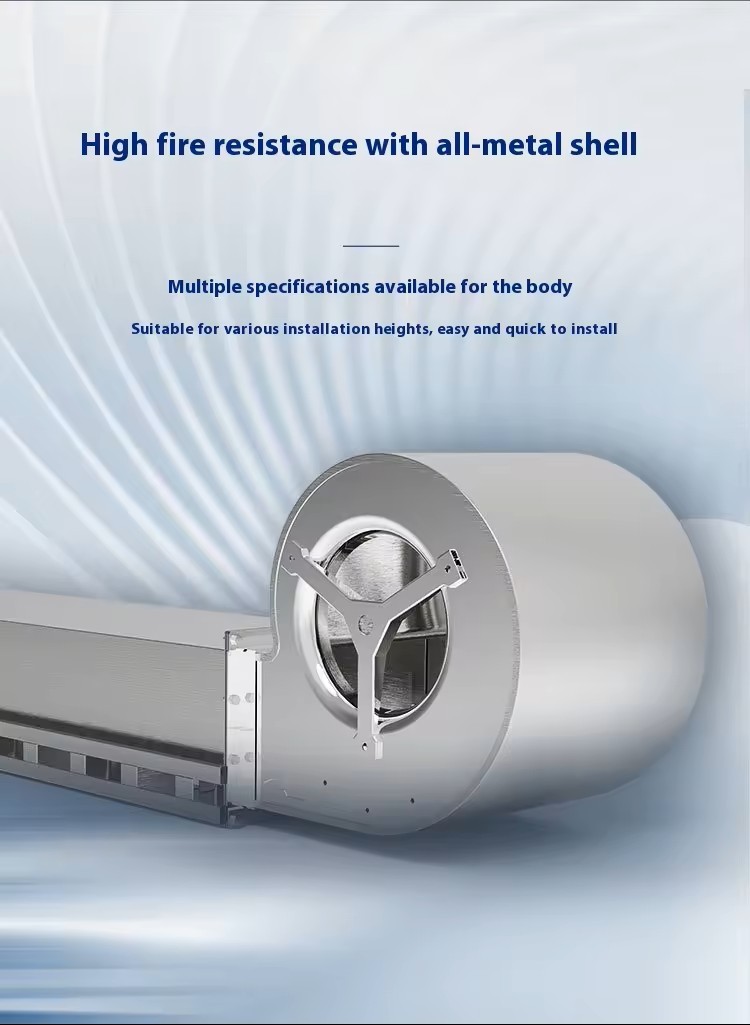
For cold storage and food processing, we strictly recommend 304 Stainless Steel. It is rust-proof, easy to clean, and complies with food safety standards. Powder-coated steel is available for general warehousing.
16. How loud are these units?
Industrial air curtains move a lot of air, so they are louder than residential AC units. Expect noise levels between 55dB (small units) to 75dB (large industrial units). This is standard for warehouse environments.
17. Why is there mist or fog at the doorway?
This happens when warm, humid air meets cold air. If your air curtain is not powerful enough or angled incorrectly, the seal is broken, causing condensation (mist). Ensure your unit has high enough velocity to reach the floor.
18. Why is ice building up on the floor near the door?
This usually means the air curtain is either too weak (air not reaching the floor) or the vanes are angled inward, blowing warm air into the freezer which then condenses and freezes. Adjust the air vanes to blow slightly outward (away from the cold room).
19. How often should I maintain the air curtain?
Maintenance is low. We recommend:
-
Monthly: Check the intake grille for dust/debris blockage.
-
Quarterly: Wipe down the stainless steel shell.
-
Yearly: Check the fan blades and motor mounting for tightness.
20. Can I adjust the wind speed?
Yes. Most of our models come with at least 2 speeds (High/Low). Use High speed during hot summers or heavy traffic, and Low speed during cooler months to save energy.
21. What happens if the air curtain is narrower than the door?
If the unit is narrower than the door, air will leak in through the gaps at the edges. This "leakage" significantly reduces efficiency. Always choose a unit equal to or wider than your door opening.
22. Does the product come with a warranty?
Yes, all our industrial cold storage air curtains come with a standard 1-Year Warranty on the motor and electrical components. Extended warranties are available for project orders.