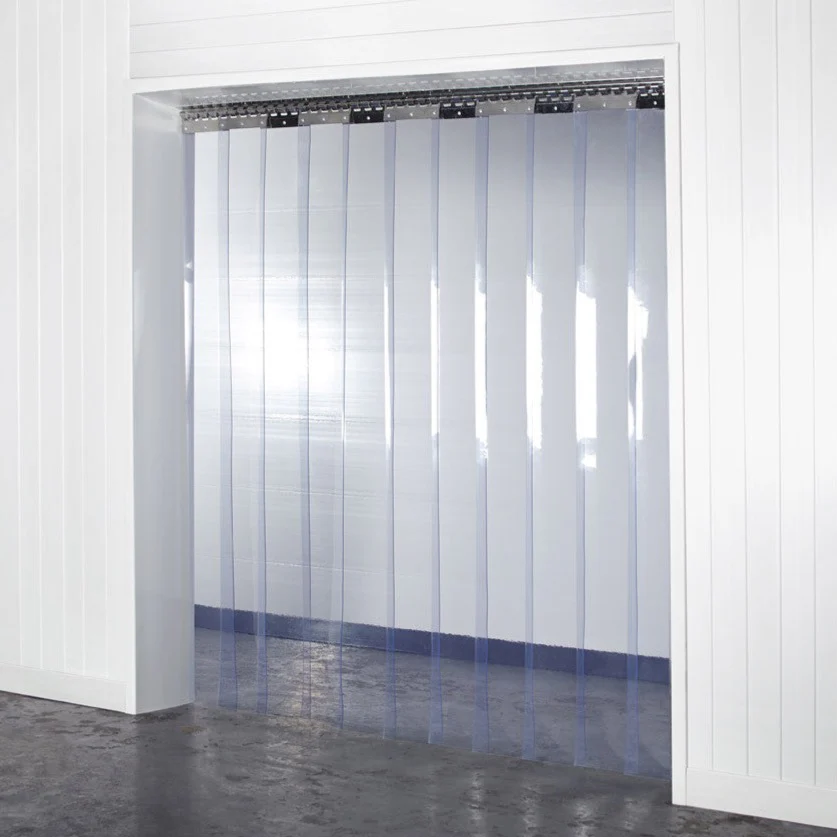
Cold-Room-Air-PVC-Curtain
Description of Cold-Room-Air-PVC-Curtain
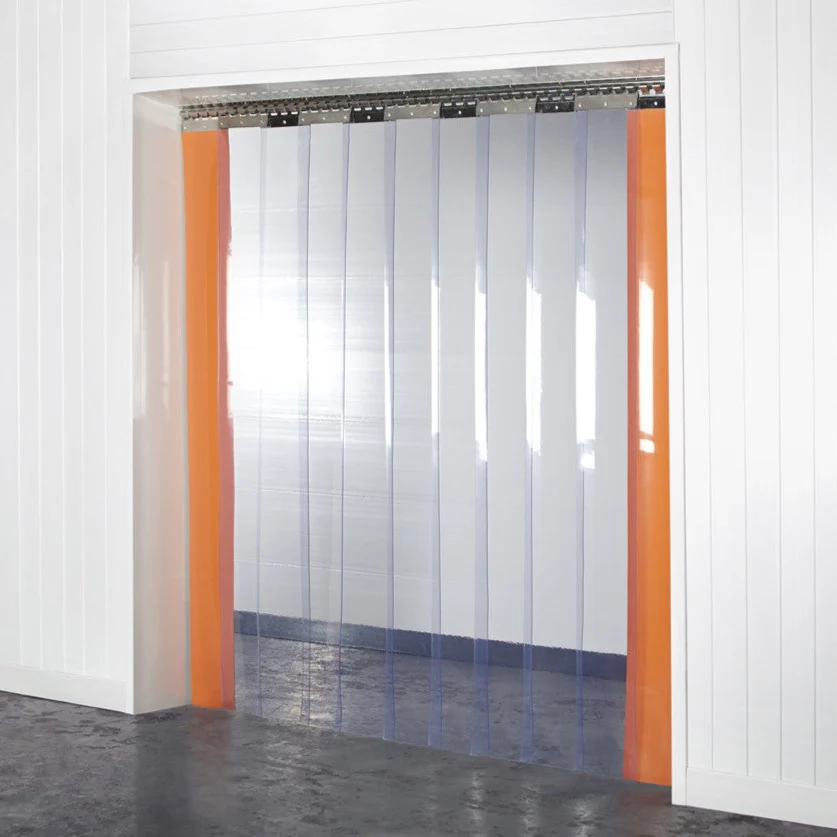
This PVC air curtain, specifically designed for cold storage rooms, utilises a flexible material that is both cold-resistant and highly transparent. It maintains its elasticity without hardening or fracturing even in extremely low-temperature environments. Its overlapping strip structure forms an automatically closing thermal barrier, effectively preventing cold air leakage while blocking external heat, dust, and flying insects. This significantly reduces energy consumption during frequent personnel or vehicle access, making it an ideal protective solution for maintaining constant temperature and cleanliness within the storage area while ensuring safe working visibility.
Core characteristics of Cold-Room-Air-PVC-Curtain

Super Polar Grade
Characteristics: Specifically engineered for low-temperature environments, incorporating a specialised cold-resistant formulation.
Benefits: Even in extremely low temperatures (typically ranging from -40°C to +50°C), the curtain slats remain supple and resilient, avoiding hardening, brittleness or fracture. This ensures unimpeded access for personnel and vehicles.

Energy Efficiency
Characteristics: PVC material possesses inherently low thermal conductivity. Combined with an overlapping suspension design, it forms a tight air-sealing layer.
Benefits: Effectively prevents cold air leakage and external hot air convection. Tests demonstrate a significant reduction in refrigeration compressor operating frequency, achieving energy savings of 30% to 50% and extending the service life of refrigeration equipment.

High Transparency & Safety
Characteristics: Manufactured from high-purity raw materials, the slats exhibit a crystal-clear transparency with exceptionally high light transmission.
Benefits: Ensures unobstructed visibility, enabling operators to clearly observe conditions beyond the door. This effectively prevents collisions involving forklift trucks or personnel, thereby enhancing safety within the operational area.

Durability & Protection
Characteristics: Material exhibits high tensile strength and exceptional resilience. Selected models feature reinforced ribbing (dual-rib design).
Benefits: Withstands frequent pedestrian traffic and mechanical vehicle abrasion. Ribbed construction minimises panel adhesion and reduces visibility impairment from scratches. Simultaneously provides dustproofing, wind resistance, insect exclusion and noise insulation, maintaining interior cleanliness.

· PrFood processing workshops
· Cold stores and freezer rooms
· Cold chain logistics centres and distribution warehouses
· Pharmaceutical factories and cleanrooms
· Biological laboratories and sample repositories
· Flower preservation chambers
· Low-temperature storage for
|
Product Type |
Cold Room PvC Strip Curtains |
| Water Absorption | 1.5%-3.5% |
| Shrinkage Rate | <0.4% |
| Tensile Strength | 81-130 MPa |
| Thickness | 0.8mm-7mm |
| Size | Customizable |
| Width | 50mm-400 mm |
| Color | Orange, Green, Blue, Clear |
| Profile | Ribbed / Flat |
| Application | commercial and industrial Use |
| Suitable for | Freezer, Cold Storage, Polar Food Processing |
| Process | Extruded/Calender |
| Edge Type | Cut Edge or Round Edge |
| Certifications | RoHS compliant, REACH compliant, |
| Grades | Standard Grade, Anti-Insect Grade, Anti-Static Grade |
Cold Storage PVC Strip Curtains: Comprehensive FAQ
Section 1: General Basics & Technical Specifications
Q1: What defines a "Polar Grade" or "Freezer Grade" PVC strip curtain, and how does it differ from a standard PVC curtain?
The primary distinction between a standard PVC strip and a Polar (or Freezer) Grade strip lies in the chemical formulation, specifically the plasticizers used. Standard PVC curtains are designed for ambient temperatures (typically 0°C to +60°C). If placed in a freezing environment, the polymer chains in standard PVC lock up, causing the material to undergo a "glass transition." This makes the curtain brittle, hard, and prone to cracking or shattering upon impact.
Polar Grade PVC, conversely, is formulated with specialized low-temperature plasticizers that lower the glass transition temperature. This allows the strips to remain flexible, soft, and durable even in environments ranging from -40°C to +25°C. They are specifically engineered to withstand the harsh conditions of walk-in freezers and blast chillers without crystallizing or breaking.
Q2: What is the effective temperature range for Cold Storage PVC curtains?
While specifications can vary slightly by manufacturer, high-quality Polar Grade PVC curtains generally operate effectively within a temperature range of -40°C to +50°C (-40°F to 122°F).
It is crucial to note that while they can tolerate +50°C, their primary function is low-temperature flexibility. Using them in extremely hot environments might make them too soft or "tacky" (sticky). Therefore, they are best utilized in environments where the temperature stays below 25°C, such as the interface between a freezer (-20°C) and a refrigerated loading dock (+5°C).
Q3: How do PVC strip curtains actually save energy in a cold storage facility?
PVC strip curtains act as a secondary barrier that minimizes air infiltration. When a solid freezer door is opened for loading or unloading, there is an immediate exchange of air: dense, cold air rushes out along the floor, and warm, moist air rushes in near the ceiling (convection).
PVC strips mitigate this by restricting the airflow opening to only the size of the object passing through (e.g., a person or a forklift). As soon as the object passes, the gravity-fed strips fall back into place, resealing the opening. Studies indicate that installing PVC curtains can reduce cold air loss by 30% to 50%. This reduction means the refrigeration compressors do not have to work as hard to maintain the set temperature, leading to significantly lower electricity bills and reduced wear and tear on cooling equipment.
Q4: Are these curtains transparent enough to ensure safety for forklift drivers?
Yes, high-quality Cold Storage PVC is manufactured to be Super Clear. Transparency is a critical safety feature. In busy cold storage warehouses, forklifts and personnel are constantly moving in and out of different temperature zones. The PVC material offers high light transmission, allowing drivers to see obstructions, pedestrians, or other machinery on the other side of the doorway before driving through. Over time, scratches may reduce clarity slightly, which is why "ribbed" versions are often recommended for high-traffic areas to preserve the main viewing area of the strip.
Q5: What is the difference between "Flat" and "Ribbed" (Double Ribbed) PVC strips, and which is better for cold storage?
-
Flat Strips: These have a smooth surface on both sides. They are excellent for forming a tight thermal seal because the strips lay perfectly flush against each other. They are ideal for pedestrian doorways or areas with light cart traffic.
-
Ribbed (Offset) Strips: These feature raised ridges (ribs) running vertically on both sides of the strip. For cold storage with forklift traffic, ribbed strips are superior. First, the ribs take the primary impact of the forklift loads, preventing scratches on the flat "viewing" portion of the strip, thus maintaining visibility longer. Second, the ribs reduce surface tension. In cold, damp environments, flat strips can sometimes stick together due to moisture and freezing; ribs create air pockets that prevent this sticking, allowing for easier passage.
Section 2: Selection & Installation
Q6: How do I determine the correct thickness and width for my cold storage strips?
The selection depends on the height of the doorway and the type of traffic:
-
200mm width x 2mm thickness: Best for pedestrian doors or small walk-in coolers (under 2.5 meters high). They are light enough for people to push through easily.
-
300mm width x 3mm thickness: The industry standard for most warehouse freezer doors and areas with pallet jacks or light forklift traffic (door heights up to 3-4 meters).
-
400mm width x 4mm thickness: Reserved for large exterior openings or very tall internal doors (over 4.5 meters) where heavy wind pressure or heavy machinery is a factor. Thicker strips resist blowing open effectively but are harder to push through.
Q7: What does "overlap" mean, and what percentage should I choose for a freezer?
Overlap refers to how much one strip covers the adjacent strip. Common overlaps are 35%, 50%, or 100% (full double layer).
For cold storage and freezers, a higher overlap is recommended to ensure a tight thermal seal.
-
50% Overlap: This is the standard for freezers. It ensures that even if there is slight air movement, the strips remain sealed.
-
100% Overlap: Used in extremely critical temperature zones or areas with strong air currents.
A higher overlap increases the insulation value (R-value) but also makes it slightly more difficult to pass through. For most -20°C freezers, a 50% overlap is the optimal balance between insulation and traffic flow.
Q8: Can PVC strip curtains prevent frost and ice buildup on evaporator coils?
Indirectly, yes. Frost buildup on evaporator coils is caused by moisture (humidity) entering the freezer from the warmer outside air. When warm, humid air hits the freezing coils, the moisture condenses and freezes. By installing PVC curtains, you drastically reduce the infiltration of humid air. Consequently, the air inside the freezer remains drier, leading to less frost accumulation on the coils. This results in fewer defrost cycles for your equipment, further saving energy and stabilizing the storage temperature.
Q9: Are the mounting hardware systems compatible with stainless steel requirements for food safety?
Absolutely. Most suppliers offer mounting hardware (the "comb" or "hook-on" rails) in SUS304 Stainless Steel. This is essential for food processing and cold storage environments. Stainless steel resists rust and corrosion caused by the high humidity and condensation often found near freezer doorways. It is also easy to sanitize, meeting HACCP and other food safety hygiene standards. Galvanized steel hardware is available as a cheaper option, but it is generally not recommended for food-contact areas or long-term freezer use due to potential rusting.
Q10: Can I install these curtains inside a blast freezer?
Yes, but you must ensure you are using "Super Polar" grade material specifically rated for the blast freezer's lowest temperature (often down to -40°C or lower). In blast freezers, air velocity is very high. Therefore, you should use thicker strips (3mm or 4mm) with a high overlap (50% to 100%) to prevent the powerful fans from blowing the strips open, which would disrupt the airflow patterns necessary for rapid freezing.
Section 3: Durability, Maintenance, & Safety
Q11: How long do PVC strip curtains typically last in a freezer environment?
The lifespan varies based on traffic volume and maintenance. In a low-traffic walk-in freezer (pedestrian use only), high-quality Polar PVC can last 3 to 5 years. In a high-traffic warehouse with forklifts passing through hundreds of times a day, the lifespan might be 1 to 2 years.
The material eventually degrades due to UV exposure (if near outside doors), mechanical stress (scratches/tearing), and the gradual migration of plasticizers, which eventually causes the strips to cloud or harden. However, because the system is modular, you can replace individual worn strips without replacing the entire door.
Q12: Is the PVC material safe for contact with food products?
Yes, reputable manufacturers produce Cold Storage PVC curtains that are REACH and RoHS compliant and meet FDA or EU food contact regulations. They are non-toxic and free from harmful heavy metals (like lead or cadmium) and banned phthalates. However, it is always important to request a material safety data sheet (MSDS) or compliance certificate from the vendor to ensure the product is suitable for direct or indirect food contact environments.
Q13: How should I clean the PVC strips?
Cleaning is vital for maintaining visibility and hygiene. You should use a solution of warm water and a mild, non-abrasive detergent (like dish soap).
-
Avoid: Harsh solvents, acetone, benzene, or strong alkali cleaners. These chemicals can react with the plasticizers in the PVC, causing the material to turn opaque (cloudy), become brittle, or feel sticky.
-
Method: Sponge down the strips and dry them with a soft cloth. In a freezer, ensure the strips are dry before letting them hang motionless to prevent them from icing together immediately.
Q14: Do these curtains help with insect and pest control?
Yes. While the primary goal in a cold room is temperature control, PVC curtains provide an excellent physical barrier against flies, mosquitoes, and other pests. Pests are attracted to the smell of food and the change in temperature. The overlapping strips prevent flying insects from entering the facility. For areas with high pest pressure, specific "Anti-Insect" yellow or orange PVC strips (citronella scented or specially colored to repel insects) are available, though standard clear polar strips also function effectively as a barrier.
Q15: Will the strips build up static electricity?
Standard PVC acts as an insulator and can generate static electricity when rubbed (triboelectric effect), which might be uncomfortable for personnel or dangerous in environments with explosive dust or sensitive electronics.
For most cold storage, standard Polar PVC is fine. However, if your facility houses sensitive electronic components or flammable materials, you should request Anti-Static (ESD) Polar PVC. These strips have additives that dissipate static charge, preventing sparks and reducing dust attraction.
Section 4: Troubleshooting & ROI
Q16: Why do my PVC strips curl or "cup" at the bottom?
Cupping or curling usually happens for two reasons:
-
Poor Quality Material: Cheap PVC often has internal stress from the extrusion process that reveals itself over time.
-
Improper Installation Length: If strips are too long and drag significantly on the floor, the constant friction and bending from forklift traffic will cause them to warp. Ideally, strips should clear the floor by about 5mm to 10mm (or just barely touch).
-
Heat Exposure: If a heater is placed too close to the curtains, it can deform the plastic.
To fix this, you can try trimming the bottom, but often replacing the warped strips is the only permanent solution.
Q17: The strips are turning yellow or orange. What is happening?
Yellowing is typically a sign of UV degradation or chemical reaction. If your freezer door is exposed to direct sunlight (or certain types of high-intensity warehouse lighting) for long periods, the UV rays break down the polymer chains. Alternatively, exposure to diesel exhaust fumes from trucks or certain cleaning chemicals can cause discoloration. While slightly yellowed strips still insulate, they reduce visibility, becoming a safety hazard. It is recommended to replace them once visibility is compromised.
Q18: Can I use red or orange strips at the edges of the doorway?
Yes, this is a highly recommended safety practice called "Safety Edge Strips." You can install two opaque red or orange strips at the outermost edges of the door opening (the jambs). This provides a clear visual reference for forklift drivers, indicating the width of the safe passage area. It helps prevent drivers from clipping the door frame, thereby protecting both the building structure and the forklift.
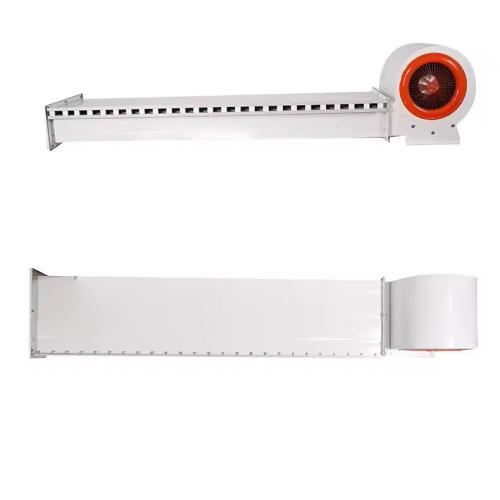
Q19: How does the cost of PVC curtains compare to Air Curtains (Air Doors)?
PVC Strip Curtains are significantly more cost-effective initially. The capital investment for PVC strips is typically 10% to 20% of the cost of a mechanical Air Curtain (blower fan system).
-
PVC Curtains: Low initial cost, zero electricity to run, high maintenance (cleaning/replacement), excellent seal when closed.
-
Air Curtains: High initial cost, consumes electricity continuously, low physical maintenance, but often less effective at stopping the "chimney effect" in freezers with high temperature differentials compared to a physical PVC barrier.
For most cold storage applications, PVC curtains offer the fastest Return on Investment (ROI).
Q20: What is the estimated Return on Investment (ROI) period?
Due to the high cost of refrigeration energy, the ROI for installing PVC strip curtains in a cold storage facility is exceptionally short. By reducing compressor run times and preventing energy loss, most facilities see the curtains pay for themselves within 3 to 6 months. After this period, the energy savings convert directly into profit. Additionally, the extended lifespan of the compressor (due to reduced load) adds long-term value not immediately calculated in the short-term ROI.