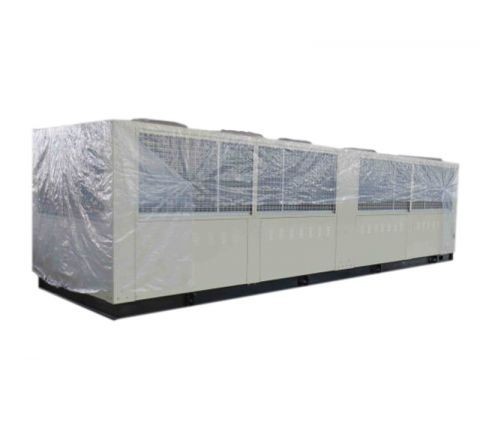
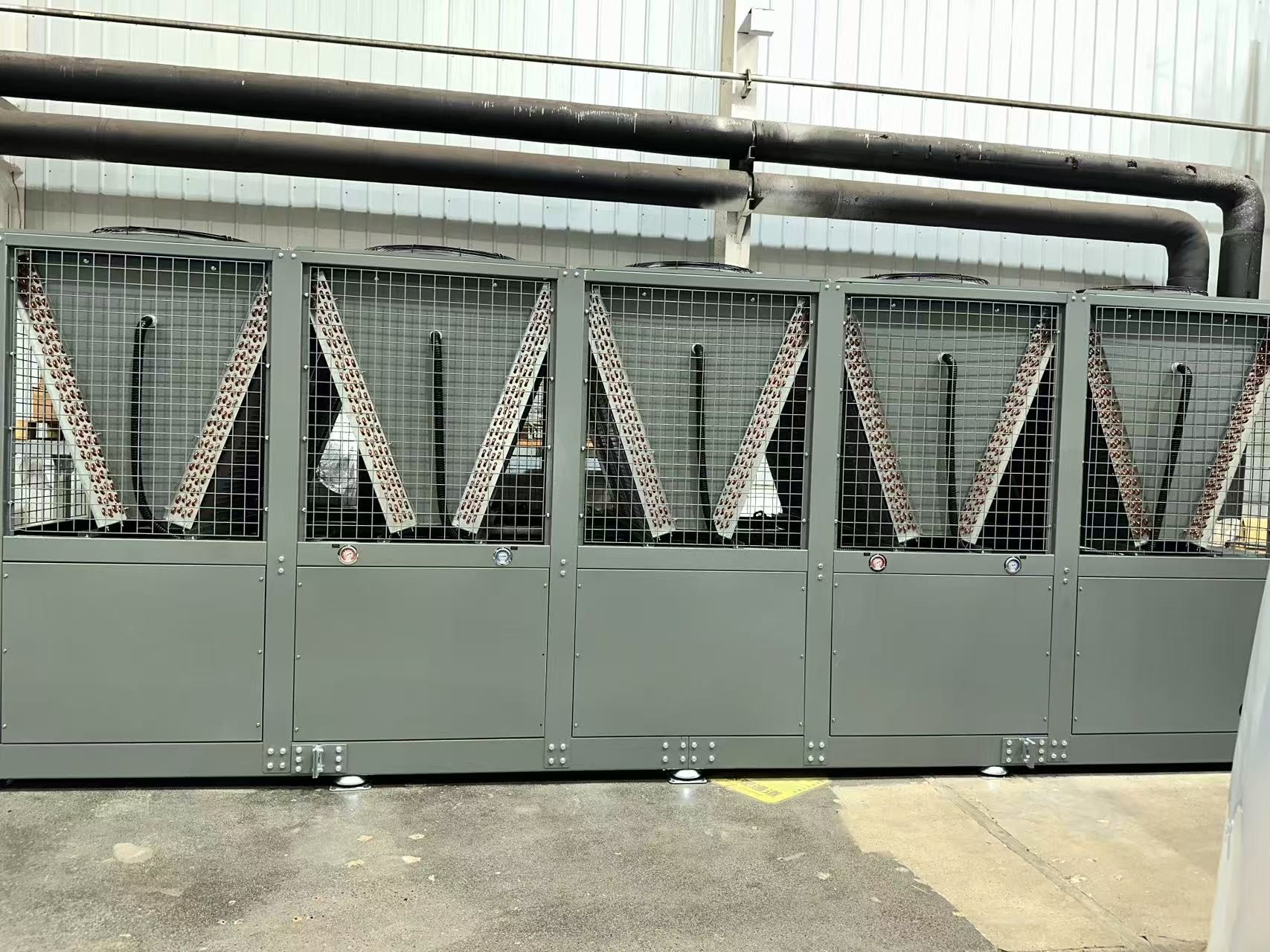
Food Industry Air-cooled Screw Chillers
Description of Food Industry Air-cooled Screw Chillers

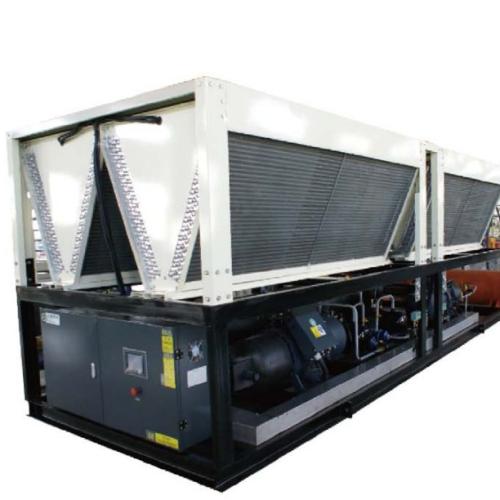
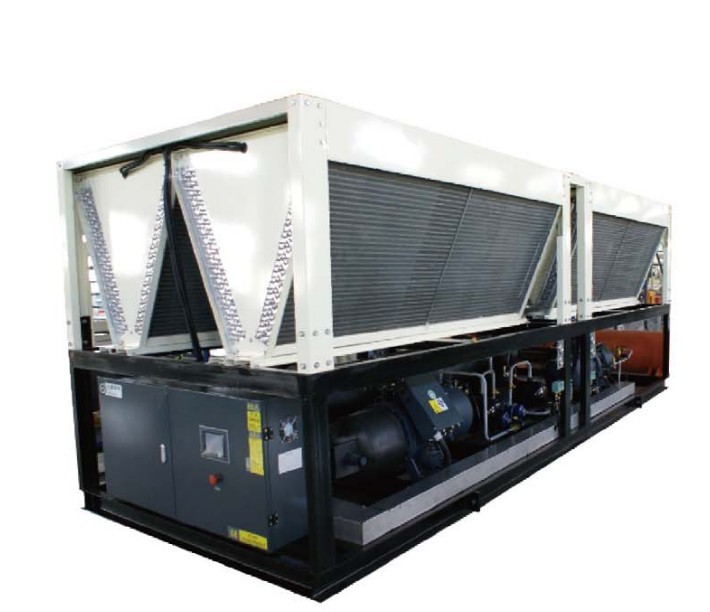
Food Industry Air-Cooled Screw Chillers are specially designed to meet the strict temperature control requirements of food production and processing environments. In the food industry, maintaining precise and stable cooling is essential to ensure product quality, safety, and production efficiency. These chillers combine advanced screw compressor technology with a high-performance air-cooled heat exchange system to deliver reliable and continuous cooling. With robust construction, energy-efficient performance, and intelligent control features, they provide a dependable cooling solution for modern food processing facilities.
Characteristics of Food Industry Air-cooled Screw Chillers

High-Efficiency Screw Compressor Technology
At the core of the chiller is a high-performance screw compressor designed for stable and continuous operation. Screw compressors are known for their smooth compression process, low vibration, and excellent durability, making them ideal for industrial environments that require long hours of operation. The compressor can handle varying load conditions efficiently while maintaining consistent cooling capacity. This ensures reliable temperature control for food production processes while optimizing energy consumption.

Efficient Air-Cooled Heat Exchange System
The chiller features an advanced air-cooled condenser with a large heat transfer surface and high-efficiency axial fans. This design allows for effective heat rejection without the need for cooling towers or complex water circulation systems. The optimized airflow structure ensures efficient heat dissipation and stable cooling performance even in environments with high ambient temperatures. The air-cooled configuration also simplifies installation and reduces water consumption and maintenance requirements.

Intelligent Control and Monitoring System
The Food Industry Air-Cooled Screw Chiller is equipped with a modern microprocessor-based control system that provides precise monitoring and management of system operation. The intelligent controller continuously monitors parameters such as chilled water temperature, pressure, and compressor performance. Operators can easily adjust system settings and monitor operational status through a user-friendly interface. Built-in alarm functions and safety protections help ensure stable and safe system operation.

Durable and Hygienic Design
Designed for demanding food production environments, the chiller is constructed with high-quality materials and corrosion-resistant components that ensure long-term reliability. The system is built to operate in humid and temperature-sensitive conditions commonly found in food processing plants. The simplified air-cooled design also reduces the risk of contamination associated with water-based cooling systems, helping facilities maintain hygienic production standards while minimizing maintenance requirements.
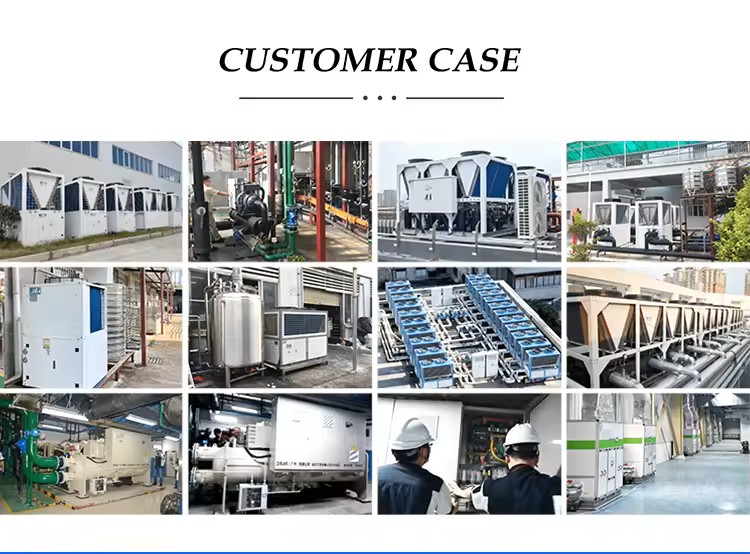
Food Industry Air-Cooled Screw Chillers are widely used in various food processing and production operations. Typical applications include dairy processing, beverage production, meat and seafood processing, fruit and vegetable processing, bakery and confectionery manufacturing, and cold storage facilities. They provide stable cooling for processing equipment, fermentation systems, packaging lines, and storage areas, ensuring product quality, safety, and efficient operation throughout the food production process.

| Model | CW(R)F510C | Condensing power(kw) | 2.2x10 |
|
Refrigeration capacity(kw) |
509.4 | Evaporator flow rate(m3/h) | 87.6 |
| Heating capacity(KW) | 526.7 |
Evaporator water(kpa) |
40-80 |
| Total power(KW) | 172.4 |
Evaporator connection pipe specifications |
2DN125 |
| Power supply | 3N/380V/50HZ |
Refrigerant |
R22 |
| Compressor model | Semi-hermetic twin-screw compressor |
Refrigerant charge(kg) |
220 |
| Compressor Starting Method | 25% (33%) load + star-delta voltage reduction starting |
Length(mm) |
6000 |
| Compressor input power(KW) | 150.4 |
Width(mm) |
2350(Includes lifting blocks, excludes lifting blocks 2200) |
| Compressor operating current(A) | 253.7 |
Height(mm) |
2580 |
| Condenser model |
Copper tube and aluminium fin heat exchanger |
Net weight(kg) | 5700 |
|
Condenser Fan Model |
Low-noise axial-flow fan | Operating weight(kg) | 5950 |
|
Condenser airflow(m3/h) |
240000 |
|
|
FAQ: Food Industry Air-cooled Screw Chillers (25 Questions, Over 1,200 Words)
1. What is an air-cooled screw chiller, and why is it widely used in the food industry?
2. What food processes are air-cooled screw chillers mainly used for?
3. What are the core advantages of air-cooled vs. water-cooled screw chillers in food factories?
- No cooling tower, piping, or water treatment: Lower initial investment and simpler maintenance.
- Hygiene & safety: No standing water, reducing Legionella and microbial risks.
- Flexible installation: Rooftop, outdoor, or open-space placement; suitable for water-scarce areas.
-
Easy cleaning: Stainless steel panels and anti-corrosion fins meet food-plant washdown requirements.
Limitations: Slightly lower efficiency in extreme heat; best for medium-to-large loads with stable ambient conditions.
4. What cooling capacity range is suitable for food industry air-cooled screw chillers?
5. What temperature range can food-grade air-cooled screw chillers provide?
- Normal cooling: 5–12°C chilled water (for pasteurization, packaging, workshop cooling).
- Low-temperature cooling: -5–5°C (using ethylene glycol solution) for meat/seafood rapid cooling.
- Ultra-low temperature: Down to -15°C (custom) for freezing tunnels and quick-freezing processes.
6. What refrigerants are suitable for food industry air-cooled screw chillers?
7. What hygiene and material requirements apply to food-industry chillers?
- Inner tank, water-side components: SUS304/316 stainless steel (easy to clean, corrosion-resistant).
- Cabinet: SUS304 or plastic-coated steel, smooth surface, no dead corners.
- Condenser fins: Hydrophilic anti-corrosion coating, resistant to workshop moisture and cleaning agents.
- Seals: Food-safe, oil-resistant, non-toxic materials to prevent coolant or lubricant leakage.
8. How to select the right chiller capacity for a food production line?
- Calculate total heat load: process heat, equipment heat, pipeline loss, and ambient heat gain.
- Reserve 10–15% margin for peak production, high-temperature seasons, or line expansion.
- Match with part-load efficiency (inverter screw units perform better in variable loads).
- Combine with process features (continuous vs. intermittent, normal vs. low-temperature).
9. Can air-cooled screw chillers run reliably outdoors in high-temperature environments?
10. How to prevent frost or freezing in winter outdoor operation?
- Use ethylene glycol aqueous solution (20–40% concentration) as coolant instead of pure water.
- Install anti-freeze protection, automatic water drainage, and insulation for pipelines.
- Set minimum startup temperature and intermittent operation to keep fluid warm.
- Drain water completely during long-term shutdown to avoid pipe cracking.