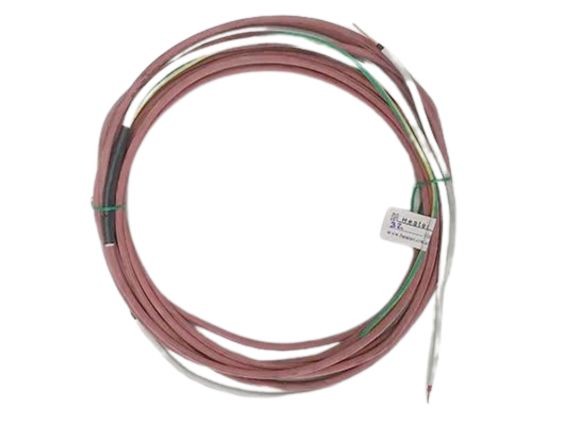
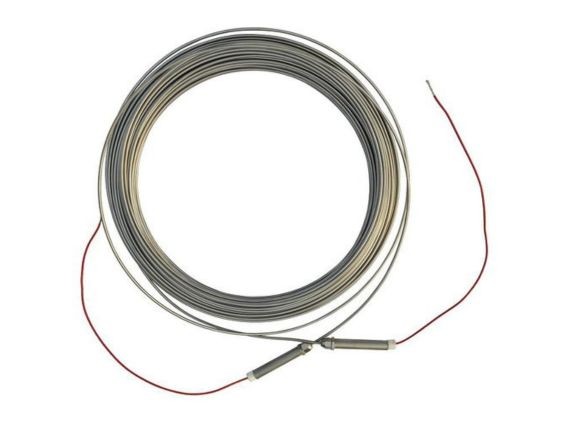
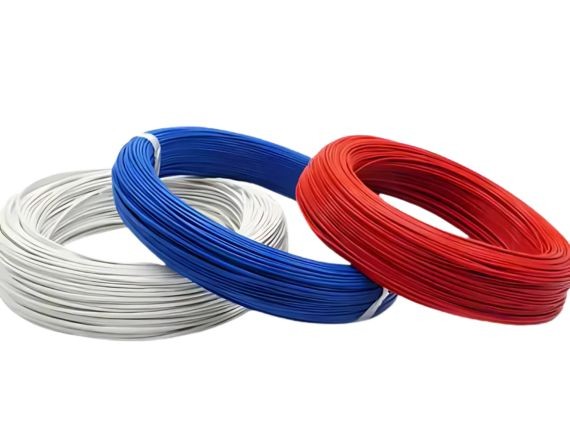
Self Regulating Heating Cable For Freezer Door
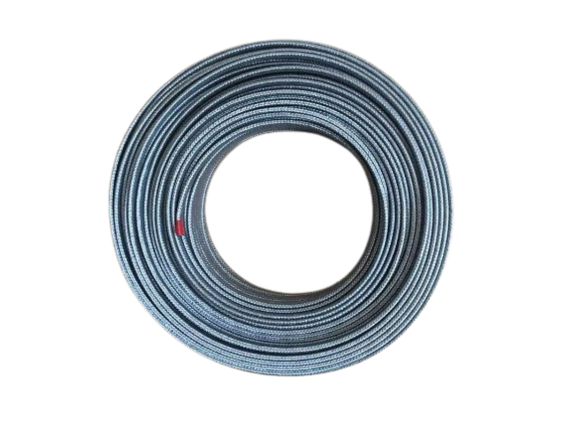
It uses PTC self-regulating technology to automatically adjust heat output based on surface temperature—providing more heat when cold and less when warm, for stable, energy-saving operation without overheating or burnout. Flexible, cuttable to length and safe to overlap, it installs easily on freezer door frames, thresholds and seals.
Built with moisture-resistant, cold-resistant and durable insulation, it withstands long-term use in commercial freezers, cold rooms, logistics warehouses and food processing facilities. It effectively prevents ice buildup, sticking doors and energy loss, keeping equipment running smoothly while lowering maintenance and power costs.
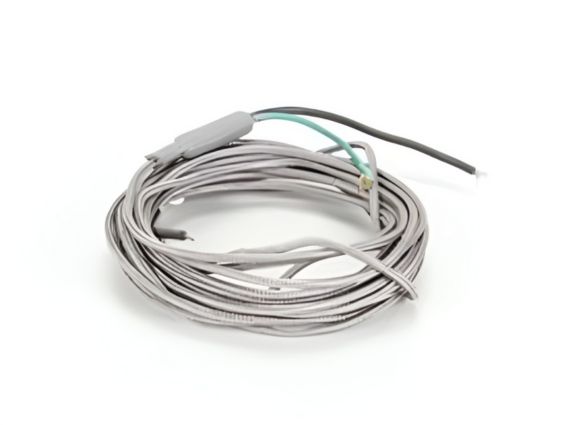
Intelligent Self Regulating Temperature Control
The core advantage of the self regulating heating cable is its automatic temperature adjustment function without additional control devices. The conductive polymer core material changes its resistance according to the surrounding temperature. When the ambient temperature drops, the resistance decreases and the heating power increases automatically. When the temperature rises, the resistance increases and the power reduces accordingly. This intelligent response ensures that the cable only provides necessary heat, avoiding overheating or insufficient heating. For freezer doors, this feature effectively prevents ice buildup on door frames, seals, and panels, eliminates frost blockage, and keeps the door opening and closing smoothly. It maintains a stable surface temperature within a safe range, protecting both the equipment and the surrounding structure from cold damage and moisture intrusion.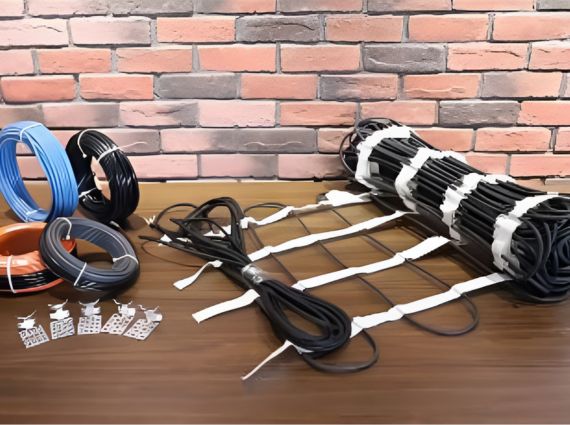
Excellent Low Temperature Resistance and Adaptability
This heating cable is specially manufactured to operate reliably in extreme low temperature environments typical of freezers. It can withstand long term working temperatures as low as minus 40 degrees Celsius and maintain stable heating output without performance degradation. The insulation layer and outer sheath are made of high quality cold resistant materials that do not become brittle, hard, or cracked in freezing conditions. The cable remains flexible even in heavy cold, allowing easy installation on curved or irregular freezer door surfaces. It adapts to various types of freezer doors including sliding doors, hinged doors, rapid rolling doors, and cold storage partition doors, providing comprehensive anti icing protection for different cold chain facilities such as food processing plants, logistics cold storages, pharmaceutical freezers, and supermarket refrigeration equipment.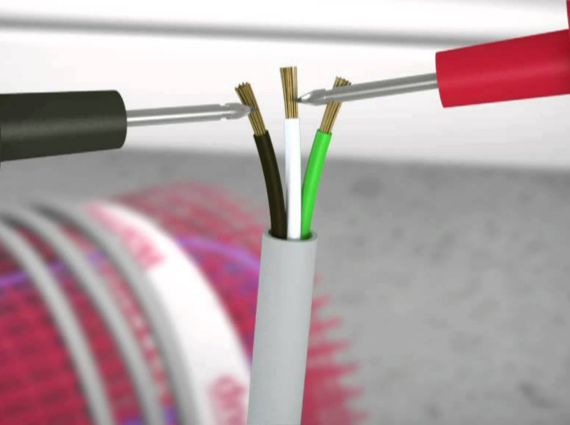
High Safety and Stable Performance
Safety is a key feature of the self regulating heating cable for freezer doors. The product uses flame retardant, waterproof, and corrosion resistant materials that meet international safety standards. The multi layer insulation structure effectively prevents electric leakage, short circuits, and insulation failure. The self regulating characteristic inherently avoids overheating, which reduces fire risks and ensures safe operation around the clock. The cable has strong resistance to moisture, chemical corrosion, and mechanical abrasion, making it suitable for humid and harsh freezer environments. It features stable performance, long service life, and minimal maintenance requirements. Once properly installed, it can operate continuously for many years without performance attenuation, providing reliable anti icing protection for freezer doors and reducing downtime caused by freezing faults.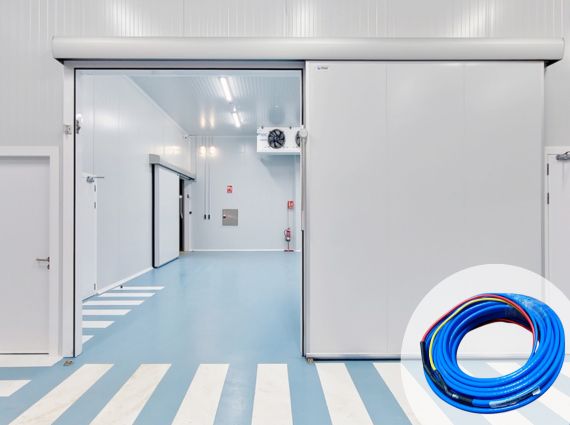
· PrFood processing workshops
· Cold stores and freezer rooms
· Cold chain logistics centres and distribution warehouses
· Pharmaceutical factories and cleanrooms
· Biological laboratories and sample repositories
· Flower preservation chambers
· Low-temperature storage for
|
Product Name |
Silicone Rubber Heating Wire / Defrost Cable |
|||
| Conductor Material |
|
|||
| Insulation Material |
Silicone Rubber (Optional: Fiberglass Braid for extra protection) |
|||
| Voltage |
12V / 24V / 110V / 220V / 230V (Customizable) |
|||
| Power Output | Standard: 20W/m, 30W/m, 40W/m, 50W/m (Max: ~60W/m) | |||
| Temperature Range | -60°C to +200°C (-76°F to +392°F) | |||
| Wire Diameter | 2.5mm, 3.0mm, 4.0mm, or Flat Type | |||
| Waterproof Rating |
|
|||
| Cold Lead Length |
Standard 1000mm (or customized) |
|||
| Color |
|
|||
| Certifications |
CE, UL, RoHS, VDE |
|||
| Applications |
Defrosting refrigerators, cold rooms, drain pipes, door frames |
FAQ
-
What is a cold storage heating wire?
It is a flexible electrical heating element, typically insulated with silicone rubber, used to prevent ice buildup in cold environments like freezer door frames, drain pipes, and evaporator coils. -
What is the temperature range of your heating wire?
Our silicone heating wires are designed to operate effectively between -60°C and +200°C (-76°F to +392°F). -
What is the difference between Silicone and PVC heating wires?
Silicone is far superior for cold storage. It remains flexible and does not crack at sub-zero temperatures, whereas PVC can become brittle and break in extreme cold. -
Can I cut the heating wire to any length?
No. Most standard resistance heating wires have a fixed resistance per meter. Cutting them shortens the circuit, increases the current, and will cause the wire to burn out instantly. (Note: Only parallel constant wattage or self-regulating cables can be cut). -
What is the standard power output (Wattage)?
Common power densities range from 20W/m to 50W/m. 40W/m is the industry standard for drain pipes and door frames. -
Do you offer different voltages?
Yes. We can customize the voltage to 12V, 24V, 110V, 220V, or 380V depending on your power supply requirements. -
What is the diameter of the wire?
Standard diameters are roughly 2.5mm to 4.0mm. We also offer flat (ribbon) profiles for specific door seals. -
Does the wire come with a "cold tail" (non-heating lead)?
Yes. To ensure safety, the connection point usually includes a non-heating lead wire (cold tail) of 1 meter (or custom length) for connecting to the power source. -
Is the heating wire waterproof?
Yes, our silicone heating wires are rated IP67, meaning they are fully waterproof and can be submerged in water (ideal for drain pipes). -
What material is used for the conductor?
We use high-quality Nickel-Chromium (NiCr) or Copper-Nickel alloy for stable resistance and long service life.
-
Where should I install this heating wire?
Common spots include:-
Inside the drain pipe of a cold room air cooler.
-
Around the door frame of a walk-in freezer.
-
On the drip tray of the evaporator.
-
Around compressor crankcases.
-
-
How do I attach the wire to a pipe?
We recommend using Aluminum Foil Tape. This secures the wire and helps spread the heat evenly across the pipe surface. -
Can I overlap the heating wire during installation?
Absolutely NOT. Overlapping the wire causes "hot spots" which will melt the insulation and cause failure or fire. The wire must always be spiraled or run straight without touching itself. -
Do I need a thermostat or temperature controller?
It is highly recommended. While some low-wattage wires can run continuously, using a thermostat saves energy and extends the life of the wire by turning it off when not needed. -
How do I install it inside a drain line?
Simply insert the wire into the pipe. The end of the wire must be sealed (waterproof cap). Ensure the heating part extends fully through the cold zone to the outside. -
Can this wire be used for floor heating in a cold room?
Standard door heater wire is too thin for floors. For floor frost heave protection, we recommend our heavier-duty armored heating cables or mating systems. -
Does the wire stay flexible in freezing conditions?
Yes, the silicone rubber insulation ensures the wire remains soft and pliable even at -50°C, making maintenance easy. -
What if the wire is too long for my pipe?
Do not cut it. You should spiral it slightly closer together (without overlapping) or let the excess hang outside the pipe in a safe area.
-
Is your heating wire safe for food storage environments?
Yes, silicone rubber is inert and odorless. It does not release harmful chemicals, making it safe for food cold chains. -
What certifications do your products have?
Our products are manufactured according to CE, UL, and RoHS standards. -
How do you prevent the connection joint from failing?
We use high-pressure molding to bond the heating wire and the cold lead. This creates a completely waterproof, integrated seal that resists moisture ingress. -
What happens if the wire gets damaged?
If the insulation is cut or the wire is broken, it must be replaced immediately to prevent short circuits or electric shocks. -
Is there a risk of fire?
Only if installed incorrectly (e.g., overlapping or wrong voltage). When installed correctly with a fuse and thermostat, they are extremely safe. -
How long is the lifespan of the wire?
Under normal usage conditions, high-quality silicone heating wires can last for 5 to 10 years. -
Can it withstand chemical cleaning agents?
Silicone is resistant to most mild cleaning agents, but harsh acids or solvents should be avoided.
-
What is the Minimum Order Quantity (MOQ)?
Our standard MOQ is usually 100 pieces per specification, but we accept smaller trial orders for testing. -
Can you print my brand logo on the wire?
Yes, we offer OEM services. We can print your logo, voltage, and wattage specifications directly on the insulation or the packaging label. -
What information do I need to provide for a quote?
Please provide:-
Voltage (e.g., 220V)
-
Total Power or Power per meter (e.g., 40W/m)
-
Total Length (heating length + cold tail length)
-
Application (Door or Drain?)
-
-
What is your standard lead time?
For standard orders, production takes 7-14 days. Custom orders may take slightly longer. -
How is the product packaged?
Usually in individual PE bags, then packed in master cartons. We can also provide custom retail boxes with barcodes. -
Can I get a free sample?
Yes, we provide free samples for stock items. You only need to cover the shipping cost. -
Do you ship internationally?
Yes, we export globally via sea (LCL/FCL), air cargo, or express couriers (DHL/FedEx/UPS). -
What payment terms do you accept?
We accept T/T (Bank Transfer), L/C, PayPal (for samples), and Western Union. -
Can you customize the plug?
Yes, we can attach standard plugs (EU, US, UK, AU) to the cold tail upon request.