

Core characteristics of Portable Mobile Chiller Trailer
Cold Storage Insulation Thickness Guide: Optimize Efficiency, Reduce Costs, and Protect Your Inventory
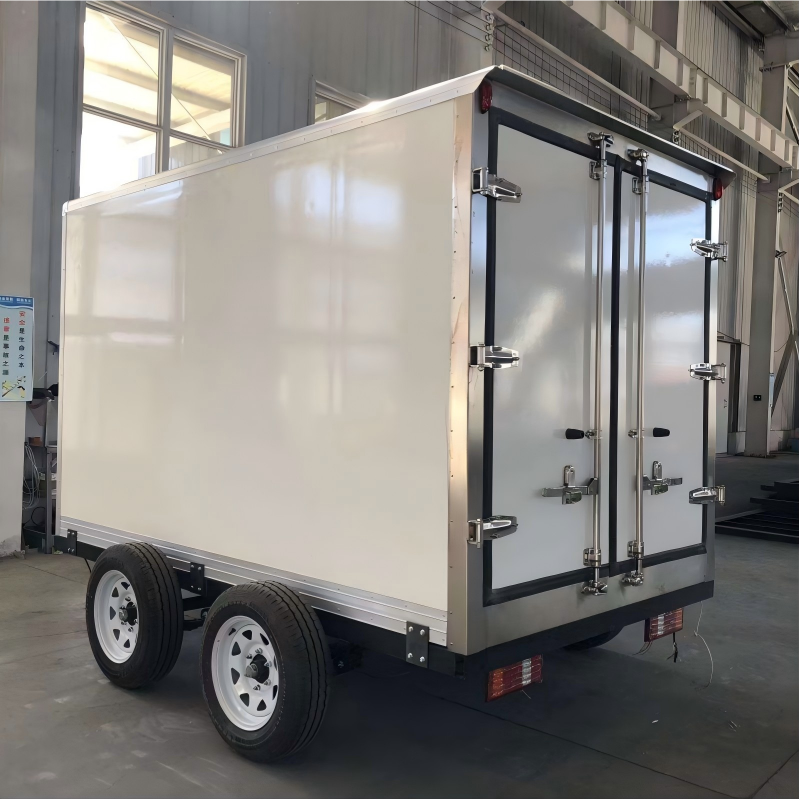
The insulated cargo compartment features thick, high-density polyurethane foam panels and airtight, gasket-sealed doors—minimizing thermal loss even in extreme ambient temperatures. Its self-contained refrigeration system (with dual power options: electric hook-up+diesel/gas backup generator for off-grid operation) delivers a wide, adjustable temperature range typically spanning from -20°C (-4°F) for deep freezing to +10°C (50°F) for chilled storage, with digital thermostats maintaining precision within ±1°C. Many advanced models offer multi-zone temperature controls, allowing simultaneous storage of different temperature-sensitive products (e.g., fresh produce, dairy, meat, pharmaceuticals, floral goods) in the same unit.
The Importance of Getting Cold Storage Insulation Thickness Right
Key Factors That Determine Cold Storage Insulation Thickness
1. Desired Internal Temperature
- Chilled Storage (0°C to 5°C): Used for fresh produce, dairy products, and beverages. This is the warmest cold storage category, so it requires the least insulation thickness.
- Refrigerated Storage (-10°C to -18°C): The most common type of cold storage, used for frozen food, meat, and poultry. This category requires moderate insulation thickness to handle the larger temperature difference between inside and outside.
- Deep Freeze (-20°C to -25°C): Used for long-term storage of frozen goods, such as frozen vegetables, ice cream, and pre-packaged meals. This requires thicker insulation to combat the extreme temperature difference.
- Ultra-Low Temperature (-30°C and Below): Used for specialized applications, such as storing pharmaceuticals, biological samples, or frozen medical supplies. This category requires the thickest insulation to maintain the extremely low internal temperature.
2. External Ambient Temperature
3. Insulation Material Type
- Polyurethane (PU): The most popular choice for cold storage insulation due to its low k-value (0.022-0.028 W/m·K), high density, and excellent moisture resistance. PU is available in rigid foam panels, which are easy to install and provide superior thermal performance. It is ideal for all temperature ranges, from chilled storage to ultra-low temperature facilities.
- Polyisocyanurate (PIR): Similar to PU but with a slightly higher k-value (0.024-0.030 W/m·K). PIR is more fire-resistant than PU and is often used in facilities where fire safety is a top priority, such as food processing plants or pharmaceutical warehouses.
- Expanded Polystyrene (EPS): A more affordable option with a higher k-value (0.038-0.042 W/m·K) than PU or PIR. EPS is lightweight and easy to handle but has lower moisture resistance, making it better suited for chilled storage rather than deep freeze or ultra-low temperature facilities.
- Mineral Wool (Rock Wool/Glass Wool): Known for its excellent fire resistance and sound absorption, with a k-value of 0.034-0.040 W/m·K. Mineral wool is heavier than foam-based insulations and requires thicker layers to achieve the same thermal performance, but it is ideal for facilities with strict fire safety requirements.
4. Facility Size and Design
5. Energy Efficiency Goals and Budget
Cold Storage Insulation Thickness Reference Table
|
Cold Storage Type
|
Internal Temperature Range
|
Insulation Material
|
Recommended Thickness (mm)
|
External Climate Consideration
|
Key Notes
|
|---|---|---|---|---|---|
|
Chilled Storage
|
0°C to 5°C
|
PU
|
80-100
|
Hot/Humid: 100mm; Cold/Temperate: 80mm
|
Ideal for fresh produce, dairy, and beverages. Moisture barrier recommended in humid climates.
|
|
Chilled Storage
|
0°C to 5°C
|
EPS
|
100-120
|
Hot/Humid: 120mm; Cold/Temperate: 100mm
|
More affordable option; ensure proper moisture sealing to prevent degradation.
|
|
Refrigerated Storage
|
-10°C to -18°C
|
PU
|
100-150
|
Hot/Humid: 150mm; Cold/Temperate: 100-120mm
|
Most common type; used for frozen food, meat, and poultry. Balances performance and cost.
|
|
Refrigerated Storage
|
-10°C to -18°C
|
PIR
|
120-160
|
Hot/Humid: 160mm; Cold/Temperate: 120-140mm
|
Fire-resistant alternative to PU; ideal for food processing facilities.
|
|
Deep Freeze
|
-20°C to -25°C
|
PU
|
150-200
|
Hot/Humid: 200mm; Cold/Temperate: 150-180mm
|
Requires thick insulation to handle extreme temperature difference. Double moisture barrier recommended.
|
|
Deep Freeze
|
-20°C to -25°C
|
Mineral Wool
|
200-250
|
Hot/Humid: 250mm; Cold/Temperate: 200-220mm
|
Fire-safe option; thicker layers needed for equivalent performance to PU.
|
|
Ultra-Low Temperature
|
-30°C and Below
|
PU (High-Density)
|
200-300
|
All Climates: 250-300mm
|
Used for pharmaceuticals and biological samples. Double insulation layers may be required.
|
|
Ultra-Low Temperature
|
-30°C and Below
|
PIR (High-Density)
|
220-320
|
All Climates: 280-320mm
|
Fire-resistant ultra-low temperature option; higher density for improved thermal performance.
|
Additional Data: Energy Savings by Insulation Thickness
|
Insulation Thickness (mm)
|
Annual Energy Consumption (kWh)
|
Annual Energy Cost ($)
|
Energy Savings vs. 80mm Thickness
|
Estimated Payback Period (Years)
|
|---|---|---|---|---|
|
80
|
145,000
|
21,750
|
0%
|
N/A
|
|
100
|
116,000
|
17,400
|
20%
|
3.2
|
|
120
|
96,700
|
14,505
|
33%
|
4.1
|
|
150
|
77,300
|
11,595
|
47%
|
5.3
|
|
200
|
58,000
|
8,700
|
60%
|
6.8
|
Frequently Asked Questions (FAQ) About Cold Storage Insulation Thickness
Q1: Is thicker insulation always better for cold storage?
Q2: Can I use the same insulation thickness for walls, ceiling, and floor?
Q3: How does moisture affect insulation thickness requirements?
Q4: Do local building codes affect insulation thickness?
Q5: Can I retroactively increase insulation thickness in an existing cold storage facility?
Q6: What is the difference between k-value and R-value, and how do they affect insulation thickness?
Conclusion: Choosing the Right Cold Storage Insulation Thickness
- The lower the desired internal temperature, the thicker the insulation needed to maintain temperature control.
- Hot, humid climates require thicker insulation than cold, temperate climates to block heat and prevent moisture ingress.
- High-performance materials (like PU and PIR) allow for thinner insulation layers while maintaining superior thermal performance.
- Floor insulation should be thicker than wall or ceiling insulation to prevent heat transfer from the ground.
- Thicker insulation has a higher upfront cost but delivers significant long-term energy savings and extends the lifespan of your refrigeration equipment.
- Always check local building codes and industry standards to ensure compliance.
Contact Information:
Email: info@aircoolingtech.com
Website: https://www.aircoolingtech.com/
Post time:Sep-25-2020
