

Introduction
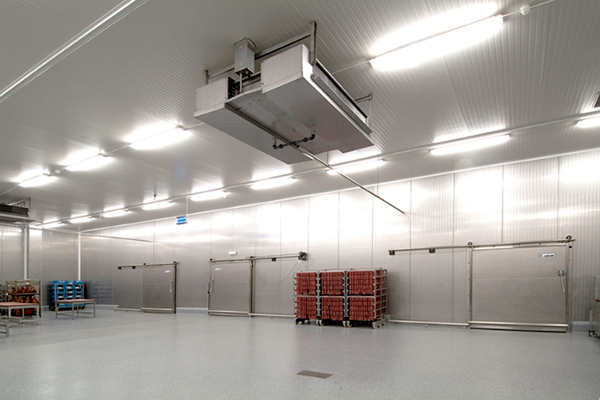
In today’s fast-paced global supply chain, temperature-controlled storage plays a crucial role in preserving product quality, safety, and shelf life. Whether you operate in the food industry, pharmaceuticals, logistics, or hospitality, choosing the right cold storage solution can significantly impact your operational efficiency and profitability.
Two of the most common solutions available are modular cold rooms and traditional cold storage facilities. While both serve the same fundamental purpose—maintaining controlled temperature environments—they differ greatly in design, installation, scalability, cost, and performance.
This comprehensive guide explores the differences between modular cold rooms and traditional cold storage systems, providing detailed insights, data comparisons, and practical recommendations to help you make an informed decision.
What is a Modular Cold Room?
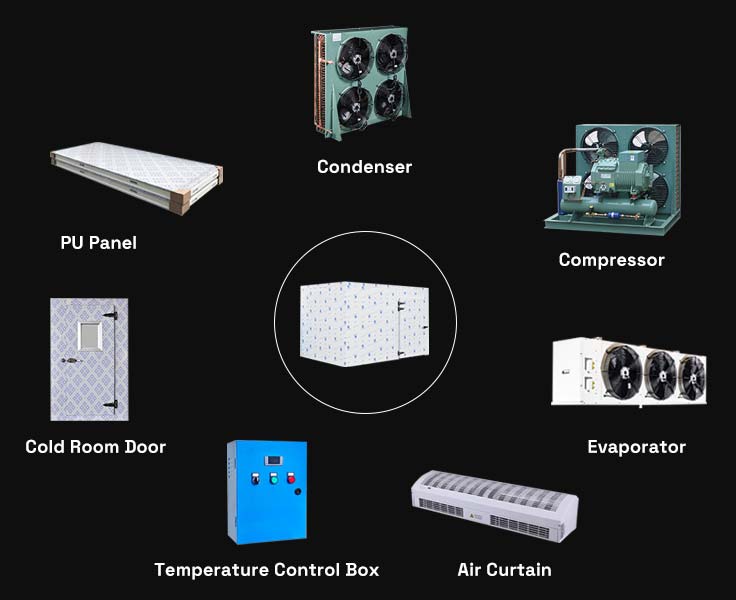
A modular cold room is a prefabricated refrigeration system composed of insulated panels that can be assembled on-site. These panels are designed to fit together seamlessly, forming a controlled temperature environment that can be customized to specific requirements.
Key Features:
-
Prefabricated insulated panels
-
Quick and easy installation
-
Flexible sizing and configuration
-
Scalable and relocatable
-
Energy-efficient design
Modular cold rooms are widely used in restaurants, supermarkets, warehouses, pharmaceutical facilities, and laboratories due to their versatility and cost-effectiveness.
What is Traditional Cold Storage?
Traditional cold storage refers to large, permanent refrigeration facilities constructed using conventional building methods. These systems are typically built on-site using concrete, brick, or steel structures and integrated refrigeration systems.
Key Features:
-
Permanent construction
-
Large-scale capacity
-
Custom-built infrastructure
-
High initial investment
-
Long construction timeline
Traditional cold storage facilities are commonly used in large industrial operations such as food processing plants, distribution centers, and cold chain logistics hubs.
Key Differences Overview
Before diving deeper, let’s look at a quick comparison between the two systems.
| Feature | Modular Cold Room | Traditional Cold Storage |
|---|---|---|
| Installation Time | Days to weeks | Months to years |
| Initial Cost | Low to medium | High |
| Scalability | High | Limited |
| Mobility | Relocatable | Fixed |
| Maintenance | Easier | Complex |
| Energy Efficiency | High | Moderate |
| Customization | Flexible | Highly customized but rigid |
| Construction Method | Prefabricated panels | On-site construction |
| Space Requirement | Compact | Large footprint |
| ROI Timeline | Faster | Slower |
Detailed Comparison
1. Installation and Setup
One of the most significant advantages of modular cold rooms is the speed of installation. Since the components are prefabricated, they can be quickly assembled on-site with minimal disruption.
Traditional cold storage, on the other hand, requires extensive planning, civil construction, and integration of refrigeration systems, which can take several months or even years.
Verdict: Modular cold rooms are ideal for businesses needing rapid deployment.
2. Cost Analysis
Modular Cold Room:
-
Lower upfront investment
-
Reduced labor costs
-
Minimal construction expenses
Traditional Cold Storage:
-
High capital expenditure
-
Significant construction costs
-
Long-term financial commitment
While traditional systems may offer economies of scale in large operations, modular solutions provide better cost efficiency for small to medium businesses.
3. Flexibility and Scalability
Modular cold rooms excel in adaptability. Businesses can expand, reduce, or relocate units as needed.
Traditional cold storage facilities are fixed structures, making expansion costly and time-consuming.
Example: A growing food distribution company can easily add additional modular units without disrupting operations.
4. Energy Efficiency
Modern modular cold rooms are designed with advanced insulation materials and energy-efficient refrigeration systems, resulting in lower operational costs.
Traditional cold storage facilities may suffer from energy loss due to older insulation methods and larger spaces.
Energy Comparison Table:
| Parameter | Modular Cold Room | Traditional Cold Storage |
| Insulation Efficiency | High (PU/PIR panels) | Medium |
| Energy Consumption | Low | Higher |
| Temperature Stability | Excellent | Good |
| Operating Cost | Lower | Higher |
5. Maintenance and Repairs
Modular systems are easier to maintain due to standardized components. Repairs can be performed quickly without affecting the entire system.
Traditional systems often require specialized technicians and may involve downtime during maintenance.
6. Customization
While traditional cold storage allows for extensive customization during construction, changes after completion are difficult.
Modular cold rooms offer flexible configurations even after installation, making them more adaptable to changing needs.
7. Space Utilization
Modular cold rooms are compact and can be installed in limited spaces, making them ideal for urban environments.
Traditional facilities require large land areas and are better suited for industrial zones.
8. Mobility and Relocation
A major advantage of modular cold rooms is their ability to be dismantled and relocated.
Traditional cold storage facilities are permanent and cannot be moved.
9. Compliance and Standards
Both systems can meet industry standards such as HACCP, GMP, and ISO requirements. However, modular systems often come with pre-certified components, simplifying compliance.
10. Return on Investment (ROI)
Modular cold rooms typically offer a faster ROI due to lower initial costs and quicker deployment.
Traditional systems may take longer to recover investment but can be more cost-effective for very large-scale operations.
Use Case Scenarios
When to Choose Modular Cold Rooms:
-
Small to medium businesses
-
Restaurants and supermarkets
-
Pharmaceutical storage
-
Temporary or seasonal storage needs
-
Rapid business expansion
When to Choose Traditional Cold Storage:
-
Large industrial operations
-
Long-term infrastructure projects
-
High-volume distribution centers
-
Centralized cold chain hubs
Advantages and Disadvantages Summary
Modular Cold Room
Advantages:
-
Quick installation
-
Lower cost
-
Flexible and scalable
-
Energy-efficient
-
Relocatable
Disadvantages:
-
Limited capacity compared to large facilities
-
May require multiple units for large operations
Traditional Cold Storage
Advantages:
-
Large capacity
-
Long-term durability
-
Suitable for industrial-scale operations
Disadvantages:
-
High cost
-
Long construction time
-
Limited flexibility
Future Trends in Cold Storage
The cold storage industry is evolving rapidly with advancements in technology. Key trends include:
-
IoT-enabled monitoring systems
-
Smart temperature control
-
Green refrigeration technologies
-
Solar-powered cold rooms
-
Automation and robotics in storage facilities
Modular cold rooms are leading the way in adopting these innovations due to their adaptable design.
Conclusion
Choosing between modular cold rooms and traditional cold storage depends on your specific business needs, budget, and long-term goals.
If you prioritize flexibility, cost-efficiency, and quick deployment, modular cold rooms are the ideal choice. However, for large-scale industrial operations requiring massive storage capacity, traditional cold storage may be more suitable.
Ultimately, understanding the strengths and limitations of each system will help you make a strategic investment that enhances your operational efficiency and ensures product quality.
FAQs
1. What is the main difference between modular and traditional cold storage?
Modular cold rooms are prefabricated and flexible, while traditional cold storage is permanently constructed and large-scale.
2. Which is more cost-effective?
Modular cold rooms are generally more cost-effective for small to medium applications.
3. Can modular cold rooms be expanded?
Yes, they can be easily expanded or reconfigured.
4. Are modular cold rooms energy-efficient?
Yes, they typically use advanced insulation and efficient refrigeration systems.
5. How long does installation take?
Modular systems can be installed in days or weeks, compared to months for traditional systems.
6. Can modular cold rooms be relocated?
Yes, they can be dismantled and moved to a new location.
7. Which industries use modular cold rooms?
Food, pharmaceuticals, hospitality, and logistics industries commonly use them.
8. Are traditional cold storage facilities outdated?
No, they are still essential for large-scale industrial operations.
9. What maintenance is required?
Both require regular maintenance, but modular systems are easier to service.
10. Which option has a faster ROI?
Modular cold rooms typically offer a faster return on investment.
Bonus: Expanded Technical Comparison Table
| Technical Parameter | Modular Cold Room | Traditional Cold Storage |
| Panel Thickness | 50–200 mm | Varies (construction-based) |
| Insulation Material | PU/PIR | Foam/Concrete |
| Temperature Range | -40°C to +15°C | -30°C to +15°C |
| Cooling System | Split/Monoblock | Centralized system |
| Installation Time | 3–14 days | 3–12 months |
| Lifespan | 10–20 years | 20–30 years |
| Expansion Capability | Easy | Difficult |
| Relocation | Possible | Not possible |
Post time:Sep-25-2020
