

What Is a Condensing Unit in Refrigeration? A Complete Guide for 2026
If you’ve ever walked past a grocery store’s back alley, noticed a humming unit outside a restaurant, or wondered how your home refrigerator keeps food fresh, you’ve encountered a condensing unit—one of the most critical components of any refrigeration system. Yet, despite its ubiquity, many people (even those in industries that rely on refrigeration) don’t fully understand what a condensing unit is, how it works, or why it’s so essential to modern life.
In this comprehensive blog, we’ll demystify the condensing unit, breaking down its definition, components, working principles, types, applications, and maintenance needs. Whether you’re a business owner looking to optimize your refrigeration system, a HVAC technician seeking to deepen your expertise, or simply a curious reader wanting to learn more about the technology that keeps our food cold and our spaces comfortable, this guide has you covered. We’ll also include real-world data, frequently asked questions, and key takeaways to ensure you leave with a thorough understanding of this unsung hero of refrigeration.
An Introduction to the Condensing Unit: Why It Matters
Before diving into the technical details, let’s start with the basics: the condensing unit is the “workhorse” of the refrigeration cycle. It is the external, high-pressure component that is responsible for removing heat from the refrigerant, converting it from a high-temperature vapor back into a liquid, and preparing it to circulate back into the system to absorb more heat. Without a functioning condensing unit, refrigeration as we know it—from residential fridges to industrial cold storage—would be impossible.
Think of the refrigeration cycle as a continuous loop of heat transfer: the evaporator (inside the fridge or cold room) absorbs heat from the space, turning liquid refrigerant into a low-pressure vapor. The condensing unit then takes that vapor, compresses it to increase its temperature and pressure, and releases the absorbed heat to the outside environment, turning the vapor back into a liquid. This liquid is then sent back to the evaporator to repeat the process, creating a constant cycle of cooling.
The importance of the condensing unit cannot be overstated. It directly impacts the efficiency, reliability, and lifespan of the entire refrigeration system. A well-designed and maintained condensing unit will reduce energy consumption, lower operating costs, and prevent costly breakdowns—critical for businesses that rely on refrigeration to preserve perishables, such as grocery stores, restaurants, pharmacies, and cold storage facilities. For residential users, it ensures your refrigerator and air conditioner run smoothly, keeping your food fresh and your home cool without wasting energy.
In recent years, as sustainability and energy efficiency have become top priorities, condensing units have evolved significantly. Manufacturers are incorporating advanced technologies like inverter compressors, eco-friendly refrigerants, and smart controls to make them more efficient and environmentally friendly. This evolution has made understanding the condensing unit even more important for anyone looking to make informed decisions about their refrigeration systems.
A Detailed Explanation: What a Condensing Unit Is and How It Works
To fully grasp the role of a condensing unit, we need to break down its components, its place in the refrigeration cycle, and the key processes that take place within it. Let’s start with a formal definition, then dive into the details.
Definition of a Condensing Unit
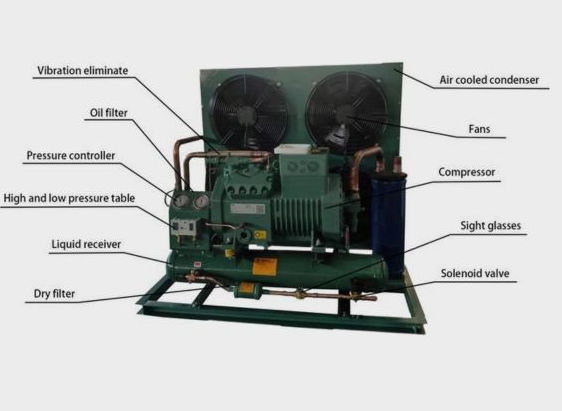
A condensing unit is a self-contained assembly (or a collection of interconnected components) in a refrigeration or air conditioning system that is responsible for compressing refrigerant vapor and condensing it into a liquid. It typically includes a compressor, a condenser coil, a condenser fan, a liquid receiver (in larger systems), a filter drier, and control components. Most condensing units are installed outdoors (or in well-ventilated areas) to facilitate heat release, though some specialized units are designed for indoor installation.
Key Components of a Condensing Unit
Every condensing unit is made up of several core components that work together to complete the heat rejection process. Understanding each component’s role is essential to understanding how the unit functions as a whole:
1. Compressor: The “Heart” of the Condensing Unit
The compressor is often referred to as the heart of the refrigeration system—and for good reason. It is the component that drives the entire refrigeration cycle by compressing low-pressure, low-temperature refrigerant vapor (from the evaporator) into high-pressure, high-temperature vapor. This compression process increases the refrigerant’s energy, making it capable of releasing heat to the outside environment.
There are several types of compressors used in condensing units, each suited to different applications:
- Reciprocating Compressors: These use a piston and cylinder to compress refrigerant, similar to a car engine. They are common in small to medium-sized systems (e.g., residential refrigerators, small commercial coolers) due to their affordability and reliability.
- Scroll Compressors: These use two spiral-shaped scrolls (one fixed, one orbiting) to compress refrigerant. They are more efficient than reciprocating compressors, operate more quietly, and are ideal for medium to large commercial systems (e.g., restaurant walk-in coolers, HVAC systems).
- Screw Compressors: These use two rotating screws to compress refrigerant. They are designed for large industrial systems (e.g., cold storage warehouses, industrial process cooling) due to their high capacity and efficiency at full load.
- Inverter Compressors: A newer technology, inverter compressors adjust their speed based on the cooling demand, rather than running at a constant speed. This makes them significantly more energy-efficient, as they use less power when cooling demand is low. They are increasingly common in modern condensing units, especially in regions with strict energy efficiency standards.
2. Condenser Coil: The Heat Exchanger
The condenser coil is a heat exchanger that transfers heat from the high-pressure, high-temperature refrigerant vapor to the surrounding air (or water, in water-cooled units). It is typically made of copper or aluminum, which are excellent conductors of heat. The coil is designed with a large surface area to maximize heat transfer—often with fins to increase the area available for heat exchange.
As the compressed refrigerant vapor flows through the condenser coil, it releases heat to the outside environment. This heat loss causes the refrigerant to cool down and condense into a high-pressure liquid. The design of the condenser coil (e.g., tube diameter, fin spacing) directly impacts the unit’s efficiency—poorly designed coils can lead to reduced heat transfer, increased energy consumption, and system breakdowns.
3. Condenser Fan: Enhancing Heat Transfer
The condenser fan is a critical component that improves the efficiency of the condenser coil by forcing air (or water, in water-cooled units) over the coil’s surface. This increases the rate of heat transfer, allowing the refrigerant to condense more quickly and efficiently.
In air-cooled condensing units (the most common type), the fan pulls ambient air through the condenser coil, absorbing heat from the refrigerant and expelling it to the outside. The fan speed is often adjustable, allowing the unit to adapt to changing ambient temperatures and cooling demands. In water-cooled units, the fan is replaced by a water pump that circulates cool water through the coil, absorbing heat and then releasing it through a cooling tower.
4. Liquid Receiver (Optional but Common in Commercial Systems)
The liquid receiver is a storage tank that holds the condensed liquid refrigerant before it is sent to the evaporator. It acts as a buffer, ensuring a steady supply of liquid refrigerant to the evaporator, even when cooling demand fluctuates. This is especially important in large commercial and industrial systems, where cooling demand can vary significantly throughout the day.
The liquid receiver also helps to separate any remaining vapor from the liquid refrigerant, ensuring that only liquid refrigerant flows to the evaporator. This prevents “liquid slugging”—a condition where liquid refrigerant enters the compressor, causing damage to the compressor’s internal components.
5. Filter Drier and Sight Glass
The filter drier is a small component that removes moisture, dirt, and other contaminants from the liquid refrigerant. Moisture in the system can cause corrosion, ice formation, and reduced efficiency, while dirt and debris can clog the expansion valve (a critical component in the evaporator). The filter drier ensures that the refrigerant remains clean and dry, protecting the entire system.
The sight glass is a small window installed in the liquid line, allowing technicians to visually inspect the flow of refrigerant. It helps to identify issues such as low refrigerant levels, moisture in the system, or blockages. Some sight glasses also include a moisture indicator that changes color when moisture is present, making it easy to detect potential problems.
6. Control Components
Modern condensing units are equipped with a range of control components to monitor and regulate their operation. These include thermostats (to monitor temperature), pressure switches (to protect the compressor from high or low pressure), and contactors (to control the fan and compressor). Some advanced units also include smart controls that allow for remote monitoring and adjustment, making it easier to track performance and identify issues before they become major problems.
How a Condensing Unit Works in the Refrigeration Cycle
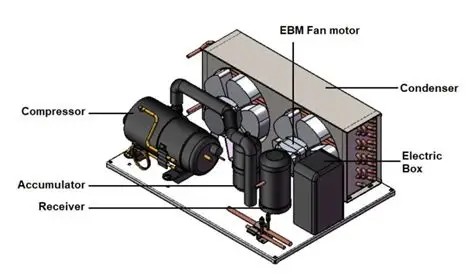
Now that we’ve covered the key components, let’s walk through the entire process of how a condensing unit functions within the refrigeration cycle. The cycle consists of four main stages: evaporation, compression, condensation, and expansion. The condensing unit is responsible for the compression and condensation stages, which are critical to the cycle’s success:
Stage 1: Evaporation (Pre-Condensing Unit)
The cycle begins in the evaporator, which is located inside the refrigerated space (e.g., inside a fridge, cold room, or air conditioner). Liquid refrigerant flows into the evaporator, where it absorbs heat from the surrounding air (or products in the space). This heat absorption causes the liquid refrigerant to evaporate, turning into a low-pressure, low-temperature vapor.
Stage 2: Compression (Condensing Unit)
The low-pressure vapor is sucked into the compressor (part of the condensing unit). The compressor compresses the vapor, increasing its pressure and temperature. This compression process is essential because it raises the refrigerant’s temperature above the ambient temperature, allowing it to release heat to the outside environment. For example, if the ambient temperature is 80°F (27°C), the compressor will heat the refrigerant vapor to 120°F (49°C) or higher, so that heat can flow from the refrigerant to the air.
Stage 3: Condensation (Condensing Unit)
The high-pressure, high-temperature vapor flows from the compressor into the condenser coil. As the vapor passes through the coil, the condenser fan blows ambient air over the coil’s surface. The air absorbs the heat from the refrigerant, causing the vapor to cool down and condense into a high-pressure liquid. The heat absorbed by the air is expelled to the outside environment (e.g., outside a building, in a back alley, or through a cooling tower in water-cooled systems).
In some systems, the condensed liquid refrigerant flows into the liquid receiver, where it is stored until it is needed. The filter drier then removes any moisture or contaminants from the liquid refrigerant before it moves to the next stage.
Stage 4: Expansion (Post-Condensing Unit)
The high-pressure liquid refrigerant leaves the condensing unit and flows through an expansion valve (also called a throttle valve). The expansion valve reduces the pressure of the refrigerant, causing it to cool rapidly and turn into a low-pressure, low-temperature mixture of liquid and vapor. This mixture then flows into the evaporator, where the cycle repeats.
Types of Condensing Units
Condensing units come in several types, each designed for specific applications, environments, and cooling demands. The most common types are categorized based on their cooling method (air-cooled vs. water-cooled) and their application (residential vs. commercial vs. industrial). Let’s explore each type in detail:
1. Air-Cooled Condensing Units
Air-cooled condensing units are the most common type, used in residential, commercial, and light industrial applications. They use ambient air to cool the condenser coil, making them simple to install and maintain. They are typically installed outdoors, where there is plenty of fresh air to facilitate heat transfer.
Advantages:
- Low installation cost (no need for a cooling tower or water supply)
- Easy maintenance (no water treatment or pipe cleaning required)
- Suitable for most climates (works in temperatures ranging from -20°F to 120°F)
Disadvantages:
- Less efficient than water-cooled units in hot, humid climates (ambient air is less effective at absorbing heat)
- Can be noisy (due to the condenser fan)
Common Applications: Residential refrigerators, window air conditioners, small commercial coolers, convenience stores, and restaurants.
2. Water-Cooled Condensing Units
Water-cooled condensing units use water to cool the condenser coil, rather than ambient air. They are typically used in large commercial and industrial applications, where high cooling capacity and efficiency are required. Water-cooled units require a cooling tower to circulate water: the water absorbs heat from the condenser coil, then flows to the cooling tower, where the heat is released to the atmosphere.
Advantages:
- Higher efficiency than air-cooled units (water is a better heat conductor than air)
- Quieter operation (no condenser fan)
- Suitable for hot, humid climates (water cooling is not affected by ambient air temperature)
Disadvantages:
- Higher installation cost (requires a cooling tower, water pipes, and water treatment system)
- Higher maintenance cost (water treatment is needed to prevent scale, corrosion, and algae growth)
- Requires a constant water supply
Common Applications: Industrial cold storage, large commercial refrigeration systems, data centers, and industrial process cooling. Some modern water-cooled units also feature inverter technology for enhanced efficiency, making them suitable for rooftop installations in commercial buildings.
3. Residential vs. Commercial vs. Industrial Condensing Units
In addition to cooling method, condensing units are also categorized by their application:
- Residential Condensing Units: Small, compact units designed for home use (e.g., refrigerators, air conditioners). They typically have a cooling capacity of 1–5 tons and use reciprocating or scroll compressors. They are designed for low energy consumption and quiet operation.
- Commercial Condensing Units: Medium-sized units designed for commercial applications (e.g., restaurants, grocery stores, pharmacies). They have a cooling capacity of 5–50 tons and use scroll or screw compressors. They are more durable than residential units and can handle higher cooling demands.
- Industrial Condensing Units: Large, heavy-duty units designed for industrial applications (e.g., cold storage warehouses, chemical plants, food processing facilities). They have a cooling capacity of 50+ tons and use screw or centrifugal compressors. They are designed for 24/7 operation and can handle extreme temperatures and high humidity.
Key Data and Comparison Table: Condensing Unit Types and Specifications
To help you better understand the differences between various types of condensing units, we’ve compiled a comprehensive table comparing their specifications, efficiency, and applications. This data is based on industry standards and recent manufacturer data (2025–2026) to ensure relevance.
|
Condensing Unit Type
|
Cooling Method
|
Cooling Capacity Range
|
Compressor Type
|
SEER2 Efficiency (Average)
|
Installation Cost (Relative)
|
Maintenance Cost (Relative)
|
Common Applications
|
|---|---|---|---|---|---|---|---|
|
Residential Air-Cooled
|
Ambient Air
|
1–5 Tons
|
Reciprocating/Scroll
|
13.4–15.0 SEER2
|
Low
|
Low
|
Home refrigerators, window ACs, small heat pumps
|
|
Commercial Air-Cooled
|
Ambient Air
|
5–50 Tons
|
Scroll/Screw
|
11.7–13.4 SEER2
|
Medium
|
Medium
|
Restaurants, convenience stores, small cold rooms
|
|
Industrial Air-Cooled
|
Ambient Air
|
50+ Tons
|
Screw/Centrifugal
|
9.5–12.5 SEER2
|
High
|
Medium
|
Large cold storage, industrial process cooling
|
|
Commercial Water-Cooled
|
Water + Cooling Tower
|
10–100 Tons
|
Scroll/Screw
|
12.0–14.0 SEER2
|
High
|
High
|
Grocery stores, data centers, large restaurants
|
|
Industrial Water-Cooled
|
Water + Cooling Tower
|
100+ Tons
|
Screw/Centrifugal
|
12.3–13.9 SEER2
|
Very High
|
Very High
|
Industrial cold storage, chemical plants, food processing
|
|
Inverter Air-Cooled (Commercial)
|
Ambient Air
|
5–30 Tons
|
Inverter Scroll
|
15.0–18.0 SEER2
|
Medium-High
|
Medium
|
Rooftop installations, energy-efficient commercial spaces
|
Notes:
- SEER2 (Seasonal Energy Efficiency Ratio 2) is the current industry standard for measuring the efficiency of air conditioning and refrigeration systems, replacing the older SEER standard. Higher SEER2 values indicate greater energy efficiency.
- Cooling capacity is measured in tons, where 1 ton = 12,000 BTU/hour (the amount of heat needed to melt 1 ton of ice in 24 hours).
- Installation and maintenance costs are relative (Low = $1,000–$5,000; Medium = $5,000–$20,000; High = $20,000–$50,000; Very High = $50,000+).
- Efficiency values are based on minimum requirements set by the U.S. Department of Energy (DOE) and industry standards (2026).
Energy Efficiency Trends in Condensing Units (2026)
As energy efficiency regulations become stricter (e.g., DOE standards for walk-in coolers and freezers), manufacturers are focusing on developing more efficient condensing units. Here are some key trends and data points for 2026:
- Inverter technology is becoming standard in commercial and residential condensing units, improving efficiency by 20–30% compared to non-inverter units. Inverter compressors adjust their speed to match cooling demand, reducing energy waste during low-demand periods.
- Eco-friendly refrigerants (e.g., R-448A, R-449A, R-134a) are replacing older, ozone-depleting refrigerants (e.g., R-22). These new refrigerants have lower global warming potential (GWP) and are more efficient, reducing both environmental impact and energy consumption.
- The average SEER2 rating for residential air-cooled condensing units has increased from 13.0 in 2020 to 13.4 in 2026, with high-efficiency models reaching 18.0 SEER2. For commercial units, the average SEER2 rating has increased from 11.0 to 11.7 over the same period.
- Smart controls are becoming more common, allowing users to monitor and adjust the condensing unit’s operation remotely. This can reduce energy consumption by 10–15% by optimizing performance based on real-time cooling demand and ambient conditions.
Frequently Asked Questions (FAQ) About Condensing Units
We’ve compiled the most common questions about condensing units, based on industry research and user inquiries, to help you address any lingering doubts or concerns.
Q1: What’s the difference between a condensing unit and a compressor?
A: The compressor is a component of the condensing unit, not the same thing. The condensing unit is a complete assembly that includes the compressor, condenser coil, fan, and other components. The compressor is just one part of the condensing unit, responsible for compressing the refrigerant. Think of it like this: the condensing unit is a car, and the compressor is the engine.
Q2: Why is my condensing unit making a loud noise?
A: Loud noises from a condensing unit can be caused by several issues:
- Loose components (e.g., fan blades, mounting brackets) – tighten any loose parts.
- Dirty condenser coil – a dirty coil can cause the compressor to work harder, leading to louder operation. Clean the coil regularly.
- Faulty fan motor – a worn or damaged fan motor can produce a loud hum or squeal. Replace the motor if needed.
- Compressor issues (e.g., worn bearings, refrigerant leaks) – these require professional repair.
If the noise is persistent or loud enough to be disruptive, contact a HVAC technician to inspect the unit.
Q3: How often should I maintain my condensing unit?
A: The frequency of maintenance depends on the type of unit and its application:
- Residential units: Inspect and clean the condenser coil every 6–12 months. Check refrigerant levels and fan operation annually.
- Commercial units: Inspect and clean the coil every 3–6 months. Check refrigerant levels, fan operation, and control components every 6 months. Perform a full system check annually.
- Industrial units: Daily visual inspections, weekly coil cleaning (if needed), monthly refrigerant checks, and quarterly full system maintenance.
Regular maintenance can extend the unit’s lifespan by 5–10 years and reduce energy consumption by 10–15%.
Q4: What happens if the condensing unit fails?
A: If the condensing unit fails, the refrigeration cycle will stop, and the refrigerated space will start to warm up. This can lead to:
- Spoilage of perishable goods (e.g., food, medicine) – a major concern for businesses like grocery stores and pharmacies.
- Overheating of the compressor (if the unit tries to run without proper cooling), leading to permanent damage.
- High energy bills (if the unit is running but not cooling effectively).
If you notice that your condensing unit is not working (e.g., no hum, no fan movement, warm air coming from the unit), contact a technician immediately to avoid further damage.
Q5: How do I choose the right condensing unit for my application?
A: To choose the right condensing unit, consider the following factors:
- Cooling capacity: Calculate the amount of cooling needed (in tons or BTU/hour) based on the size of the refrigerated space and the heat load (e.g., number of products, ambient temperature).
- Climate: In hot, humid climates, water-cooled units may be more efficient. In cooler climates, air-cooled units are sufficient.
- Energy efficiency: Look for units with high SEER2 ratings and inverter technology to reduce energy costs.
- Space: Consider the available space for installation (e.g., rooftop, back alley) – compact units are ideal for small spaces.
- Budget: Balance installation and maintenance costs with long-term energy savings. High-efficiency units may cost more upfront but save money over time.
It’s always best to consult a HVAC professional to help you choose the right unit for your specific needs.
Contact Information:
Phone: +86 17321217077
Email: info@aircoolingtech.com
Website: https://www.aircoolingtech.com/
Post time:Sep-25-2020
