

1. Introduction
Cold storage technology plays a critical role in modern supply chains. Industries such as food processing, pharmaceuticals, agriculture, and logistics rely on temperature-controlled storage to maintain product quality, safety, and shelf life. Two of the most common cold storage solutions are walk-in freezers and cold rooms (walk-in coolers).
Although they may appear structurally similar, these systems serve different purposes and operate at different temperature ranges. Choosing the correct cold storage solution directly impacts product preservation, operational efficiency, and energy costs.
This article provides a detailed comparison between walk-in freezers and cold rooms, including technical specifications, performance differences, industry applications, and operational advantages.
2. What is a Walk-in Freezer?

A walk-in freezer is a large refrigerated storage unit designed to maintain temperatures below freezing, typically between −18 °C and −25 °C, although some industrial models can reach −40 °C.
These units are designed to freeze and preserve products for long-term storage, preventing bacterial growth and maintaining product integrity.
Key Characteristics
-
Temperature range: −18 °C to −25 °C (industrial models up to −40 °C)
-
Heavy insulation panels
-
High-capacity refrigeration systems
-
Frost control and defrost cycles
-
Long-term storage capability
Typical Stored Products
-
Frozen meat and seafood
-
Ice cream and frozen desserts
-
Frozen vegetables
-
Prepared frozen meals
-
Pharmaceutical samples and vaccines
Deep freezing slows down enzymatic activity and microbial growth, allowing food products to remain safe for months or even years under controlled conditions.
3. What is a Cold Room?
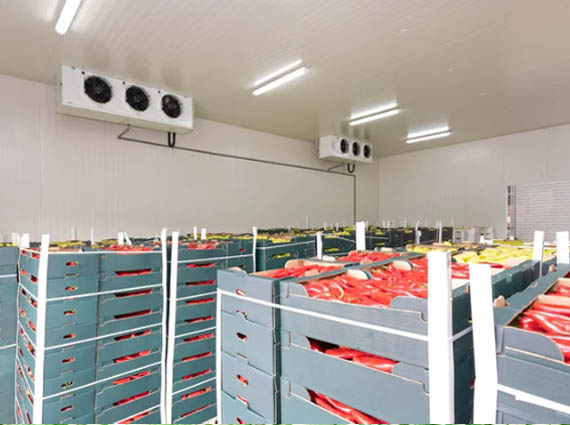
A cold room, also known as a walk-in cooler, is a temperature-controlled space designed to keep products cool but not frozen. Typical operating temperatures range from 0 °C to +10 °C, with many systems optimized for 2 °C to 8 °C storage.
Cold rooms are widely used for short- to medium-term storage of perishable goods that require refrigeration rather than freezing.
Key Characteristics
-
Temperature range: 0 °C to +10 °C
-
Moderate insulation thickness
-
Lower energy consumption compared to freezers
-
Ideal for preserving freshness without freezing
Typical Stored Products
-
Fresh fruits and vegetables
-
Dairy products
-
Beverages
-
Flowers and plants
-
Pharmaceuticals requiring refrigeration
Cold rooms slow bacterial growth and extend shelf life while preserving the texture and quality of fresh products.
4. Technical Comparison: Walk-in Freezer vs Cold Room
Below is a technical comparison highlighting the core differences between the two systems.
| Feature | Walk-in Freezer | Cold Room (Walk-in Cooler) |
|---|---|---|
| Temperature Range | −18 °C to −25 °C (up to −40 °C industrial) | 0 °C to +10 °C |
| Storage Purpose | Long-term frozen storage | Short-term refrigeration |
| Insulation Thickness | Thick insulation panels | Moderate insulation |
| Energy Consumption | Higher due to extreme cooling | Lower compared to freezers |
| Refrigeration System | High-capacity compressors | Standard refrigeration |
| Frost Management | Defrost systems required | Usually no frost issues |
| Typical Products | Frozen meat, seafood, ice cream | Fruits, vegetables, dairy |
| Shelf Life Extension | Months to years | Days to weeks |
| Installation Scale | Medium to large | Small to warehouse scale |
| Operational Cost | Higher | Moderate |
The most significant difference lies in temperature and intended storage duration.
Cold rooms preserve freshness, while walk-in freezers enable long-term frozen storage.
5. Structural and Design Differences
Although they share a similar appearance, their internal design varies significantly.
5.1 Insulation Panels
Walk-in freezers require thicker insulation panels because maintaining sub-zero temperatures demands stronger thermal protection.
Typical materials include:
-
Polyurethane foam (PUF)
-
Extruded polystyrene
-
Insulated metal panels
Cold rooms use thinner insulation since the temperature difference between the interior and exterior environment is smaller.
5.2 Refrigeration Systems
Walk-in freezers require more powerful refrigeration systems because they must remove more heat to maintain freezing temperatures.
Components typically include:
-
Compressor
-
Condenser
-
Evaporator
-
Expansion valve
Cold rooms use similar components but with lower cooling capacity requirements.
5.3 Flooring and Safety
Walk-in freezers often include:
-
Heated floors or anti-frost floors
-
Anti-slip surfaces
-
Emergency release handles
These features prevent ice buildup and ensure worker safety.
Cold rooms generally do not require heated floors.
6. Storage Capacity and Scalability
Both cold rooms and walk-in freezers can be designed in various sizes depending on the operational needs.
Typical configurations include:
| Storage Type | Typical Size Range | Usage |
|---|---|---|
| Small Walk-in | 5–15 m² | Restaurants, small shops |
| Medium Cold Room | 20–100 m² | Food processing facilities |
| Large Cold Storage Warehouse | 500–10,000 m² | Logistics and distribution |
Cold rooms are often used for daily operational storage, while freezers support bulk inventory storage.
7. Industry Applications
Cold storage solutions support numerous industries.
7.1 Food and Beverage Industry
This is the largest market for both cold rooms and walk-in freezers.
Cold rooms are used for:
-
Fresh produce storage
-
Dairy product storage
-
Beverage refrigeration
Walk-in freezers are used for:
-
Frozen meat storage
-
Seafood preservation
-
Frozen ready meals
Restaurants, supermarkets, and food distributors rely heavily on both systems.
7.2 Pharmaceutical Industry
Pharmaceutical products require precise temperature control to maintain stability and effectiveness.
Cold rooms are used for:
-
Vaccine storage
-
Laboratory samples
-
Medical supplies
Walk-in freezers are used for:
-
Biological samples
-
Plasma storage
-
Advanced vaccine preservation
Temperature stability is essential to prevent product degradation.
7.3 Agriculture and Floriculture
Cold rooms are widely used to store:
-
Fruits
-
Vegetables
-
Flowers
Maintaining a temperature slightly above freezing helps preserve freshness without damaging delicate products.
7.4 Logistics and Cold Chain Distribution
Cold storage is essential in modern logistics networks.
Large cold storage warehouses combine:
-
Cold rooms for fresh goods
-
Freezers for frozen products
This ensures temperature control across the entire cold chain supply system.
8. Operational Advantages
8.1 Advantages of Walk-in Freezers
Long-term preservation
Freezers halt bacterial growth completely, allowing food to remain safe for extended periods.
Bulk storage
Businesses can purchase ingredients in bulk, reducing costs and supply disruptions.
Food safety compliance
Consistent freezing temperatures help meet food safety regulations.
Supply chain flexibility
Frozen storage allows companies to store seasonal products year-round.
8.2 Advantages of Cold Rooms
Fresh product preservation
Cold rooms maintain freshness without altering product texture.
Lower energy consumption
Operating above freezing temperatures requires less energy.
Quick product access
Cold rooms are ideal for daily operational use.
Versatility
They can store a wide range of temperature-sensitive products.
9. Cost Comparison
Cost varies depending on size, insulation, refrigeration capacity, and installation complexity.
| Cost Factor | Walk-in Freezer | Cold Room |
|---|---|---|
| Initial Equipment Cost | High | Moderate |
| Installation Cost | Higher | Lower |
| Energy Consumption | High | Moderate |
| Maintenance Cost | Higher | Moderate |
| Lifespan | 10–20 years | 10–20 years |
Although walk-in freezers have higher operational costs, they provide essential long-term storage capability.
10. How to Choose Between Walk-in Freezer and Cold Room
Selecting the right system depends on several factors:
Storage temperature requirement
-
Above freezing → Cold Room
-
Below freezing → Walk-in Freezer
Product type
Fresh products require refrigeration, while frozen products require deep freezing.
Storage duration
-
Short-term storage → Cold Room
-
Long-term storage → Freezer
Energy budget
Cold rooms consume less electricity.
Industry requirements
Certain industries, such as pharmaceuticals, may require both.
11. Future Trends in Cold Storage Technology
Cold storage technology is rapidly evolving.
Emerging innovations include:
-
Smart temperature monitoring systems
-
AI-based energy optimization
-
Remote monitoring via IoT
-
High-efficiency refrigeration compressors
These technologies improve operational efficiency while reducing environmental impact.
12. Conclusion
Both walk-in freezers and cold rooms are essential components of modern cold storage infrastructure.
The main difference lies in temperature range and storage purpose.
-
Cold rooms maintain temperatures above freezing for fresh goods.
-
Walk-in freezers provide deep-freeze conditions for long-term preservation.
Businesses should evaluate storage requirements, product types, and operational costs before selecting the appropriate system.
In many industries, the optimal solution involves using both systems together to support different stages of the cold chain.
FAQ:
1. What is the main difference between a walk-in freezer and a cold room?
The main difference lies in the temperature range and storage purpose.
A walk-in freezer operates at temperatures below −18 °C, designed for long-term frozen storage of products like meat, seafood, and frozen foods.
A cold room, also called a walk-in cooler, operates between 0 °C and +10 °C, mainly used to preserve fresh products such as fruits, vegetables, dairy, and beverages without freezing them.
2. Which industries commonly use walk-in freezers and cold rooms?
Both storage systems are widely used across multiple industries, including:
-
Food processing and distribution
-
Supermarkets and restaurants
-
Pharmaceutical and biotechnology companies
-
Agriculture and fresh produce storage
-
Cold chain logistics and warehouses
-
Floral storage and horticulture
Many facilities use both systems together to support complete cold chain management.
3. How cold does a walk-in freezer get?
A standard commercial walk-in freezer typically operates between −18 °C and −25 °C, which is the recommended temperature range for frozen food storage according to international food safety standards.
Industrial or ultra-low-temperature freezers can reach −30 °C to −40 °C, used for specialized storage such as pharmaceuticals or laboratory samples.
4. What temperature should a cold room maintain?
Cold rooms are generally maintained between 0 °C and +10 °C, depending on the products stored.
Common temperature settings include:
| Product Type | Recommended Temperature |
|---|---|
| Fruits & Vegetables | 0 °C – 4 °C |
| Dairy Products | 2 °C – 5 °C |
| Beverages | 3 °C – 7 °C |
| Pharmaceuticals | 2 °C – 8 °C |
Maintaining the correct temperature ensures optimal freshness and product safety.
5. Which system consumes more energy?
A walk-in freezer consumes significantly more energy than a cold room because it must maintain sub-zero temperatures.
Factors that influence energy consumption include:
-
Insulation thickness
-
Door usage frequency
-
Ambient temperature
-
Refrigeration system efficiency
-
Storage capacity
Cold rooms generally offer lower operational energy costs.
6. Can a cold room be converted into a walk-in freezer?
In some cases, a cold room can be upgraded into a walk-in freezer, but it usually requires significant modifications, including:
-
Thicker insulation panels
-
More powerful refrigeration systems
-
Floor heating or anti-frost systems
-
Specialized freezer doors
Because of these requirements, businesses often install a dedicated freezer system instead of converting a cold room.
7. What size walk-in freezer or cold room should I choose?
The size depends on several factors:
-
Storage volume requirements
-
Inventory turnover rate
-
Available installation space
-
Industry operational needs
Typical size ranges include:
| Facility Type | Typical Size |
|---|---|
| Small Restaurant | 5–10 m² |
| Supermarket | 15–50 m² |
| Food Processing Plant | 50–500 m² |
| Cold Storage Warehouse | 500–10,000 m² |
Proper sizing improves efficiency, accessibility, and energy management.
8. How long can products be stored in a walk-in freezer?
Frozen products can typically be stored for several months to over a year, depending on the product type.
Examples include:
| Product | Typical Frozen Storage Time |
|---|---|
| Beef | 6–12 months |
| Poultry | 9–12 months |
| Seafood | 3–6 months |
| Frozen Vegetables | 8–12 months |
Proper packaging and stable temperatures are essential for maintaining quality.
9. What are the maintenance requirements for cold storage systems?
Regular maintenance helps ensure system reliability and efficiency.
Key maintenance tasks include:
-
Cleaning condenser coils
-
Checking refrigerant levels
-
Inspecting door seals
-
Monitoring temperature sensors
-
Defrost system maintenance
Routine servicing can significantly extend equipment lifespan and reduce energy costs.
10. Is it better to use both a cold room and a walk-in freezer?
Yes. Many businesses benefit from using both systems together.
Cold rooms are ideal for short-term fresh product storage, while walk-in freezers provide long-term frozen inventory storage.
Combining both systems allows companies to maintain complete cold chain control, improve operational efficiency, and reduce product waste.
Post time:Sep-25-2020
