

A Real Case Study: How the Right Cold Room Door Reduced Energy Loss by 18%
In the cold chain industry, many companies focus heavily on refrigeration systems, compressors, and storage capacity while overlooking one of the most frequently used components in a cold room: the door.
A few years ago, a frozen food distribution center operating in Southeast Asia faced a problem that is common among many cold storage facilities. The company managed more than 3,000 square meters of frozen storage space, maintaining temperatures between -18°C and -25°C for seafood, meat products, and frozen ingredients.
The refrigeration equipment was relatively new, but the facility continued experiencing unstable temperature conditions. Operators noticed that the compressors were running longer than expected, frost frequently appeared around the door frame, and employees complained that the working environment near the storage entrance was becoming increasingly uncomfortable.
Initially, the company assumed the refrigeration system was the cause. After a professional inspection, however, the main issue was identified as the existing cold room doors.
The original doors had several problems:
-
Insufficient insulation thickness
-
Aging magnetic gasket system
-
Poor sealing performance after repeated opening and closing
-
Door frame deformation caused by long-term low-temperature operation
-
Lack of customization according to actual traffic frequency
The cold storage facility opened its doors more than 100 times per day, with workers frequently moving pallets in and out. Every opening allowed cold air to escape and warm humid air to enter. Over time, this created additional pressure on the refrigeration system.
The company replaced the old doors with customized insulated cold storage doors designed according to their operating conditions. The new solution included:
-
High-density polyurethane insulation panels
-
Improved sealing structure
-
Reinforced stainless-steel frame
-
Heavy-duty hinges and hardware
-
Customized dimensions according to forklift traffic requirements
After six months of operation, the results were significant:
| Performance Indicator | Before Replacement | After Installing Customized Cold Storage Door |
|---|---|---|
| Door opening frequency | 100+ times/day | 100+ times/day |
| Average temperature fluctuation | 3-5°C | Less than 1.5°C |
| Compressor operating time | 18 hours/day | 14.7 hours/day |
| Frost accumulation around door | Frequent | Rare |
| Annual energy consumption | Baseline | Reduced by approximately 18% |
The biggest lesson from this case was simple:
1. Why Cold Room Doors Are Critical for Cold Storage Performance
A cold storage facility is a complete thermal control system. Walls, ceilings, floors, refrigeration units, and doors all work together to maintain stable temperature conditions.
Among these components, the cold room door is often the weakest point because it is opened and closed repeatedly.
Unlike insulated panels that remain stationary, doors experience:
-
Frequent mechanical movement
-
Temperature differences between inside and outside environments
-
Physical impact from workers and equipment
-
Continuous pressure on sealing components
A poorly designed door can create several problems:
1.1 Increased Energy Consumption
Cold storage facilities consume large amounts of electricity, and refrigeration usually represents the largest operational cost.
When a cold room door does not seal properly, warm air enters and cold air escapes. The refrigeration system must compensate by working harder.
For large warehouses operating 24 hours a day, even a small improvement in door insulation and sealing can generate significant annual savings.
For example:
A freezer warehouse operating at -25°C may experience thousands of door openings every month. If each opening results in unnecessary cold air loss, the cumulative energy waste can become substantial.
A high-quality insulated cold room door helps reduce:
-
Heat transfer
-
Air leakage
-
Compressor cycling frequency
-
Defrosting requirements
1.2 Maintaining Product Quality and Safety
Temperature stability is essential for industries such as:
-
Frozen food processing
-
Meat and seafood storage
-
Pharmaceutical logistics
-
Biological sample storage
-
Fresh produce distribution
Repeated temperature fluctuations may cause:
-
Ice crystal formation in frozen products
-
Reduced shelf life
-
Product quality degradation
-
Increased risk of contamination
A well-designed cold storage door minimizes temperature exchange during daily operations.
2. Understanding Different Types of Cold Room Doors
Before purchasing a cold storage door, buyers need to understand that different applications require different door structures.
There is no single “best” cold room door for every facility.
The correct choice depends on:
-
Temperature range
-
Opening frequency
-
Available installation space
-
Traffic requirements
-
Hygiene standards
-
Operating environment
2.1 Hinged Cold Room Doors
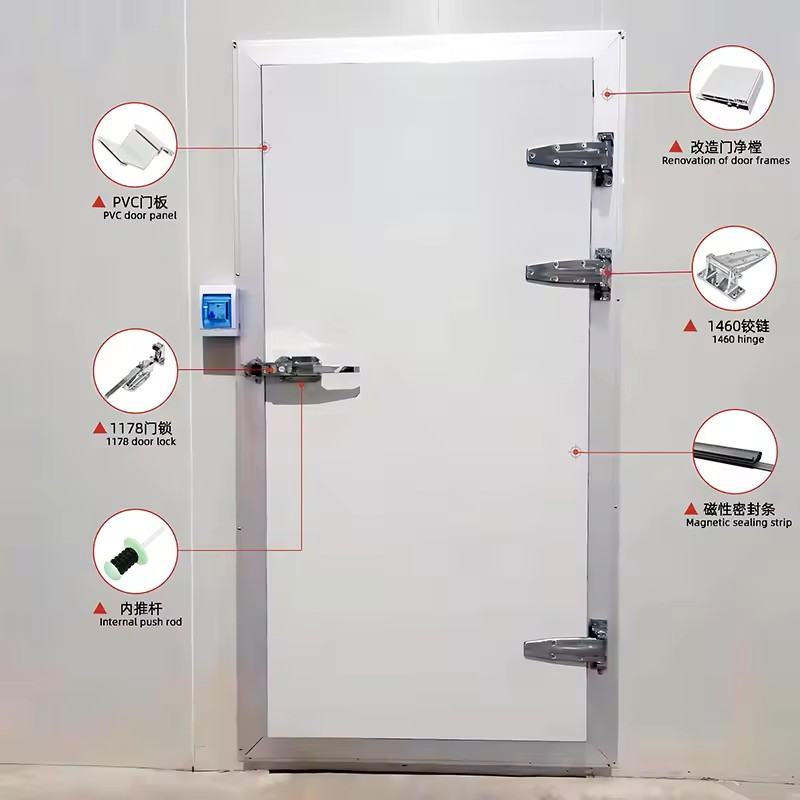
Hinged doors are one of the most common solutions for small and medium-sized cold rooms.
They operate similarly to traditional doors and are widely used in:
-
Restaurants
-
Small food storage rooms
-
Laboratory cold rooms
-
Pharmaceutical storage areas
Advantages:
-
Simple structure
-
Easy installation
-
Lower initial investment
-
Good sealing performance
Suitable applications:
-
Low-frequency access
-
Personnel entry
-
Small storage areas
However, hinged doors may not be the best choice for high-traffic warehouses because frequent manual opening creates more heat exchange.
2.2 Sliding Cold Room Doors
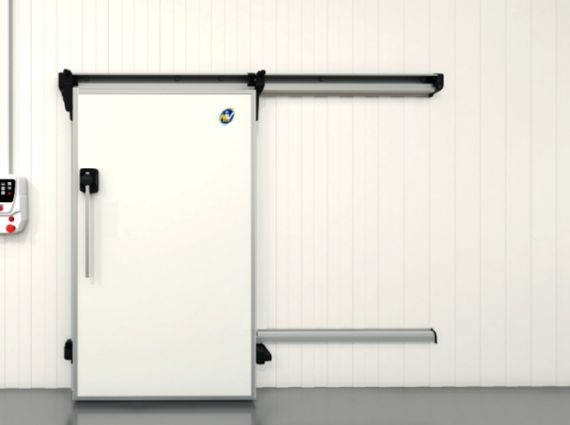
Sliding cold room doors are widely used in industrial applications where large openings and frequent movement are required.
They are commonly installed in:
-
Frozen food warehouses
-
Distribution centers
-
Meat processing plants
-
Large cold storage facilities
Compared with hinged doors, sliding doors provide:
-
Larger opening sizes
-
Easier forklift access
-
Better space utilization
For example, a warehouse using pallet trucks or forklifts may require a door width of 1.5-3 meters or more. A sliding door provides smoother operation and reduces collision risks.
2.3 High-Speed Cold Storage Doors
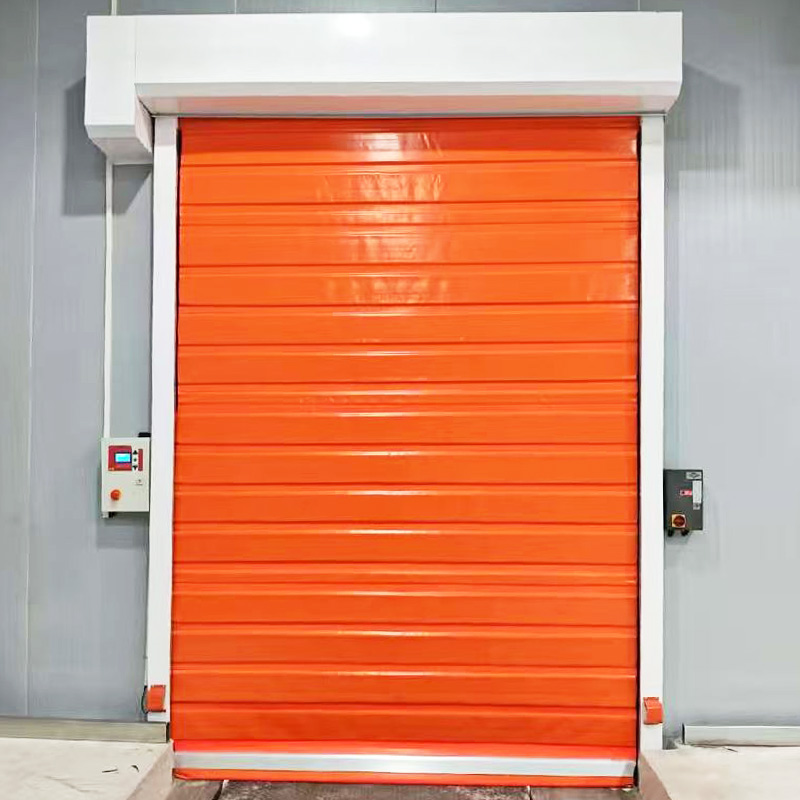
High-speed cold room doors are designed for environments with extremely frequent traffic.
They are commonly used together with traditional insulated doors.
Typical applications include:
-
Automated warehouses
-
Food processing production lines
-
Logistics distribution centers
Their main advantage is fast opening and closing speed, which minimizes the time the cold room remains exposed.
Benefits include:
-
Reduced temperature loss
-
Improved workflow efficiency
-
Better hygiene control
-
Reduced insect and dust entry
3. Why Customized Cold Storage Doors Are Becoming More Important
Many buyers initially consider standard-size cold room doors because they appear cheaper.
However, industrial cold storage facilities often have unique requirements.
A customized cold storage door considers:
3.1 Different Temperature Conditions
A chilled room operating at:
-
0°C to +5°C
has completely different requirements from a freezer room operating at:
-
-18°C
-
-25°C
-
-40°C
Lower temperatures require:
-
Higher insulation performance
-
Better sealing materials
-
Stronger anti-freezing design
3.2 Different Traffic Requirements
A seafood processing factory and a pharmaceutical warehouse may both require cold storage doors, but their usage patterns are completely different.
A seafood factory may need:
-
Large forklift access
-
Impact resistance
-
Frequent opening capability
A pharmaceutical facility may prioritize:
-
Cleanroom compatibility
-
Hygiene performance
-
Precise temperature control
Customized design allows manufacturers to match the door with actual operational conditions.
4. Key Factors to Consider When Buying a Cold Room Door
Choosing a cold room door is not simply a matter of selecting the right size and price. A reliable cold storage door must match the operating environment, temperature requirements, traffic frequency, and long-term maintenance expectations of the facility.
Many companies make purchasing decisions based only on the initial cost. However, a cheaper door with poor insulation or weak sealing performance may create higher operating expenses over its lifetime.
A professional purchasing decision should evaluate the following factors.
4.1 Door Panel Thickness and Temperature Requirements
One common mistake is selecting the same door specification for different temperature environments.
The required insulation level depends strongly on operating temperature.
Typical recommendations:
| Application | Temperature Range | Recommended Door Panel Thickness |
|---|---|---|
| Chilled room | 0°C to +5°C | 50-75 mm |
| Fresh food storage | -5°C to 0°C | 75-100 mm |
| Frozen storage | -18°C to -25°C | 100-150 mm |
| Deep freezing | Below -30°C | 150-200 mm |
For example:
A door used for a +5°C vegetable storage room does not require the same insulation structure as a -40°C pharmaceutical freezer.
Choosing insufficient thickness may result in:
-
Condensation
-
Frost formation
-
Increased electricity consumption
-
Shortened door lifespan
4.2 Door Hardware Quality and Durability
A cold storage door is opened thousands of times during its service life.
Therefore, hardware quality directly affects reliability.
Important components include:
Hinges
High-quality hinges should provide:
-
Smooth operation
-
Strong load-bearing capability
-
Corrosion resistance
For heavy industrial doors, stainless steel or reinforced alloy hinges are commonly selected.
Sliding Door Track System
For sliding doors, the track system is one of the most important components.
A good sliding mechanism should provide:
-
Stable movement
-
Low maintenance requirements
-
Resistance to deformation
Poor-quality tracks may cause:
-
Difficult opening
-
Door misalignment
-
Increased sealing problems
5. Cold Room Door Comparison: Which Type Is Right for Your Business?
| Door Type | Best Application | Advantages | Limitations |
|---|---|---|---|
| Hinged Door | Small cold rooms, restaurants, laboratories | Simple, economical, easy maintenance | Not ideal for high traffic |
| Sliding Door | Warehouses, factories, logistics centers | Large opening, forklift friendly | Higher installation requirements |
| High-Speed Door | Production lines, automated warehouses | Fast operation, minimizes temperature loss | Higher investment |
| Customized Industrial Door | Complex environments | Designed according to actual needs | Requires professional manufacturer |
The right choice depends on your operating conditions rather than simply selecting the most expensive option.
Post time:Sep-25-2020
