

The Door Was Not the Problem — The Installation Was
When a food factory experiences temperature problems, the first thing engineers usually check is the refrigeration system.
They check:
-
compressors
-
evaporators
-
refrigerant pressure
-
insulation panels
-
temperature controllers
The cold storage door is often checked last.
After years of working with food processing facilities, we have learned that this is often the wrong order.
A cold storage door is one of the few parts of a refrigeration system that is opened and closed hundreds of times every day.
The refrigeration unit works continuously to maintain temperature, but the door determines how much cooling is lost during operation.
A well-designed refrigeration system can still perform poorly if the cold room doors are incorrectly selected or installed.
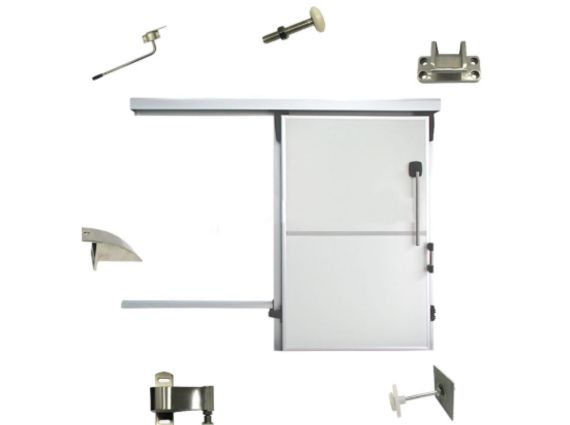
A Factory Expansion Project That Changed How We Look at Cold Storage Doors
A frozen food manufacturer in Western Europe contacted our team during the expansion of its production facility.
The company was adding a new freezing area to support increased export orders.
The project included:
-
frozen product storage rooms
-
packaging rooms
-
loading areas
-
forklift transportation routes
-
temperature-controlled production zones
At the beginning of the project, the customer's main concern was refrigeration capacity.
The door selection was considered a relatively small decision.
The original plan used conventional manual sliding freezer doors for most areas because they were reliable and cost-effective.
From a construction perspective, the choice seemed reasonable.
The problem appeared after production started.
During normal operation, workers moved products between the processing area and freezer storage area throughout the day.
Some doors were opened every few minutes.
Operators noticed:
-
frost appearing around the door frame
-
longer temperature recovery time
-
water condensation near the entrance
-
increased cleaning requirements
The maintenance team initially adjusted the refrigeration settings.
The result was limited.
The refrigeration system was not the main issue.
The problem was that the door was allowing too much air exchange between different temperature zones.
After reviewing the workflow, the factory changed several high-traffic doors to automatic sliding freezer doors.
The improvement was immediate.
Workers spent less time waiting for doors to open.
The freezer rooms recovered temperature faster.
The amount of frost around the entrance area decreased significantly.
The lesson from this project was simple:
The correct cold storage door is determined by how the factory operates, not only by the temperature of the room.
Why Food Factories Need a Different Approach to Cold Storage Doors
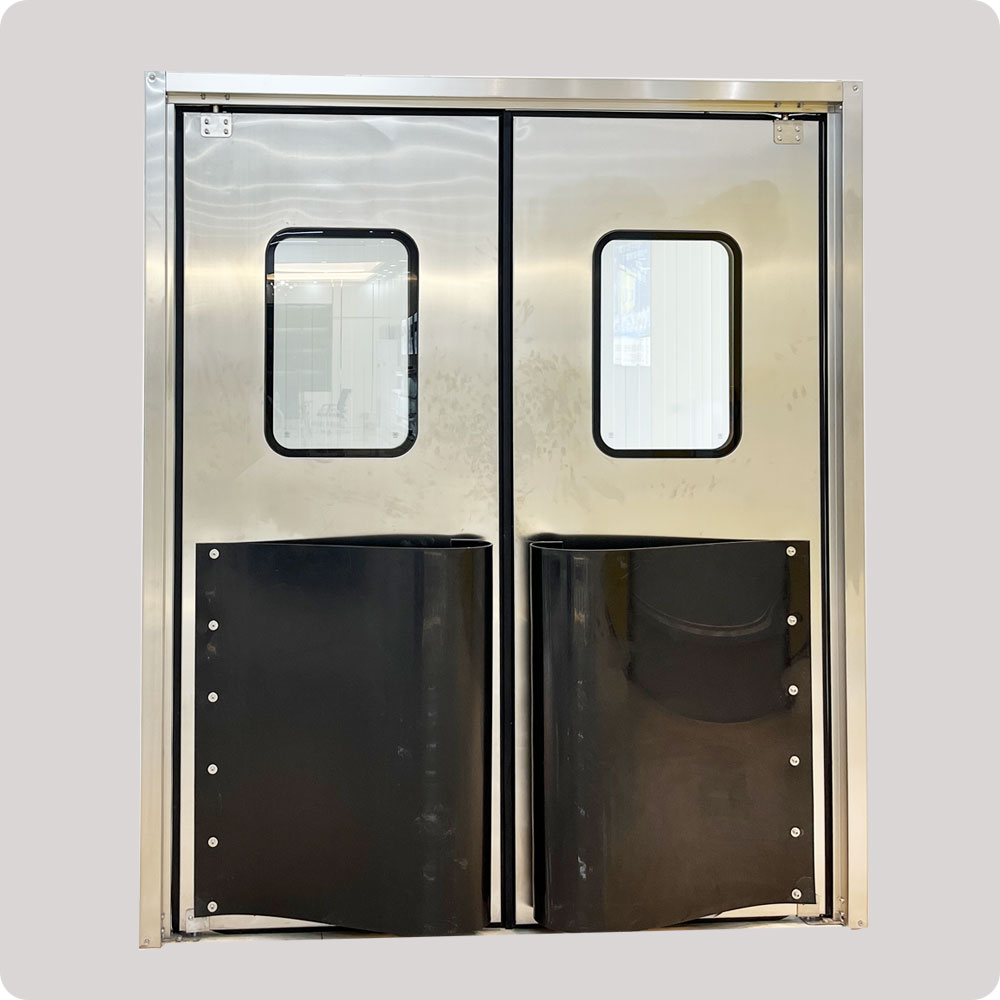
A normal warehouse door may open several times a day.
A food production door may open hundreds of times.
This difference completely changes the engineering requirements.
In food factories, doors must deal with:
-
frequent operation
-
temperature differences
-
humidity migration
-
cleaning processes
-
forklift impact
-
hygiene regulations
For example:
A freezer room operating at -25°C connected to a +10°C production area creates a strong temperature imbalance.
Every opening allows:
-
warmer air to enter
-
moisture to enter
-
cold air to escape
The result can be:
-
ice formation
-
higher compressor operation
-
unstable temperature
-
increased maintenance
The door becomes part of the cold chain.
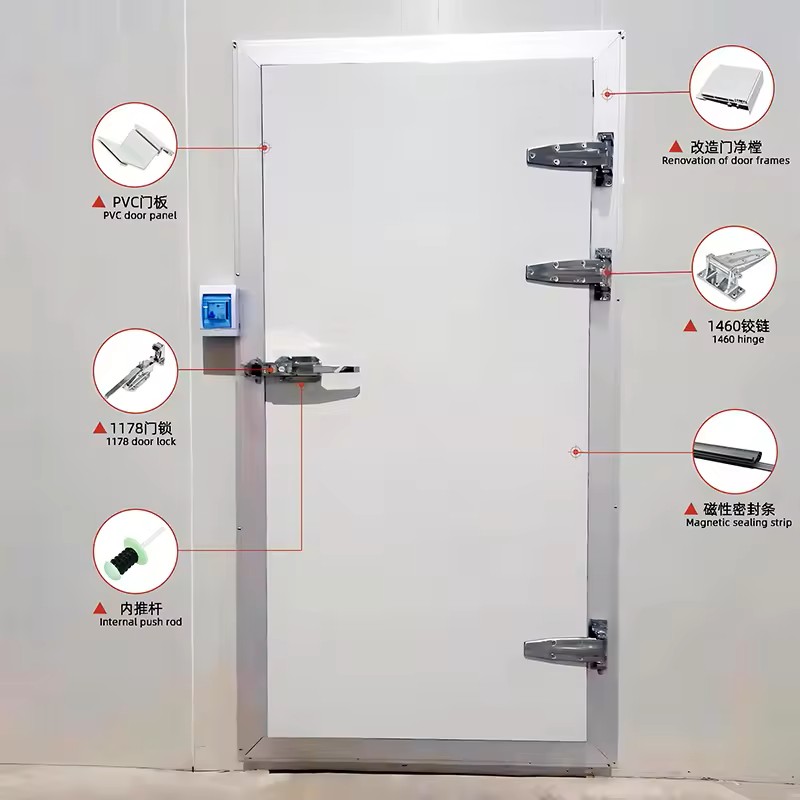
Choosing Cold Storage Doors According to Real Factory Conditions
One of the biggest mistakes during food factory construction is selecting doors only according to room temperature.
Temperature is important, but it is only one factor.
Before selecting a door, engineers should evaluate four questions.
How many times will the door open every day?
This is usually the most important question.
A storage room opened five times per day does not need the same solution as a production entrance opened 300 times per day.
What equipment passes through the door?
A worker walking through a door creates very different requirements compared with:
-
forklifts
-
pallet trucks
-
automated vehicles
Door size, speed, and safety systems must match the traffic type.
What happens if the door stays open?
In a normal building, an open door may only affect comfort.
In a freezer environment, an open door affects:
-
energy consumption
-
humidity
-
product quality
How will the door be cleaned and maintained?
Food factories require regular cleaning.
A technically advanced door that is difficult to clean may create operational problems.
Manual Sliding Freezer Doors: Reliable but Not Always the Right Choice
Manual sliding doors remain widely used because of their simple structure.
They are common in:
-
frozen storage rooms
-
small cold rooms
-
low-frequency access areas
A good manual sliding door can operate reliably for many years.
However, installation quality becomes critical.
Track Installation
The sliding rail must be perfectly aligned.
A small deviation can cause:
-
uneven movement
-
increased operator force
-
premature wear
Door Seal Adjustment
The sealing system should create sufficient contact pressure.
Too little pressure:
-
cold leakage
-
condensation
-
frost
Too much pressure:
-
difficult opening
-
faster gasket damage
When Manual Doors Are Suitable
Manual doors are suitable when:
-
traffic is limited
-
workers have enough operating time
-
temperature exchange is acceptable
They are not always suitable for busy production routes.
Automatic Sliding Freezer Doors: Designed for High-Frequency Operation
Modern food factories increasingly use automatic sliding freezer doors in production areas.
The reason is not simply convenience.
The main benefit is controlling exposure time.
A door that opens and closes quickly reduces the period when two temperature zones are connected.
Typical applications include:
-
meat processing plants
-
seafood factories
-
dairy production
-
frozen food packaging areas
Important Installation Details
Sensor Position
Sensors should match actual movement patterns.
Incorrect positioning can lead to:
-
unnecessary opening
-
delayed response
-
safety concerns
Electrical Protection
Cold environments create additional challenges.
Components should be protected from:
-
condensation
-
moisture
-
low temperatures
Emergency Access
Automatic doors must still allow safe operation during power interruption.
High-Speed Freezer Doors: When Every Second Matters
Some food factories operate almost continuously.
In these environments, waiting for a door becomes a production issue.
High-speed freezer doors are designed for:
-
frequent forklift movement
-
automated production lines
-
large distribution facilities
Their main advantage is speed.
A faster opening cycle means:
-
less cold air loss
-
better temperature stability
-
smoother logistics
However, high-speed doors require more professional installation.
The installer must consider:
-
motor location
-
control system protection
-
safety sensors
-
maintenance access
A high-performance door installed incorrectly will not deliver expected results.
Hinged Cold Room Doors: Small Doors With Important Roles
Not every cold room requires an automatic system.
Hinged doors remain practical for:
-
small preparation rooms
-
inspection rooms
-
laboratory areas
Their advantages include:
-
simple operation
-
easy cleaning
-
low maintenance
However, several details should not be ignored.
Hinges
Heavy insulated panels require suitable hardware.
Weak hinges may cause:
-
door sagging
-
poor sealing
-
alignment problems
Hygiene Design
Food facilities should avoid unnecessary gaps and complicated structures.
Smooth surfaces are easier to clean and maintain.
Installation Mistakes We Frequently See on Food Factory Projects
Mistake 1: Selecting Doors After the Factory Layout Is Finished
The door location affects:
-
material flow
-
worker movement
-
refrigeration zoning
Door planning should happen together with the factory layout.
Mistake 2: Ignoring Future Production Growth
Many factories expand faster than expected.
A door system designed for current traffic may become a bottleneck later.
Good planning considers future requirements.
Mistake 3: Focusing Only on Purchase Price
The purchase price is only one part of the cost.
The real cost includes:
-
energy consumption
-
maintenance
-
downtime
-
replacement frequency
A better door often pays back through daily operation.
Comparing Three Cold Storage Door Solutions in a Real Production Environment
A food factory evaluated three door types for a -25°C freezer area.
Operating conditions:
-
door size: approximately 3m × 3m
-
forklift movement
-
daily opening frequency: more than 200 cycles
| Door Type | Operation Speed | Best Application |
|---|---|---|
| Manual Sliding Door | Medium | Low traffic storage |
| Automatic Sliding Door | Fast | Production areas |
| High-Speed Freezer Door | Very Fast | Heavy traffic routes |
The conclusion was not that one door was universally better.
The correct choice depended on the role of each entrance.
Practical Checklist Before Installing Cold Storage Doors
Before starting installation, factory owners should confirm:
□ Room temperature difference
□ Daily opening frequency
□ Product movement method
□ Cleaning requirements
□ Available maintenance resources
□ Future expansion plans
□ Safety requirements
A cold storage door should be selected based on operation, not appearance.
Final Thoughts from the Installation Perspective
Many companies consider cold storage doors a small construction item.
After seeing different food factories operate, our view is different.
The door is one of the most active components in a cold chain facility.
It directly affects:
-
energy consumption
-
temperature control
-
worker efficiency
-
hygiene performance
A successful cold storage door installation requires more than choosing a product.
It requires understanding:
-
how people move
-
how products flow
-
how often the door operates
-
how the factory will grow
The best cold storage door is not simply the most advanced model.
It is the one designed around the real working conditions of the factory.
Frequently Asked Questions
How do I choose a cold storage door for a food factory?
The selection should consider temperature, traffic frequency, product movement, hygiene requirements, and maintenance conditions.
Are automatic freezer doors worth the investment?
For high-frequency applications, automatic doors usually reduce energy loss and improve workflow efficiency.
Why does ice form around freezer doors?
Common causes include poor sealing, frequent opening, incorrect installation, or insufficient frame heating.
How long do industrial cold storage doors last?
With proper installation and maintenance, industrial freezer doors can provide many years of reliable operation.
Contact Our Engineering Team
If you are planning a new food factory installation or upgrading an existing cold storage facility, professional door selection can improve efficiency, reduce operating costs, and protect your cold chain.
Post time:Sep-25-2020
