

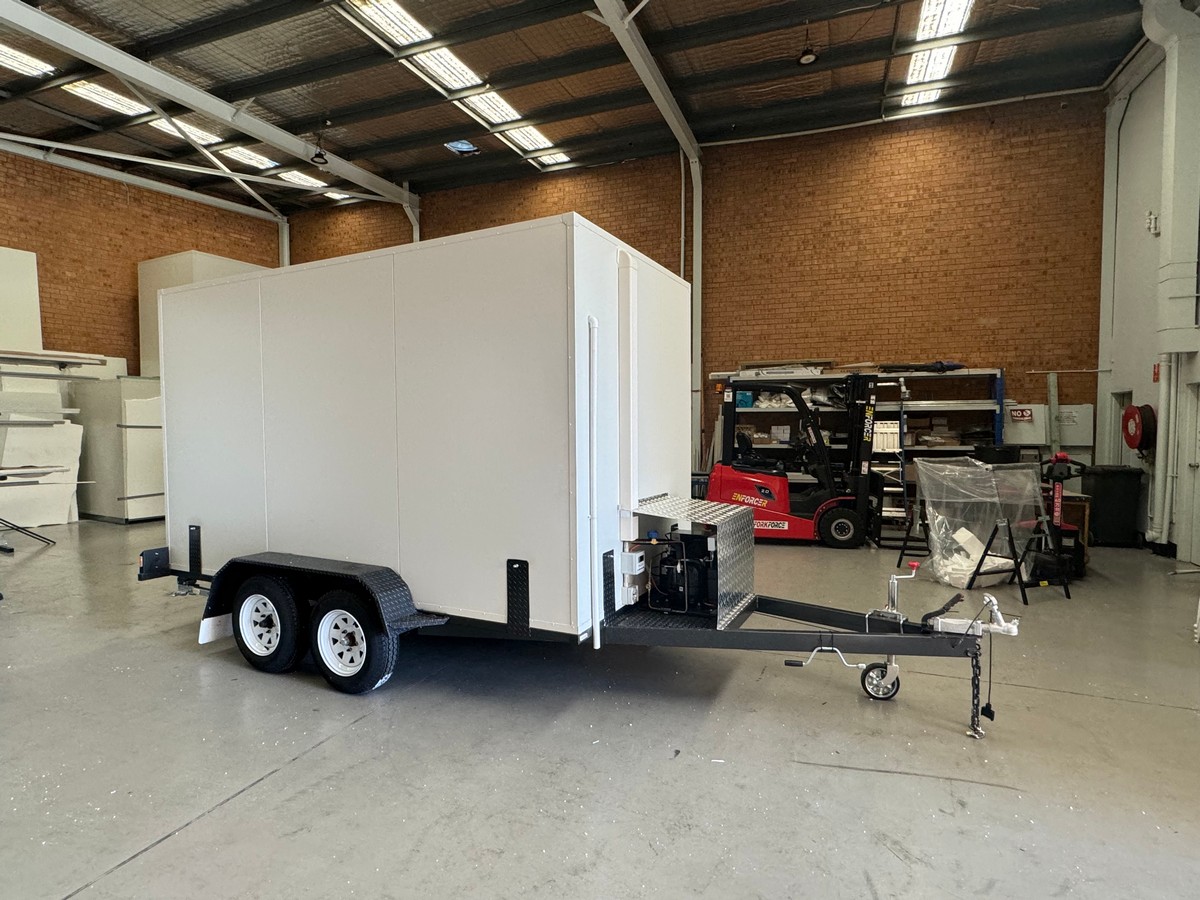
European modular mobile cold storage units are designed to comply with ISO standards for shipping containers, ensuring compatibility with global transportation networks—critical for cross-border operations within the EU. Most modular units are available in standard sizes (10ft, 20ft, 40ft) but can be customized with additional features, such as multiple doors, partition walls (to create separate temperature zones), and access ramps for easy loading. Advanced modular designs even allow for vertical stacking, making efficient use of limited space in warehouses, ports, and construction sites. In the Netherlands, for example, Modular Cool Solutions has developed a stackable modular unit that can be stacked up to three high, with integrated locking systems to ensure stability. This design is widely used in Rotterdam Port, one of Europe’s busiest ports, where space is at a premium and mobile cold storage is needed for temporary storage of imported perishables.
Lightweight materials are a key enabler of modular design, reducing the overall weight of mobile cold storage units and improving fuel efficiency during transport—critical in Europe, where road transport is subject to strict weight limits (e.g., 40 tonnes for articulated lorries in the EU, with penalties for overloading). Traditional mobile cold storage units are constructed with steel frames and thick insulation, which can result in weights of 5-8 tonnes for a 20-foot unit. Modern European units, however, use lightweight materials such as aluminum, fiberglass-reinforced plastic (FRP), and high-strength composite materials, reducing weight by 20-30% while maintaining structural integrity and insulation performance.
Insulation technology has also evolved to support lightweight design, with advanced materials that provide superior thermal performance at thinner thicknesses. Traditional mobile cold storage units use polyurethane foam insulation with a thickness of 100-150 mm, but modern European units use vacuum-insulated panels (VIPs) and aerogel insulation, which offer 2-3 times the thermal resistance (R-value) of polyurethane at half the thickness. VIPs are composed of a core material (e.g., fiberglass or polyurethane foam) enclosed in an airtight membrane, creating a vacuum that minimizes heat transfer. Aerogel insulation, made from silica gel, is the lightest and most efficient insulation material available, with an R-value of up to 10 per inch.
|
Technology Category
|
Material/System
|
Key Technical Parameters
|
Advantages
|
Limitations
|
Typical European Applications
|
|---|---|---|---|---|---|
|
Lightweight Structural Materials
|
Aluminum
|
Strength-to-weight ratio: 2.7 g/cm³; 50% lighter than steel; recyclability rate ≥95%
|
Corrosion-resistant, food-safe, easy to fabricate, compliant with EU circular economy goals
|
Higher cost than steel; lower rigidity in extreme loads
|
General food transport, coastal/marine mobile units (Spain, Italy)
|
|
GFRP
|
Strength-to-weight ratio: 1.8 g/cm³; 15-25% lighter than steel; impact-resistant
|
Affordable, chemical-resistant, moisture-proof
|
Lower heat resistance; longer fabrication time
|
Mid-range food service units, outdoor event coolers (UK, France)
|
|
|
CFRP
|
Strength-to-weight ratio: 1.6 g/cm³; 70% lighter than steel; 5x stronger than steel
|
Ultra-lightweight, high durability, extreme weather resistance
|
High cost (3-5x steel); limited recyclability
|
Pharmaceutical transport, offshore oil rig units (Norway, Netherlands)
|
|
|
Insulation Materials
|
Polyurethane Foam (Traditional)
|
R-value: 4-5 per inch; thickness: 100-150 mm; density: 30-40 kg/m³
|
Low cost; easy installation; good moisture barrier
|
Thick profile; higher weight; lower thermal efficiency
|
Budget-friendly stationary units (Eastern Europe)
|
|
VIPs
|
R-value: 8-10 per inch; thickness: 50 mm; vacuum-sealed membrane
|
Thin profile; 2-3x thermal efficiency of polyurethane; weight reduction 25%
|
Susceptible to punctures; higher cost
|
Frozen food transport, Nordic sub-zero units (Sweden, Finland)
|
|
|
Aerogel
|
R-value: up to 10 per inch; density: 10-15 kg/m³; silica-based
|
Lightest insulation; extreme thermal resistance; thin profile
|
Very high cost; fragile structure
|
Specialized pharmaceutical transport, high-performance units
|
|
|
Lightweight Refrigeration
|
Variable-Speed Compressor (Aluminum/Plastic)
|
Lightweight, energy-efficient, adaptive cooling
|
Higher upfront cost; requires electronic control systems
|
Across EU mobile units (Germany, France, Spain)
|
Another key design innovation in European mobile cold storage is the integration of lightweight refrigeration systems. Traditional refrigeration compressors and condensers are heavy and bulky, but modern units use compact, high-efficiency compressors made from aluminum and plastic components, reducing weight by 30-40%. Additionally, manufacturers are using variable-speed compressors, which are not only lighter but also more energy-efficient, as they adjust their speed based on cooling demand. In Germany, Bitzer has developed a lightweight variable-speed compressor for mobile cold storage, weighing just 25 kg (compared to 40 kg for traditional compressors) and consuming 20% less energy. This compressor is widely used in European mobile units, contributing to both weight reduction and energy savings.
European mobile cold storage design must also comply with strict safety and environmental regulations, which influence material selection and construction. For example, the EU’s Restriction of Hazardous Substances (RoHS) Directive prohibits the use of lead, mercury, and other hazardous materials in electrical components, while the REACH Regulation restricts the use of harmful chemicals in insulation and coatings. Manufacturers must also ensure that units meet fire safety standards (EN 13501-1), with insulation materials that are fire-retardant and emit low levels of smoke and toxic gases. In France, for example, all mobile cold storage units must pass fire safety tests conducted by the Institut National de l’Environnement Industriel et des Risques (INERIS) before they can be sold or rented.
Despite the benefits, several challenges remain in the adoption of modular and lightweight design. The high cost of advanced materials (such as CFRP and VIPs) increases the upfront price of units, while the lack of standardized design for modular components can hinder interoperability between different manufacturers. Additionally, lightweight materials may have lower durability than steel in some applications, requiring careful design to ensure longevity—particularly in harsh European climates. To address these challenges, European manufacturers are collaborating with research institutions to develop affordable, durable lightweight materials, while industry associations are working to establish standards for modular components.
Looking ahead, the integration of 3D printing technology will further revolutionize modular design, allowing manufacturers to produce custom components on-demand, reducing lead times and waste. 3D printing will also enable the production of complex, lightweight structures that are not possible with traditional manufacturing methods. Additionally, the use of digital twin technology will allow operators to simulate the performance of modular units in different environments, optimizing design for specific European applications—from urban delivery to remote rural use.
Post time:Sep-25-2020
