

A Real Story from a Seafood Processing Plant
On a humid Monday morning in southern Vietnam, the maintenance manager of a seafood processing company noticed something unusual. The electricity bill for June had increased by almost 18% compared with the same month the previous year, even though production volume had remained almost unchanged.
His first reaction was predictable. He suspected that one of the refrigeration compressors had become inefficient. The service contractor was called in to inspect the screw compressors, check refrigerant pressure, examine condenser performance, and verify the control system. Everything appeared to be operating within the manufacturer's recommended range.
For nearly two weeks, the engineering team searched for a mechanical fault that simply wasn't there.
The answer eventually came from a routine site inspection rather than a technical report.
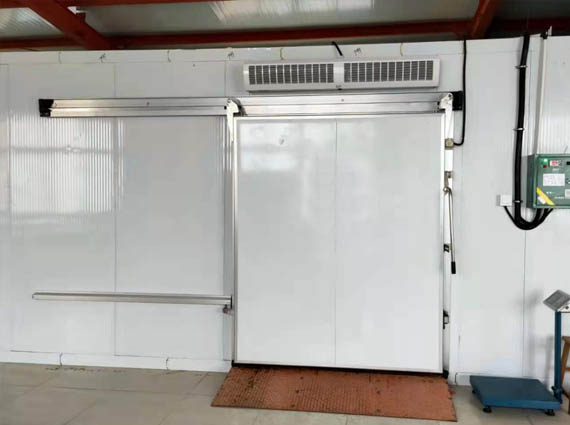
During the afternoon loading period, forklifts were constantly moving pallets of frozen shrimp between the freezer and the loading dock. To avoid delays, operators left the freezer sliding door partially open for long periods instead of allowing it to close after each trip. Warm tropical air flowed into the cold room almost continuously. Moisture condensed immediately on the evaporator coils, creating heavy frost that forced the refrigeration system into more frequent defrost cycles.
The compressors were not inefficient—they were simply removing heat that should never have entered the building.
After replacing the old manual door with an insulated high-speed freezer door, repairing damaged door seals, and introducing a simple traffic management procedure, the facility achieved measurable improvements within twelve months:
| Performance Indicator | Before Improvement | After Improvement |
|---|---|---|
| Average Door Open Time | 22 seconds | 4.5 seconds |
| Daily Defrost Cycles | 8 | 5 |
| Monthly Electricity Consumption | 168,000 kWh | 139,000 kWh |
| Annual Refrigeration Cost | US$242,000 | US$199,000 |
| Estimated Annual Energy Saving | — | 17.3% |
The refrigeration equipment itself remained exactly the same. No new compressor was installed. No refrigerant was changed. The biggest improvement came from reducing unnecessary heat entering the freezer.
This experience reflects a challenge faced by cold storage operators around the world. Rising electricity costs are often blamed on aging refrigeration equipment, but in many cases the real problem lies elsewhere. Every unnecessary source of heat forces the refrigeration system to work harder, increasing both operating costs and equipment wear.
Understanding where that heat comes from is the first step toward building a more energy-efficient cold storage facility.
Why Energy Efficiency Matters More Than Ever
Cold storage has always been one of the most energy-intensive sectors in industrial refrigeration. Whether the facility stores frozen seafood, meat, dairy products, pharmaceuticals, fruit, or vegetables, maintaining a stable low temperature requires refrigeration systems to operate around the clock.
Unlike many manufacturing plants, refrigeration never stops. Compressors continue running during nights, weekends, and holidays to keep products within their required storage temperature. Even a brief interruption can compromise product quality and create significant financial losses.
Electricity therefore represents one of the largest ongoing operating expenses for warehouse owners.
Industry surveys consistently show that refrigeration systems account for 50% to 70% of a cold storage facility's total electricity consumption, depending on warehouse size, climate, insulation quality, and operating conditions.
Yet many companies invest heavily in new compressors while overlooking smaller issues that quietly waste energy every day. Air leaks around a worn door seal, damaged insulation hidden behind wall panels, or a door that remains open for a few extra seconds during each forklift cycle may seem insignificant in isolation. Over the course of a year, however, these small inefficiencies can translate into tens of thousands of dollars in avoidable energy costs.
Energy efficiency is therefore not simply about installing better refrigeration equipment. It is about reducing the amount of heat that enters the building in the first place.
The less heat entering the cold room, the less work the refrigeration system must perform.
Understanding Where the Heat Comes From
A common misconception is that refrigeration equipment "creates cold." In reality, refrigeration systems remove heat from inside the cold room and reject it to the surrounding environment.
Every source of heat entering the warehouse becomes an additional load that the refrigeration system must remove.
This heat enters the facility through several pathways:
- Warm outdoor air entering when doors open
- Air leakage through worn door seals
- Heat conducted through walls, roofs, and floors
- Solar radiation absorbed by the building structure
- Warm products entering storage
- Workers and forklifts operating inside the cold room
- Lighting systems
- Electric motors and conveyor equipment
- Defrost heaters
- Moisture infiltration leading to frost accumulation
Each source may contribute only a small percentage of the total heat load, but together they significantly increase compressor runtime.
Think of a cold storage facility as a bucket with several small holes. Replacing the refrigeration system with a larger compressor is like pouring more water into the bucket. Unless the holes are repaired, the problem continues.
The most cost-effective energy is often the energy that never has to be produced.
The Seven Most Common Causes of Energy Loss
Although every cold storage facility is unique, energy audits repeatedly identify the same issues across food processing plants, distribution centers, pharmaceutical warehouses, and logistics hubs.
1. Frequent Door Openings
Every time a cold room door opens, two separate air movements occur simultaneously.
Cold, dense air naturally flows outward near the floor, while warmer, lighter air enters through the upper part of the doorway. This natural air exchange begins immediately—even without wind or forklift movement.
In busy distribution centers, doors may open several hundred times per day. If each opening lasts only a few extra seconds, the cumulative heat gain becomes substantial.
Longer door opening times also increase humidity inside the cold room. That moisture later freezes on evaporator coils, reducing heat transfer efficiency and requiring more frequent defrost cycles.
For facilities with high traffic volumes, reducing door opening time is often one of the fastest ways to lower energy consumption.
2. Damaged Door Seals
Many operators assume that once a freezer door is closed, it completely isolates the cold room from the outside environment.
In reality, worn or damaged door gaskets allow warm air to leak continuously into the storage area. Unlike door openings, this infiltration occurs twenty-four hours a day, seven days a week.
Signs of deteriorating seals include:
- Frost around door frames
- Water droplets on the frame
- Ice forming near the threshold
- Condensation around the perimeter
- Uneven temperatures close to the entrance
Replacing door gaskets is a relatively inexpensive maintenance task, yet it often delivers measurable energy savings within a short period.
3. Aging or Moisture-Damaged Insulation
Insulation performs well only when it remains dry and structurally intact.
Water penetration significantly reduces the thermal resistance of insulation panels, allowing more heat to pass through walls and ceilings.
Moisture can enter insulation through damaged panel joints, roof leaks, accidental impacts from forklifts, or poor installation practices. Because this deterioration often occurs inside the wall structure, it may remain unnoticed for years while steadily increasing refrigeration costs.
Regular inspections using thermal imaging cameras can help identify hidden insulation failures before they become expensive long-term problems.
4. Air Leakage: The Invisible Energy Drain
When warehouse managers think about energy loss, they usually picture an open door. In reality, one of the biggest sources of wasted refrigeration is something that cannot be seen at all—air leakage.
Small gaps around door frames, damaged seals, cable penetrations, floor joints, or wall connections allow warm air to enter continuously. Because this leakage happens every hour of every day, its cumulative effect can exceed the heat introduced during occasional door openings.
Unlike a compressor failure, air leakage rarely triggers an alarm. The refrigeration system simply runs longer to compensate.
During energy audits, technicians often discover leaks in locations that have been ignored for years:
- Cracked rubber door gaskets
- Damaged bottom door sweeps
- Poorly sealed electrical conduit openings
- Gaps between insulated panels
- Aging silicone joints around windows
- Dock leveler openings
Even a gap only a few millimeters wide can introduce a surprising amount of warm, humid air over the course of a year.
Typical Warning Signs
Many facilities already have visible clues that air leakage is occurring.
Common symptoms include:
- Frost around door frames
- Ice building up on the floor
- Water dripping after defrost
- Condensation near entrances
- Uneven room temperatures
- Compressors running almost continuously
These are often symptoms—not the root cause.
5. Warm Products Entering Storage
Another frequently overlooked source of energy loss is product temperature.
Every product entering a cold room carries heat with it.
Imagine receiving frozen seafood at -10°C when the storage room is maintained at -25°C. Although the product is already frozen, the refrigeration system must still remove the remaining heat until the product reaches storage temperature.
Now imagine receiving:
- Fresh vegetables
- Cooked food
- Warm beverages
- Fresh meat
- Bakery products
The refrigeration load increases dramatically.
Many operators mistakenly believe the refrigeration system is becoming less efficient when production increases. In reality, it is simply removing more product heat.
For this reason, many modern food factories use dedicated pre-cooling rooms before long-term frozen storage.
6. Poor Maintenance
Energy efficiency slowly declines when maintenance is neglected.
Dust on condensers reduces heat rejection.
Dirty evaporators reduce airflow.
Incorrect refrigerant charge lowers cooling efficiency.
Loose fan belts reduce airflow.
Blocked drains create ice formation.
Each individual issue may increase electricity consumption by only a few percent.
Together, however, they create a significant increase in operating cost.
One maintenance engineer once explained it perfectly:
"Compressors don't suddenly become inefficient overnight. They slowly lose efficiency because the system around them slowly gets worse."
Routine inspections often produce higher returns than expensive equipment upgrades.
7. Outdated Door Systems
Many cold storage facilities were designed fifteen or twenty years ago.
At that time, logistics volumes were much lower.
Forklifts moved more slowly.
Shipping schedules were less demanding.
Manual sliding doors worked well because they were opened only occasionally.
Today's distribution centers are different.
A single loading dock may experience hundreds of door cycles every day.
Every additional second that a door remains open increases heat gain.
Older manual doors often stay open because operators simply don't want to stop and close them after every trip.
Modern insulated high-speed freezer doors solve this problem by automatically closing within seconds.
Instead of depending on operator discipline, the door itself becomes part of the energy-saving strategy.
How Heat Actually Enters a Cold Storage Facility
Understanding heat gain helps explain why refrigeration systems consume so much electricity.
Heat enters in three primary ways:
1. Conduction
Heat moves directly through walls, roofs, floors, and doors.
The greater the temperature difference, the faster heat transfers.
Example:
Outside temperature: 35°C
Freezer temperature: -25°C
Temperature difference:
60°C
Every square meter of insulation experiences this temperature difference twenty-four hours a day.
Poor insulation therefore creates continuous energy loss.
2. Air Infiltration
Whenever a door opens:
Warm air enters.
Cold air escapes.
Humidity enters.
Moisture freezes.
The refrigeration system must remove both heat and moisture.
This is often the largest source of energy loss in busy warehouses.
3. Internal Heat Sources
Heat is also generated inside the warehouse itself.
Examples include:
- LED lighting
- Forklift batteries
- Electric motors
- Workers
- Packaging machines
- Conveyor systems
Although each source seems small, together they contribute significantly to refrigeration load.
Engineering Calculation Example
Let's examine a simplified example.
Warehouse size:
- Storage Volume: 4,000 m³
- Temperature: -20°C
- Outside Temperature: 30°C
- Door Size: 3 m × 3 m
- Door Opens: 350 times/day
- Average Opening Time: 18 seconds
Total daily open time:
350 × 18=6,300 seconds=105 minutes
Nearly two hours every day with the freezer exposed to warm outside air.
Now imagine reducing the opening time to only 5 seconds using an automatic high-speed insulated door.
Daily exposure becomes:
350 × 5=1,750 seconds=29 minutes
The reduction is:
105 minutes → 29 minutes
A 72% reduction in door exposure time.
Although actual energy savings depend on humidity, airflow, and building design, this simple calculation illustrates why faster doors often deliver noticeable reductions in refrigeration load.
Comparing Different Cold Room Door Types
| Feature | Manual Sliding Door | Standard Electric Door | High-Speed Freezer Door |
|---|---|---|---|
| Average Opening Time | 18–25 sec | 10–15 sec | 3–5 sec |
| Air Exchange | High | Medium | Low |
| Frost Formation | Heavy | Moderate | Minimal |
| Forklift Efficiency | Medium | Good | Excellent |
| Energy Performance | Low | Medium | High |
| Maintenance Frequency | Low | Medium | Medium |
For warehouses handling frequent pallet movements, reducing door open time can have a larger impact on annual electricity consumption than many operators expect.
Case Study Analysis
Returning to the Vietnamese seafood processing plant introduced earlier, the engineering team compared operating data before and after upgrading the freezer entrance.
Facility Profile
Industry:
Frozen seafood export
Storage Temperature:
-22°C
Warehouse Size:
4,800 m²
Operating Schedule:
24 hours/day
Forklift Traffic:
Approximately 420 trips daily
The investigation showed that compressors were operating normally. The true issue was the amount of warm, humid air entering through the loading entrance.
Improvements Implemented
Instead of replacing refrigeration equipment, the company focused on reducing heat gain:
- Installed insulated high-speed freezer doors.
- Replaced damaged door gaskets.
- Added traffic sensors for automatic door operation.
- Trained forklift drivers to avoid unnecessary waiting at entrances.
- Introduced monthly inspections of door seals and insulation joints.
Results After 12 Months
| Indicator | Before | After | Improvement |
|---|---|---|---|
| Monthly Electricity Use | 168,000 kWh | 139,000 kWh | -17.3% |
| Average Door Open Time | 22 sec | 4.5 sec | -79% |
| Defrost Cycles per Day | 8 | 5 | -37.5% |
| Annual Maintenance Cost | US$31,000 | US$24,500 | -21% |
| Product Temperature Stability | ±2.5°C | ±0.8°C | Improved |
The engineering team estimated that the door upgrade paid for itself in approximately 2.4 years, thanks to lower electricity use, fewer maintenance interventions, and improved temperature stability.
One important lesson emerged from the project: reducing heat gain often delivers greater returns than increasing refrigeration capacity. Instead of asking the compressors to work harder, the facility reduced the amount of heat entering the building in the first place.
Lessons Learned
From this project and similar cold storage installations, several practical conclusions stand out:
- Energy loss is usually caused by a combination of small issues rather than one major equipment failure.
- Door management has a direct impact on compressor runtime and frost formation.
- Preventive maintenance of seals, insulation, and refrigeration components is more cost-effective than waiting for failures.
- Operational habits—such as leaving doors open during busy periods—can quietly increase annual electricity costs.
- Improving the building envelope is often one of the fastest ways to reduce long-term operating expenses.
A Practical Energy-Saving Checklist for Cold Storage Facilities
Energy efficiency is rarely achieved through a single upgrade. The most successful cold storage operators treat energy management as an ongoing process rather than a one-time investment.
Based on our experience working with food processing plants, frozen logistics centers, pharmaceutical warehouses, and cold chain distribution facilities, the following checklist can help reduce unnecessary refrigeration loads.
1. Inspect Cold Room Doors Regularly
The cold room door is the most frequently used component in many facilities. Daily opening and closing cycles gradually wear out seals, hinges, rollers, and heating elements.
Monthly inspections should include:
- Checking door gasket condition
- Verifying door closing speed
- Inspecting bottom seals
- Testing automatic safety sensors
- Cleaning guide rails
- Confirming door heater operation (for freezer doors)
Even minor damage can allow warm air to enter continuously.
2. Keep Insulation Dry
Insulation only performs well when it remains dry.
Warehouse operators should regularly inspect:
- Roof joints
- Wall panel connections
- Floor insulation
- Pipe penetrations
- Window frames
- Expansion joints
If condensation appears repeatedly in the same location, hidden insulation damage may already exist.
Using a thermal imaging camera once a year is often a worthwhile investment, especially for facilities operating below -18°C.
3. Reduce Door Opening Time
Many facilities focus on reducing the number of door openings. In practice, reducing door opening duration often produces greater energy savings.
Simple improvements include:
- Installing automatic high-speed freezer doors
- Using motion sensors for forklift traffic
- Separating inbound and outbound logistics
- Scheduling product movements efficiently
- Training forklift operators to avoid waiting in doorways
Saving just 10 seconds per door cycle may seem insignificant, but across hundreds of cycles each day, the reduction in heat gain can be substantial.
4. Improve Airflow Around Evaporators
Proper airflow is essential for efficient heat transfer.
Avoid:
- Blocking evaporators with stored products
- Stacking pallets too close to air outlets
- Overloading storage areas
Restricted airflow forces fans and compressors to work harder while reducing temperature uniformity.
5. Maintain Condensers
Dirty condensers are one of the most common causes of excessive compressor energy consumption.
Routine maintenance should include:
- Cleaning condenser fins
- Removing dust and grease
- Checking fan motors
- Inspecting refrigerant pressure
- Verifying condenser airflow
A clean condenser improves heat rejection and reduces compressor workload.
6. Monitor Electricity Consumption
Energy cannot be managed unless it is measured.
Many warehouse operators review only the monthly electricity bill.
A better approach is to monitor:
- Daily kWh consumption
- Compressor runtime
- Defrost frequency
- Door opening cycles
- Room temperature stability
Unexpected changes often reveal hidden problems long before equipment fails.
ROI Analysis: Is an Energy Upgrade Worth the Investment?
One of the most common questions warehouse owners ask is:
"How long will it take to recover the investment?"
Let's use a simplified example based on a medium-sized frozen food warehouse.
Existing Conditions
Warehouse Area: 5,000 m²
Operating Temperature: -20°C
Operating Hours: 24 hours/day
Annual Electricity Consumption: 2,100,000 kWh
Average Electricity Cost: US$0.14/kWh
Annual Electricity Cost:
2,100,000 × 0.14 = US$294,000
Proposed Improvements
- Replace manual freezer doors with insulated high-speed doors
- Install new magnetic door seals
- Repair damaged insulation joints
- Optimize forklift traffic flow
- Improve preventive maintenance schedule
Investment Cost:
| Item | Cost (USD) |
|---|---|
| High-speed freezer doors | 38,000 |
| Installation | 6,000 |
| Door seal replacement | 3,500 |
| Insulation repairs | 7,500 |
| Staff training | 2,000 |
| Total Investment | 57,000 |
