

Designing a cold room for a fish processing plant is not just about installing refrigeration equipment and insulated panels. It’s about creating a system that matches how the plant actually operates.
A well-designed cold room supports product quality, workflow efficiency, and energy control. A poorly designed one can lead to temperature fluctuations, moisture issues, product dehydration, hygiene risks, and unnecessary operating costs.
This guide walks through the key considerations based on real processing conditions.
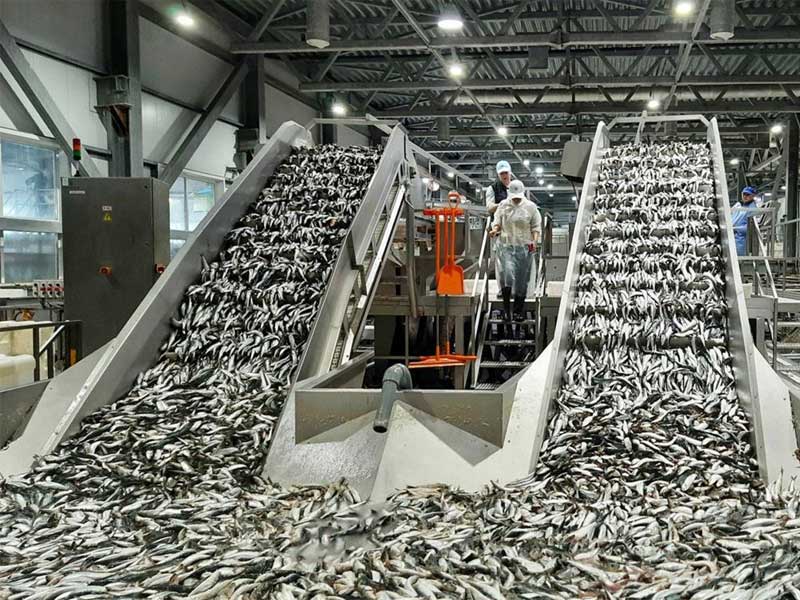
Why Cold Room Design Matters in Fish Processing
Fish is highly perishable. Its high water content and soft tissue structure make it extremely sensitive to temperature changes.
Even a small rise in temperature can accelerate:
-
Spoilage and odor formation
-
Texture breakdown
-
Color changes
-
Drip loss
Cold rooms in fish processing plants are used at multiple stages, including:
-
Raw material receiving
-
Pre-chilling after washing or cutting
-
Temporary storage before packing
-
Frozen storage
-
Dispatch staging
That means a cold room must do more than just “keep things cold.” It needs to:
-
Maintain stable temperatures
-
Remove heat quickly after loading
-
Avoid hot spots
-
Support hygienic handling
Start with the Process Flow
Before thinking about room size or equipment, map out the production flow.
A typical fish processing flow looks like this:
Receiving → Sorting & Washing → Cutting/Filleting → Pre-chilling → Packing → Storage → Dispatch
Cold room design should follow this sequence.
Recommended zoning
| Process Stage | Cold Room Type | Purpose |
|---|---|---|
| Raw receiving | Chilled receiving room | Short-term holding |
| After washing | Pre-chill room | Rapid cooling |
| Packed fresh fish | Chilled storage | Short-term storage |
| Frozen products | Frozen storage | Long-term storage |
| Dispatch | Dispatch cold room | Shipment staging |
Key principle:
Products should move from warmer to colder zones without backtracking.
Define Temperature Zones Clearly
Fish processing plants rarely operate with just one temperature.
Typical temperature ranges:
| Area | Temperature | Use |
|---|---|---|
| Receiving | 0 to 4°C | Raw fish holding |
| Pre-chill | -1 to 2°C | Rapid cooling |
| Chilled storage | 0 to 2°C | Fresh products |
| Ice room | -5 to 0°C | Ice storage |
| Frozen storage | -18 to -25°C | Long-term storage |
Fresh fish should be kept as close to 0°C as possible without freezing.
Frozen products must remain stable even during door openings.
Size the Cold Room Based on Real Demand
Cold room size should reflect actual storage needs.
Basic calculation approach
-
Estimate maximum product volume
-
Convert into pallet count
-
Calculate required floor area
Example
-
Daily processing: 20 tons
-
Chilled storage: 1 day
-
Frozen storage: 7 days
-
Pallet load: 800 kg
-
Space per pallet: ~2 m²
Result:
| Storage Type | Pallets | Area |
|---|---|---|
| Chilled | ~25 | ~50 m² |
| Frozen | ~175 | ~350 m² |
Always allow extra capacity for peak seasons and delays.
Plan the Layout Carefully
Layout has a direct impact on efficiency and hygiene.
Key considerations:
-
Product flow direction
-
Separation of raw and finished goods
-
Entry and exit points
-
Forklift access
-
Cleaning access
Practical tips:
-
Place receiving rooms near unloading areas
-
Keep pre-chill rooms close to processing lines
-
Locate finished goods storage near dispatch
-
Minimize door openings in frozen rooms
Choose Proper Insulation
Insulation affects both temperature stability and energy consumption.
Recommended panel thickness:
| Room Type | Thickness |
|---|---|
| Chilled rooms | 75–100 mm |
| Pre-chill | 100 mm |
| Frozen rooms | 120–150 mm |
Use moisture-resistant materials such as PU or PIR panels.
Ensure proper sealing to prevent condensation and heat gain.
Design the Refrigeration System Correctly
Cooling load is not just about room size.
It includes:
-
Product heat load
-
Heat transfer through walls
-
Air infiltration from doors
-
Internal loads (people, lighting, equipment)
Key factors:
| Factor | Impact |
|---|---|
| Product entry temperature | Higher = more cooling needed |
| Loading frequency | Increases demand |
| Door openings | Adds heat load |
| Target temperature | Affects system design |
Pre-chill rooms usually require higher capacity than storage rooms.
Manage Airflow and Humidity
Airflow directly affects product quality.
Common issues:
-
Too little airflow → uneven temperature
-
Too much airflow → product dehydration
Recommended approach:
| Product Type | Condition |
|---|---|
| Fresh fish | High humidity, gentle airflow |
| Packed chilled fish | Moderate airflow |
| Frozen products | Controlled airflow |
Avoid direct air blowing onto fish surfaces.
Design Hygienic Floors and Drainage
Fish processing environments are wet and require frequent cleaning.
Essential features:
-
Anti-slip flooring
-
Proper drainage slope
-
Smooth, washable surfaces
-
Sealed joints
Frozen rooms also need insulated floors to prevent frost damage.
Select the Right Doors
Doors are a major source of heat gain.
Options include:
-
Sliding doors (for forklifts)
-
Hinged doors (small access)
-
High-speed doors (frequent use)
-
Strip curtains
For frozen rooms, anti-icing door frames are recommended.
Match Storage Method to Design
Storage type affects layout and airflow.
Questions to consider:
-
Pallets or manual stacking?
-
Rack system or floor stacking?
-
Required aisle width?
-
Maximum stacking height?
A balance is needed between storage density and accessibility.
Install Monitoring and Control Systems
Reliable monitoring is essential.
Recommended features:
-
Temperature sensors
-
Door alarms
-
High-temperature alerts
-
Data logging
-
Remote monitoring
Fish products are sensitive, so real-time monitoring reduces risk.
Improve Energy Efficiency
Cold rooms consume significant energy.
Practical strategies:
-
High-quality insulation
-
LED lighting
-
Fast-closing doors
-
Reduced door opening time
-
Efficient fan control
Proper system sizing is critical—oversized or undersized systems both waste energy.
Avoid Common Mistakes
Frequent design errors include:
-
Using one room for multiple temperature needs
-
Underestimating product load
-
Ignoring door traffic
-
Poor airflow design
-
Inadequate drainage
-
Lack of monitoring systems
Final Thoughts
A well-designed cold room starts with understanding the process, not the equipment.
When the system is properly planned—covering temperature zones, layout, airflow, hygiene, and energy use—it becomes a key part of maintaining product quality and operational efficiency.
In fish processing, the cold room is not just storage.
It is a critical control point for freshness, safety, and consistency.
Post time:Sep-25-2020
