

When discussing cold storage construction, most buyers focus on refrigeration units, insulation panels, and temperature control systems. Surprisingly, the cold room door is often treated as a minor accessory.
After participating in cold storage projects for food processing plants, seafood warehouses, and commercial distribution centers, we have noticed a recurring pattern: many operational problems can be traced back to an unsuitable door selection.
A cold room door is more than an entry point. It acts as the barrier between a controlled environment and the outside world. Every time the door opens, warm air enters and cold air escapes. Over months and years, even small inefficiencies can significantly increase operating costs.
This article shares practical lessons from real cold storage projects, supported by industry data and common challenges faced by facility operators.
Why We Started Paying More Attention to Cold Room Doors
Several years ago, a frozen food customer approached us with a problem.
The facility had invested heavily in refrigeration equipment and premium insulation panels. However, energy consumption was consistently higher than expected.
After inspecting the site, the issue became obvious.
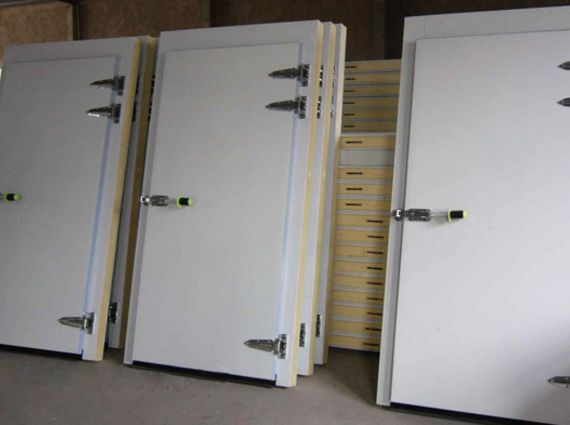
The main freezer entrance used a standard hinged cold room door. Forklifts passed through the opening hundreds of times every day. The door frequently remained open for extended periods during loading operations.
The refrigeration system was working overtime simply to compensate for temperature losses occurring at the entrance.
This experience reinforced an important lesson:
Even the most advanced refrigeration system cannot compensate for a poorly selected cold room door.
The Hidden Cost of Choosing the Wrong Door
Most buyers compare cold room doors based on purchase price.
However, the purchase price represents only a small portion of the total ownership cost.
Consider the following simplified example:
| Item | Low-Cost Door | High-Efficiency Door |
|---|---|---|
| Initial Cost | $2,500 | $4,000 |
| Estimated Service Life | 8 Years | 15 Years |
| Annual Maintenance | $350 | $120 |
| Additional Energy Cost | $1,000/Year | $300/Year |
After ten years:
Low-Cost Door
Total Cost:
$2,500 + ($350 × 10) + ($1,000 × 10)
= $16,000
High-Efficiency Door
Total Cost:
$4,000 + ($120 × 10) + ($300 × 10)
= $8,200
Although the second option costs more initially, the long-term savings are substantial.
Many cold storage operators only realize this after several years of operation.
Case Study: Seafood Processing Facility
One of the most memorable projects involved a seafood processor operating near a coastal region in Southeast Asia.
Project Overview
- Storage Area: 1,500 m²
- Operating Temperature: -25°C
- Daily Throughput: 70 Tons
- Forklift Traffic: Approximately 350 Passages Per Day
The original cold room was equipped with a manually operated hinged freezer door.
Initially, the system worked reasonably well.
As production increased, several issues appeared:
- Frost accumulation around the frame
- Frequent gasket damage
- Delayed loading operations
- Increased compressor running time
Workers often left the door partially open during peak periods because opening and closing it repeatedly became inconvenient.
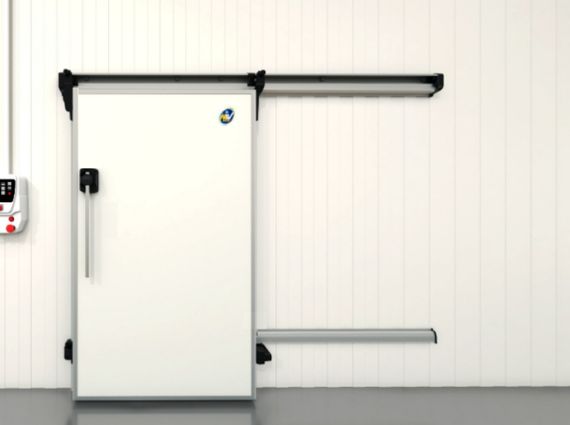
After reviewing operational data, the company decided to install a 150 mm insulated sliding cold room door with a heated frame and automatic closing system.
Results After Six Months
The facility reported:
- Approximately 11% reduction in electricity consumption
- Significantly less frost formation
- Faster loading operations
- Reduced maintenance interventions
Although every project is different, the results clearly demonstrated how door selection directly affects cold storage performance.
Understanding Your Actual Operating Conditions
One mistake we frequently see is choosing a door based solely on opening dimensions.
The more important questions are:
- How often will the door be used?
- Will forklifts pass through?
- What temperature will be maintained?
- Is hygiene a critical requirement?
- How much moisture exists in the environment?
These factors often determine the ideal door configuration.
A supermarket walk-in cooler has very different requirements from a frozen seafood warehouse.
Yet many buyers compare doors as if they were identical products.
Sliding or Hinged? What We Have Learned from Projects
There is no universal answer.
Both designs have advantages depending on the application.
Hinged Doors
We typically recommend hinged doors for:
- Restaurants
- Small food storage rooms
- Convenience stores
- Pharmaceutical cold rooms
Advantages include:
- Lower purchase cost
- Simple installation
- Easy maintenance
However, they become less practical when traffic volume increases.
Sliding Doors
Sliding doors are generally preferred for:
- Industrial cold storage
- Food processing plants
- Distribution centers
- Logistics warehouses
Their biggest advantage is operational efficiency.
In facilities where forklifts move continuously throughout the day, sliding doors help reduce delays and improve temperature retention.
Many operators initially hesitate because of the higher investment.
Yet in most high-traffic facilities, the payback period is often shorter than expected.
Temperature Matters More Than Many Buyers Realize
The operating temperature should influence every aspect of door selection.
For example:
| Temperature Range | Recommended Door Thickness |
|---|---|
| 0°C to 5°C | 75 mm |
| -5°C to -18°C | 100 mm |
| -18°C to -25°C | 120-150 mm |
| Below -30°C | 150-200 mm |
In freezer projects below -25°C, we generally recommend:
- Heated door frames
- Heated pressure relief valves
- Reinforced sealing systems
- Anti-condensation devices
Skipping these features may reduce the initial investment but often leads to operational issues later.
Energy Efficiency Is No Longer Optional
Electricity costs have increased significantly in many regions over the past few years.
As a result, cold storage operators are paying closer attention to energy efficiency.
Industry studies commonly indicate that refrigeration systems can account for 50% to 70% of a cold storage facility's electricity consumption.
Because the door is the most frequently opened part of the cold room, even small improvements can generate measurable savings.
We have observed facilities reducing energy usage simply by upgrading:
- Worn door gaskets
- Insulation thickness
- Closing mechanisms
- Traffic management systems
Sometimes the most effective energy-saving upgrade is not a new compressor—it is a better door.
Common Mistakes We See During Cold Storage Projects
Over time, certain mistakes appear repeatedly.
Buying Based Only on Price
A lower purchase price often results in higher operating costs.
Ignoring Traffic Frequency
High-traffic facilities require heavy-duty solutions.
Choosing Insufficient Insulation
Thin doors may be adequate today but expensive over the next decade.
Overlooking Maintenance
A door that is difficult to service can increase downtime and repair expenses.
Forgetting About Future Expansion
Many facilities grow faster than expected.
Selecting a door that accommodates future demand can prevent costly upgrades later.
What We Recommend Before Purchasing
Before requesting quotations from suppliers, create a simple checklist.
Document:
- Room temperature
- Door opening dimensions
- Daily traffic volume
- Type of products stored
- Cleaning requirements
- Available installation space
Providing this information allows suppliers to recommend the most appropriate solution rather than simply offering a standard product.
Final Thoughts
If there is one lesson we have learned from cold storage projects, it is this:
The cheapest door is rarely the most economical door.
A well-designed cold room door affects energy consumption, productivity, maintenance costs, employee safety, and product quality.
For facilities operating twenty-four hours a day, these factors can influence profitability for years.
When selecting a cold room door, think beyond the purchase price. Consider how the door will perform after thousands of opening cycles, changing weather conditions, and years of continuous operation.
The right decision today can save significant time, energy, and money in the future.
Frequently Asked Questions
How long does a cold room door typically last?
A high-quality industrial cold room door can often last 15–20 years with proper maintenance.
Is a sliding door better than a hinged door?
For high-traffic industrial applications, sliding doors are usually more efficient. Hinged doors remain an excellent choice for smaller facilities.
What is the most important factor when choosing a cold room door?
Traffic frequency and operating temperature are usually the two most critical considerations.
How much energy can an efficient cold room door save?
Depending on facility conditions, operators commonly report energy savings ranging from 5% to 15% after upgrading poorly performing doors.
Are heated door frames necessary?
For freezer rooms operating below -18°C, heated frames are highly recommended to prevent frost and ice buildup.
Post time:Sep-25-2020
