

Case Study: How a Food Warehouse Reduced Energy Costs by 27.8% After Installing High-Speed Freezer Doors
Introduction
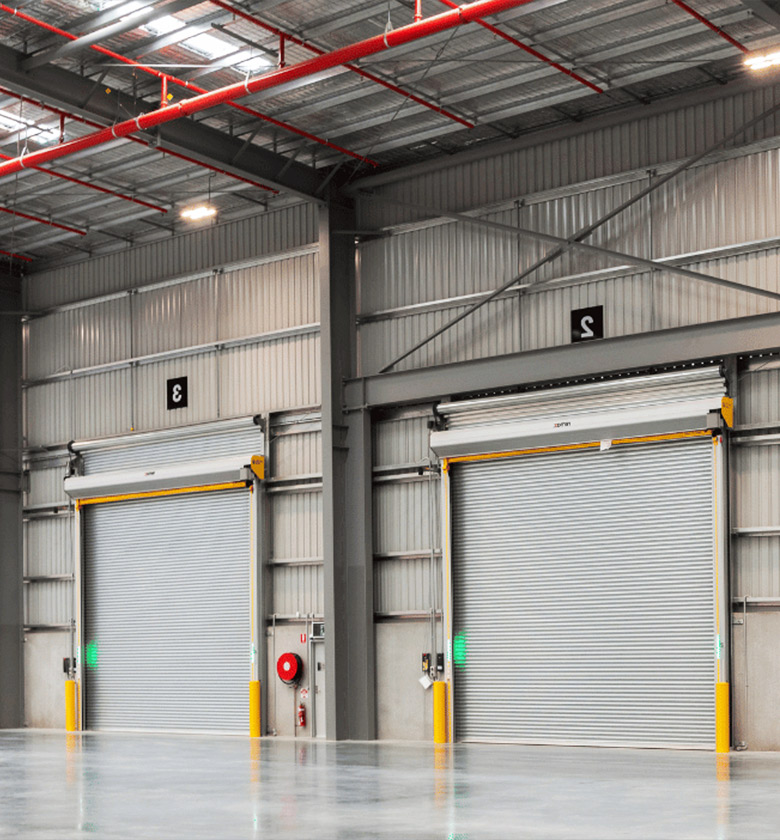
Several years ago, I visited a frozen food distribution center that had a problem many warehouse operators would immediately recognize.
The refrigeration equipment was working harder than expected.
Electricity bills kept increasing.
Ice regularly accumulated around the freezer entrance.
Forklift operators complained that the sliding doors slowed down traffic during peak loading hours.
At first glance, none of these issues appeared serious enough to justify a major investment. The warehouse had been operating for years using conventional insulated sliding doors.
Yet after a detailed operational review, it became clear that the doors themselves were contributing to a significant portion of the warehouse's energy loss.
This article shares the results of that project and explains how replacing traditional doors with high-speed freezer doors delivered measurable savings within the first year.
Project Background
Facility Overview
Industry:
Frozen Food Distribution
Location:
Southeast Asia
Warehouse Size:
8,500 m²
Freezer Area:
2,300 m²
Operating Temperature:
-25°C
Ambient Temperature:
30°C to 35°C
Daily Operating Hours:
20 hours
Forklift Movements:
Approximately 1,100 crossings per day
The facility supplied frozen meat, seafood, and processed food products to supermarkets and restaurant chains.
Because of increasing order volumes, warehouse traffic had nearly doubled compared to five years earlier.
However, the door system had never been upgraded.
Initial Problems Identified
After conducting a site inspection, four major issues emerged.
1. Excessive Door Open Time
The existing sliding door required:
- 8 seconds to open
- 8 seconds to close
Average cycle:
16 seconds
With over 1,100 daily crossings, the freezer remained partially open for nearly five hours every day.
2. Significant Cold Air Loss
Every time the door opened, warm humid air entered the freezer.
The consequences included:
- Increased refrigeration load
- Temperature fluctuations
- Product quality concerns
- Higher compressor operating hours
3. Ice Formation Around Door Frames
Condensation repeatedly froze around the entrance.
This caused:
- Safety risks
- Door seal damage
- Increased maintenance costs
4. Forklift Delays
Forklift operators frequently waited for the sliding doors to fully open.
Warehouse management estimated:
- 10–15 seconds lost per crossing
Although small individually, the cumulative impact was substantial.
Evaluating Potential Solutions
The warehouse considered three options.
| Option | Initial Cost | Expected Energy Saving |
|---|---|---|
| Replace Seals Only | Low | Limited |
| Install New Sliding Doors | Medium | Moderate |
| Install High-Speed Freezer Doors | Higher | Significant |
After reviewing long-term operating costs, management selected insulated high-speed freezer doors.
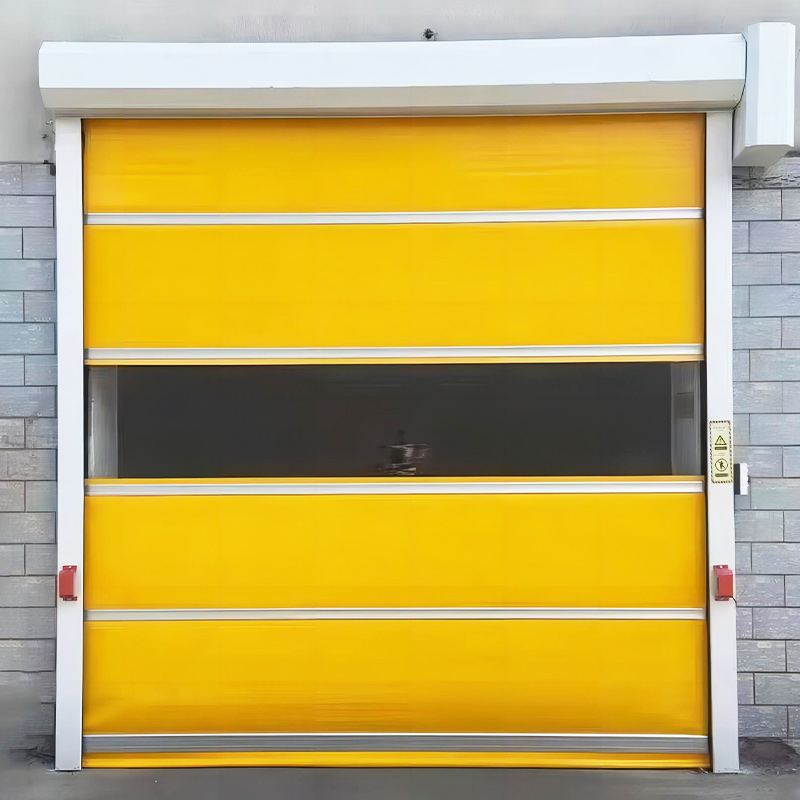
High-Speed Door Specifications
Installed door size:
4.0 m × 4.5 m
Opening speed:
2.0 m/s
Closing speed:
1.5 m/s
Door curtain:
Thermal insulated composite curtain
Control system:
Radar + induction loop
Safety:
Photoelectric sensors
Operating temperature:
-30°C to +45°C
Performance Measurements After Installation
The warehouse monitored performance for six months.
The results were surprising even for the engineering team.
Door Open Time Comparison
Before
Average cycle:
16 seconds
Daily crossings:
1,100
Total open time:
17,600 seconds
4.89 hours/day
After
Average cycle:
4.5 seconds
Daily crossings:
1,100
Total open time:
4,950 seconds
1.38 hours/day
Improvement
Door open time reduced by:
71.9%
This immediately reduced warm air infiltration.
Energy Consumption Analysis
Energy data was collected directly from the refrigeration control system.
Before Installation
Average monthly energy consumption:
182,000 kWh
After Installation
Average monthly energy consumption:
131,500 kWh
Difference
Reduction:
50,500 kWh/month
Percentage reduction:
27.8%
Electricity Cost Savings
Local electricity rate:
USD 0.14/kWh
Monthly savings:
50,500 × 0.14
= USD 7,070
Annual savings:
USD 84,840
ROI Calculation
Project Cost
Two high-speed freezer doors:
USD 42,000
Installation:
USD 6,000
Control upgrades:
USD 4,500
Total Investment:
USD 52,500
Payback Period
Annual savings:
USD 84,840
Investment:
USD 52,500
Payback:
52,500 ÷ 84,840
= 0.62 years
Approximately 7.4 months
For warehouse management, this was one of the fastest-return projects completed in the facility.
Productivity Improvements
Energy savings were not the only benefit.
The operational team noticed improvements almost immediately.
Forklift Efficiency
Before:
Average waiting time:
11 seconds
After:
2 seconds
Reduction:
81.8%
Labor Productivity
Warehouse throughput increased.
Average pallet movement per hour:
Before:
178 pallets
After:
214 pallets
Increase:
20.2%
No additional labor was required.
Temperature Stability Analysis
Maintaining a consistent freezer temperature is critical for food safety.
Data loggers recorded internal temperatures over a 30-day period.
Before Installation
Temperature variation:
-25°C to -20°C
Fluctuation:
5°C
After Installation
Temperature variation:
-25°C to -23.2°C
Fluctuation:
1.8°C
Improvement
Temperature stability improved by approximately 64%.
This reduced stress on refrigeration equipment and improved product protection.
Ice Formation Results
One unexpected benefit involved ice accumulation.
Before installation:
Maintenance crews removed ice from door frames almost every week.
After installation:
Ice-related maintenance calls dropped by more than 80%.
The reason was simple.
The door opened and closed so quickly that significantly less moisture entered the freezer.
Less moisture meant less frost.
Less frost meant fewer maintenance issues.
Lessons Learned From the Project
Looking back, several important lessons emerged.
Lesson 1
Many warehouses underestimate the impact of door performance on refrigeration costs.
Management often focuses on compressors and insulation while ignoring the doorway itself.
In reality, the doorway may be one of the largest sources of thermal loss.
Lesson 2
Energy savings alone can justify the investment.
Many operators assume high-speed freezer doors are expensive.
However, when evaluated against annual energy costs, the investment often pays for itself much faster than expected.
Lesson 3
Productivity gains are often larger than energy savings.
The warehouse originally approved the project to reduce electricity costs.
Yet operational improvements ultimately created additional value that was not included in the original ROI calculations.
Lesson 4
Door selection should match traffic volume.
For low-traffic cold rooms, traditional doors may still be suitable.
For facilities with continuous forklift movement, high-speed freezer doors usually deliver better long-term economics.
Comparing High-Speed Doors and Traditional Sliding Doors
| Factor | Sliding Door | High-Speed Freezer Door |
|---|---|---|
| Opening Speed | Slow | Very Fast |
| Energy Efficiency | Medium | High |
| Traffic Flow | Medium | Excellent |
| Ice Formation Risk | Higher | Lower |
| Maintenance Frequency | Medium | Lower |
| ROI Potential | Moderate | High |
Is a High-Speed Freezer Door Worth the Investment?
Based on this project, the answer was clearly yes.
The warehouse achieved:
- 27.8% lower energy consumption
- 81.8% less forklift waiting time
- 64% better temperature stability
- Over 80% reduction in icing problems
- Payback period of only 7.4 months
These results transformed what initially appeared to be a simple door replacement into a strategic operational upgrade.
Final Thoughts
When discussing cold storage efficiency, attention usually focuses on refrigeration equipment, insulation panels, or warehouse management systems.
Yet one of the most frequently used components in any freezer facility is the door itself.
Every opening represents an opportunity for energy loss, temperature fluctuation, and operational delay.
For food warehouses with high traffic volumes, a properly designed high-speed freezer door can significantly improve efficiency while delivering measurable financial returns.
The project described above demonstrated that sometimes the most effective energy-saving investment is not a larger refrigeration system—but a faster door.
Post time:Sep-25-2020
