

Introduction
One of the most common questions we receive from cold storage operators is:
"Will installing a high speed freezer door actually save enough energy to justify the investment?"
It is a reasonable question.
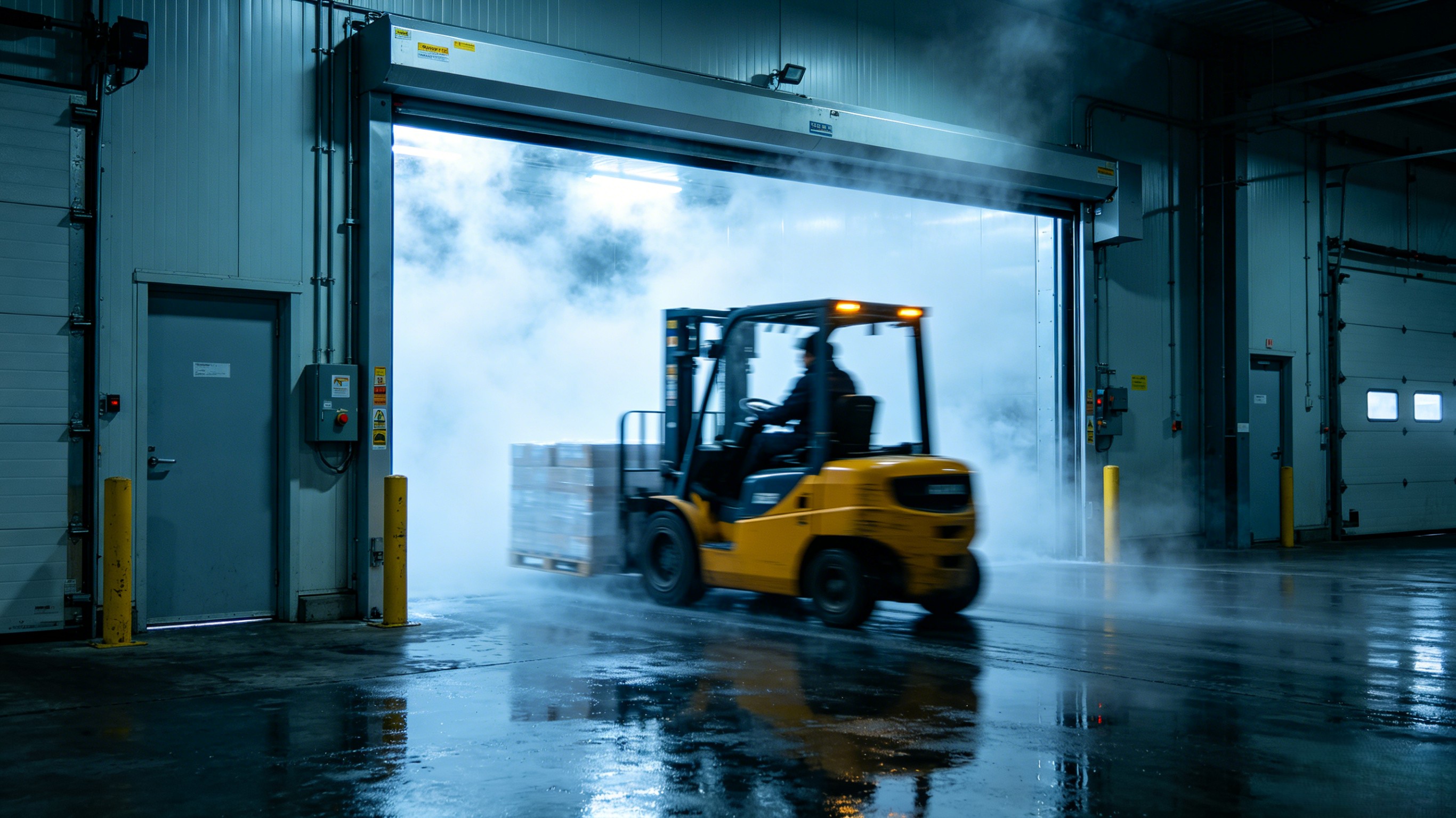
A high speed freezer door typically costs several times more than a conventional sliding cold room door. At first glance, many warehouse owners focus only on the purchase price.
However, after working with cold storage projects in food processing plants, frozen logistics centers, seafood warehouses, and pharmaceutical facilities, we have found that the purchase price is often the least important number.
The real cost comes from:
- Cold air loss
- Frost accumulation
- Refrigeration system overload
- Increased compressor runtime
- Product temperature fluctuations
- Labor delays caused by slow door operation
In many facilities, the annual energy savings alone can pay for the door within 1–3 years.
This article shares actual project experience, energy calculations, and comparisons between different cold storage door types.
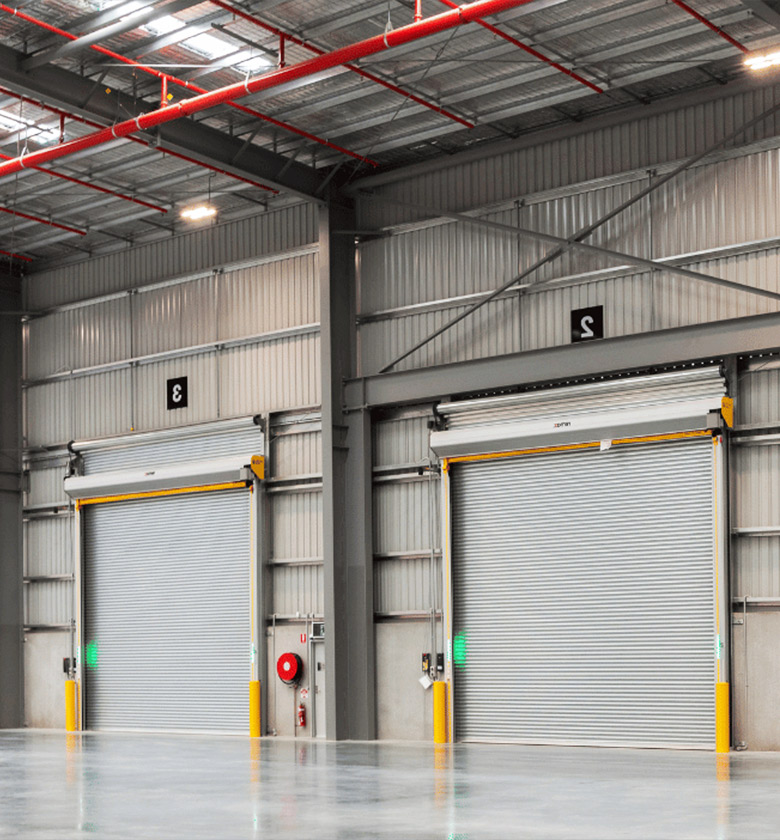
Why Door Openings Are One of the Biggest Sources of Energy Loss
Many warehouse managers assume refrigeration compressors consume the most energy.
Technically this is true.
However, what causes compressors to work harder?
The answer is usually:
Warm air infiltration through door openings.
Every time a freezer door opens, warm ambient air enters while heavy cold air escapes.
This process is known as:
Air Exchange
For a freezer operating at:
- Freezer temperature: -25°C
- Ambient temperature: +25°C
The temperature difference reaches:
50°C
This large temperature differential creates a powerful pressure and density imbalance.
The result:
- Cold air flows outward
- Warm moist air flows inward
- Ice and frost form immediately
The refrigeration system must remove this heat load continuously.
Traditional Sliding Door vs High Speed Freezer Door
Let's compare opening and closing speeds.
| Door Type | Average Opening Time |
|---|---|
| Manual Sliding Door | 20-30 seconds |
| Electric Sliding Door | 12-20 seconds |
| High Speed Freezer Door | 2-5 seconds |
A traditional door may remain open for 20 seconds.
A high speed freezer door often completes the entire cycle within 5 seconds.
That means:
Door-open exposure time can be reduced by 75-85%.
This is where most energy savings originate.
Understanding the Hidden Cost of Cold Air Loss
Consider a typical frozen warehouse.
Facility Specifications
Warehouse Size:
- 2,000 m²
Freezer Temperature:
- -25°C
Door Opening:
- 3m × 4m
Door Traffic:
- 120 cycles/day
Operating Days:
- 365 days/year
Electricity Cost:
- $0.12/kWh
Scenario 1: Conventional Sliding Door
Average opening duration:
20 seconds
Total open time per day:
120 × 20 = 2,400 seconds
= 40 minutes/day
Scenario 2: High Speed Freezer Door
Average opening duration:
5 seconds
Total open time:
120 × 5 = 600 seconds
= 10 minutes/day
Difference
40 − 10 = 30 minutes/day
The freezer remains exposed for 30 fewer minutes every day.
Over one year:
30 × 365
= 10,950 minutes
= 182.5 hours
This represents a significant reduction in heat infiltration.
Real Energy Loss Calculation
According to refrigeration engineering standards, a freezer opening measuring:
3m × 4m
can experience approximately:
40–70 kW of infiltration heat load
during door openings.
Using a conservative value:
50 kW
Annual energy reduction:
182.5 × 50
= 9,125 kWh
Electricity savings:
9,125 × $0.12
= $1,095/year
This figure only includes direct refrigeration energy.
The actual savings are often much higher.
Additional Savings Most Operators Ignore
Many ROI calculations underestimate the value of high speed freezer doors because they focus solely on compressor electricity.
In reality, several hidden benefits contribute to savings.
1. Reduced Frost Formation
Warm air contains moisture.
When moisture enters a freezer:
- Ice forms on evaporators
- Frost accumulates on ceilings
- Ice builds up around door frames
This leads to:
- More frequent defrost cycles
- Higher energy consumption
- Additional maintenance
Facilities often report:
20-40% reduction in frost-related maintenance after installation.
2. Lower Compressor Runtime
Every kilogram of warm air entering the freezer becomes additional refrigeration load.
In one seafood warehouse project, compressor operating hours decreased by approximately:
18%
after replacing sliding doors with high speed freezer doors.
3. Longer Equipment Life
Reduced compressor cycling means:
- Lower wear
- Fewer breakdowns
- Longer service intervals
For large refrigeration systems, extending compressor life by even one year can save tens of thousands of dollars.
Case Study 1: Frozen Food Distribution Center
Location:
Southeast Asia
Facility Size:
5,500 m²
Storage Temperature:
-22°C
Problem:
The loading area experienced heavy forklift traffic.
Existing sliding doors remained open for extended periods.
Issues included:
- Ice accumulation
- Employee safety concerns
- High electricity bills
Solution
Installation of:
4 High Speed Freezer Doors
Specifications:
- Opening speed: 2.0 m/s
- Closing speed: 1.0 m/s
- Heated side columns
- Heated bottom seal
Results After 12 Months
| Indicator | Before | After |
|---|---|---|
| Monthly Energy Use | 148,000 kWh | 125,000 kWh |
| Frost Maintenance | Weekly | Monthly |
| Compressor Runtime | 100% | 82% |
| Forklift Waiting Time | 100% | 35% |
Annual energy reduction:
276,000 kWh
Annual electricity savings:
Approximately $33,000
Door investment payback:
Around 18 months
Case Study 2: Seafood Processing Plant
A seafood exporter operated a freezer tunnel at:
-30°C
The facility used traditional insulated sliding doors.
The problem was not only energy consumption.
Product quality was affected.
Temperature fluctuations occurred every time forklifts moved products.
Solution
Installed two high speed freezer doors with:
- Double insulated curtain
- Anti-condensation heating system
- PLC automatic control
Results
Within six months:
- Product temperature variation reduced by 60%
- Frost accumulation reduced by 70%
- Defrost cycles reduced by 35%
- Energy consumption reduced by 14%
The operations manager later commented:
"We initially bought the doors to improve workflow. Energy savings became an unexpected bonus."
This observation is common in freezer facilities.
Comparison of Different Cold Storage Door Types
1. Manual Sliding Door
Advantages:
- Low purchase cost
- Simple structure
Disadvantages:
- Slow operation
- High energy loss
- Labor dependent
Energy Performance:
Poor
2. Electric Sliding Door
Advantages:
- Automated operation
- Better sealing
Disadvantages:
- Slower than high speed doors
- Longer open duration
Energy Performance:
Moderate
3. High Speed Freezer Door
Advantages:
- Fast opening
- Fast closing
- Reduced air exchange
- Better workflow
Disadvantages:
- Higher initial investment
Energy Performance:
Excellent
Comparison Table
| Feature | Manual Door | Electric Sliding Door | High Speed Freezer Door |
|---|---|---|---|
| Opening Speed | Slow | Medium | Very Fast |
| Air Infiltration | High | Medium | Low |
| Frost Formation | High | Medium | Low |
| Labor Efficiency | Low | Medium | High |
| Energy Savings | Low | Moderate | Excellent |
| ROI | Long | Medium | Short |
ROI Analysis
A typical industrial high speed freezer door costs:
$6,000–$15,000
Depending on:
- Size
- Temperature range
- Heating systems
- Safety sensors
Typical annual savings:
$2,000–$10,000
Simple payback period:
Low-Traffic Warehouse
3–5 years
Medium-Traffic Warehouse
2–3 years
High-Traffic Distribution Center
1–2 years
Many logistics facilities recover their investment faster than expected.
Experience from Real Projects
After supplying freezer doors for various cold chain facilities, one pattern appears consistently.
Customers initially focus on:
"How much does the door cost?"
After installation, they focus on:
"Why didn't we install it earlier?"
The biggest benefits are usually:
- Reduced energy consumption
- Less ice buildup
- Faster forklift movement
- Improved worker safety
- Lower maintenance costs
Energy savings are important.
Operational efficiency is often even more valuable.
When Does a High Speed Freezer Door Make the Most Sense?
A high speed freezer door is particularly suitable when:
✓ Temperature below -18°C
✓ More than 50 door cycles per day
✓ Frequent forklift traffic
✓ Large door openings
✓ High electricity costs
✓ Frost problems already exist
The higher the traffic volume, the faster the return on investment.
Final Thoughts
So, how much energy can a high speed freezer door save?
Based on actual project experience and industry calculations, most facilities achieve:
10%–30% reduction in refrigeration-related energy consumption.
In high-traffic freezer warehouses, savings can be even greater.
When energy reduction, labor efficiency, frost control, and equipment protection are combined, high speed freezer doors often become one of the most cost-effective upgrades available for a cold storage facility.
The question is no longer whether a high speed freezer door saves energy.
The real question is:
How much energy are you currently losing every day without one?
Post time:Sep-25-2020
