

Not long ago, most cold storage facilities were still using traditional sliding doors. In smaller cold rooms, hinged doors were even more common. They were reliable, easy to maintain, and for many years nobody paid much attention to them. As long as the door opened and closed properly, it was considered good enough.
But warehouse operations today are very different from what they were ten years ago.
A cold storage warehouse that handled a few dozen pallet movements per day may now process several times that volume. Forklifts move continuously between temperature zones, loading docks operate for longer hours, and managers are paying much closer attention to energy consumption than they did in the past.
One thing we've noticed while discussing projects with cold storage owners is that refrigeration equipment often receives most of the attention when energy costs increase. Compressors, evaporators, and insulation panels are carefully evaluated, yet the doors themselves are sometimes overlooked.
In reality, doors are among the most frequently used components in any cold storage facility. A busy warehouse may open and close the same doorway hundreds of times every day. Each opening allows warm air to enter and cold air to escape. The effect may seem minor during a single cycle, but over weeks, months, and years, those small losses add up.
This shift in awareness is one reason why high-speed doors are appearing in more cold storage projects than ever before. What was once seen as a premium option is increasingly becoming a practical solution for facilities looking to improve efficiency, reduce energy waste, and support faster warehouse operations.
The following sections draw on project experience, operating data, and real-world applications to explain why many cold storage operators are making the switch and what results they are seeing after installation.
| Metric | Improvement |
|---|---|
| Door Opening Exposure | ↓ 75% |
| Energy Consumption | ↓ 15-30% |
| Frost Formation | ↓ 40-60% |
| Maintenance Costs | ↓ 30-50% |
| Forklift Efficiency | ↑ 10-15% |
| Temperature Stability | ↑ 50-70% |
| ROI Period | 2-4 Years |
Understanding the Challenge of Cold Storage Operations
Cold storage facilities are unique environments.
Unlike standard warehouses, they must maintain stable temperatures around the clock. Even small temperature variations can affect product quality, food safety compliance, and refrigeration costs.
Every time a door opens, warm outside air enters while cold air escapes.
This exchange creates several problems:
- Increased refrigeration load
- Higher electricity consumption
- Frost and ice formation
- Temperature instability
- Reduced equipment lifespan
- Poor working conditions
Many facility managers underestimate how significant these losses can be.
According to various refrigeration engineering studies, door openings can account for 20% to 35% of total cooling energy loss in heavily trafficked cold storage facilities.
For operations where forklifts move continuously between temperature zones, traditional doors often become one of the largest sources of energy waste.
The Limitations of Traditional Cold Room Doors
Traditional cold storage doors generally fall into two categories:
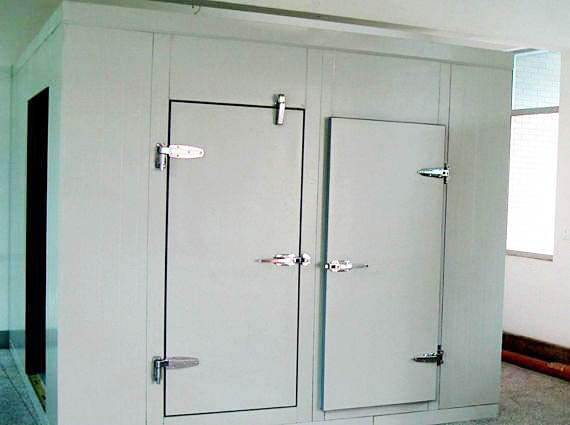
Hinged Doors
Hinged doors are common in small cold rooms and walk-in freezers.
Advantages include:
- Low initial investment
- Simple installation
- Easy maintenance
However, they also present several disadvantages:
- Slow opening and closing
- Dependence on manual operation
- Frequent accidental damage
- Air leakage caused by improper closing
In busy facilities, workers often leave hinged doors partially open to improve workflow, which defeats their thermal insulation purpose.
Sliding Doors
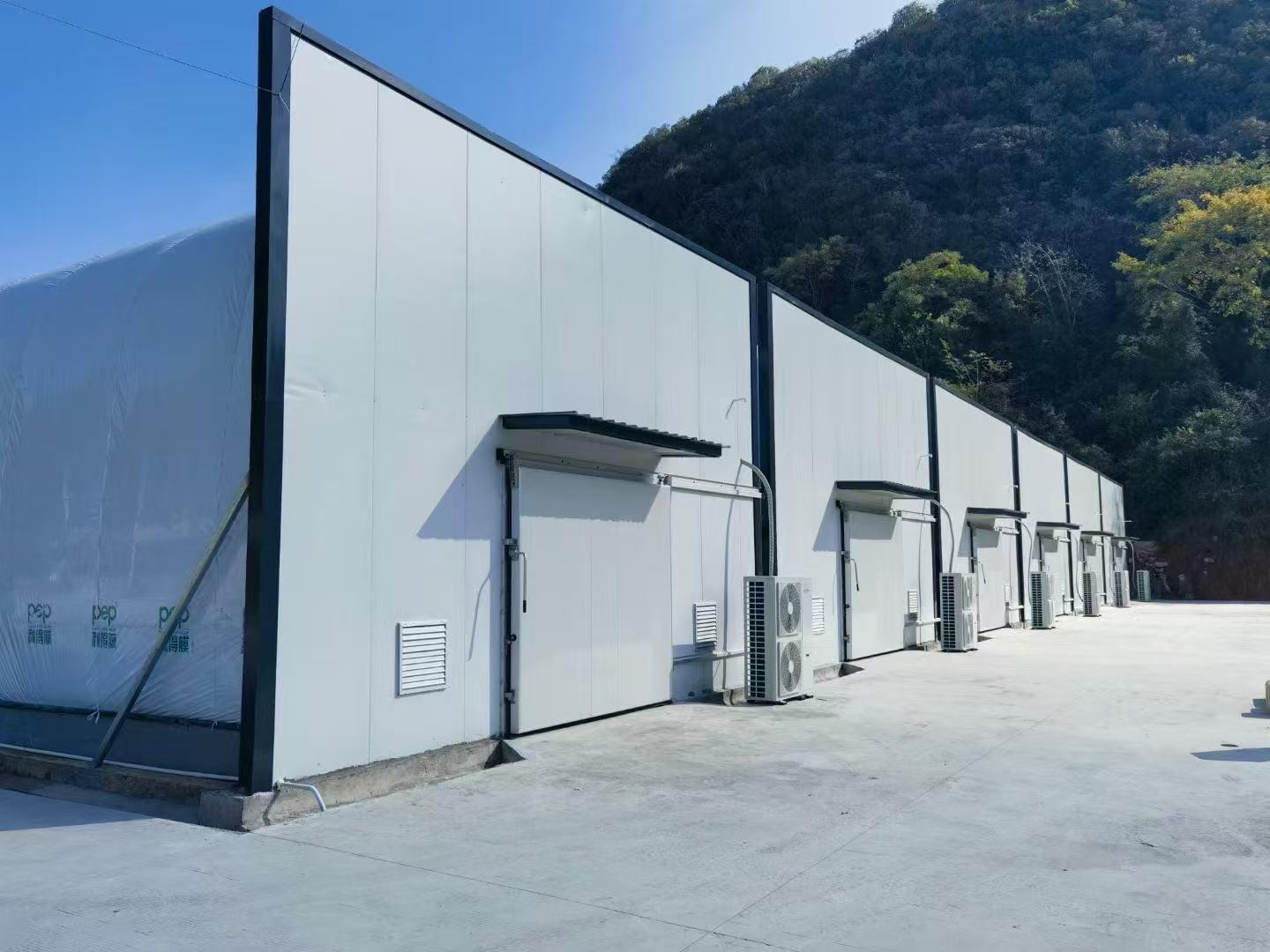
Sliding doors are widely used in larger cold rooms.
Compared with hinged doors, they offer:
- Better insulation
- Larger opening dimensions
- Improved durability
Yet they still have limitations.
Opening a large sliding door can take several seconds. During peak operation periods, this delay accumulates throughout the day.
Additionally, repeated forklift traffic often leads to impact damage, track wear, and seal deterioration.
Over time, the actual thermal performance may be significantly lower than the original design specification.
What Makes High-Speed Doors Different?
High-speed doors are designed to minimize the amount of time an opening remains exposed.
Unlike conventional doors, they can operate at speeds ranging from 0.8 m/s to over 2.0 m/s.
Some advanced models can complete a full opening and closing cycle in just a few seconds.
This seemingly simple difference creates significant operational benefits.
When the door remains open for less time:
- Less cold air escapes
- Less warm air enters
- Refrigeration systems work less
- Frost formation decreases
- Internal temperatures remain more stable
The result is measurable energy savings and improved operational efficiency.
Data Analysis: The Energy Savings Potential
Let's consider a practical example.
Imagine a frozen food warehouse with:
- Temperature: -20°C
- Door size: 3 m × 3 m
- Traffic frequency: 250 cycles per day
A conventional sliding door may remain open for approximately 20 seconds per cycle.
Daily exposure time:
250 × 20 seconds = 5,000 seconds
Approximately 83 minutes per day.
Now compare this with a high-speed door operating at 5 seconds per cycle.
250 × 5 seconds = 1,250 seconds
Approximately 21 minutes per day.
This reduces opening exposure by roughly 75%.
While actual energy savings depend on facility conditions, many operators report cooling energy reductions between 15% and 30% after upgrading to high-speed doors.
Considering rising electricity costs worldwide, these savings can generate a surprisingly fast return on investment.
Case Study 1: Frozen Seafood Distribution Center
A seafood distributor operating a -25°C freezer warehouse experienced persistent frost buildup around loading areas.
The facility originally used insulated sliding doors.
Challenges included:
- Heavy forklift traffic
- Frequent ice accumulation
- High maintenance costs
- Worker safety concerns
After replacing two main access points with insulated high-speed freezer doors, management monitored performance for twelve months.
Results included:
- Noticeable reduction in frost formation
- Lower defrost cycle frequency
- Reduced forklift waiting time
- Approximately 18% lower refrigeration energy consumption
Although the initial investment was higher than standard doors, the project achieved payback within three years.
Case Study 2: Food Processing Plant
A food manufacturer producing frozen ready meals faced increasing production demands.
The cold storage area connected directly to processing lines, creating constant traffic between temperature-controlled zones.
Traditional sliding doors became a bottleneck.
Forklift operators frequently waited for doors to open and close, reducing productivity.
The company installed automatic high-speed doors equipped with motion sensors.
Six months later, management observed:
- Faster material flow
- Reduced congestion
- Improved temperature stability
- Higher daily throughput
The production team estimated that operational efficiency improved by nearly 12%.
In industries with tight delivery schedules, this improvement represented a significant competitive advantage.
Improved Temperature Stability
Temperature consistency is becoming increasingly important.
Food safety regulations worldwide require strict temperature monitoring.
Pharmaceutical products often demand even tighter environmental control.
Every unnecessary temperature fluctuation introduces risk.
High-speed doors help create a more stable internal environment by reducing air exchange.
This stability supports:
- Product quality preservation
- Regulatory compliance
- Inventory protection
- Longer shelf life
For facilities storing high-value products, these benefits often outweigh energy savings alone.
Reduced Frost and Ice Formation
One of the most overlooked benefits of high-speed doors is frost reduction.
When warm humid air enters a freezer room, moisture immediately condenses and freezes.
Over time, operators may experience:
- Ice buildup around door frames
- Frozen floor surfaces
- Reduced visibility
- Increased slip hazards
Removing ice requires labor, downtime, and additional energy.
By minimizing infiltration, high-speed doors significantly reduce moisture entry.
Many operators report cleaner working environments and lower maintenance requirements after installation.
Enhanced Worker Safety
Safety remains a critical concern in warehouse operations.
Traditional doors often create visibility problems for forklift drivers.
High-speed doors commonly incorporate transparent vision panels that improve visibility between traffic zones.
Additional safety features may include:
- Photoelectric sensors
- Safety light curtains
- Impact-resistant curtains
- Automatic reverse systems
These technologies reduce collision risks and improve workplace safety.
A safer facility often means lower insurance costs and fewer operational disruptions.
Better Logistics Efficiency
Modern supply chains demand speed.
Whether handling frozen meat, seafood, dairy products, pharmaceuticals, or fresh produce, warehouse efficiency directly affects profitability.
A few seconds saved per door cycle may seem insignificant.
However, across thousands of daily movements, the cumulative effect becomes substantial.
Consider a warehouse with:
- 500 door cycles daily
- 10 seconds saved per cycle
Daily time savings:
5,000 seconds
Approximately 83 minutes every day.
Over a year, this represents hundreds of labor hours.
For large distribution centers, the operational impact can be enormous.
Supporting Automation and Smart Warehousing
Automation is transforming the cold storage industry.
Automated guided vehicles (AGVs), autonomous forklifts, and warehouse management systems are becoming increasingly common.
Traditional manually operated doors often struggle to integrate with these technologies.
High-speed doors are designed for automated environments.
They can communicate with:
- AGV systems
- RFID readers
- Warehouse management software
- Traffic control systems
- Access control systems
This compatibility makes them an important component of future-ready cold storage facilities.
Environmental Benefits
Sustainability has become a major business objective.
Reducing electricity consumption not only lowers operating costs but also decreases carbon emissions.
A cold storage facility that consumes less energy contributes directly to environmental goals.
For companies pursuing ESG initiatives or green building certifications, high-speed doors represent a practical and measurable improvement.
Energy efficiency is no longer just a cost issue—it has become part of corporate responsibility.
Are High-Speed Doors Worth the Investment?
The most common concern among buyers is cost.
There is no doubt that high-speed doors require a higher initial investment than standard hinged or sliding doors.
However, focusing only on purchase price can be misleading.
The more relevant question is:
"What is the total cost of ownership over the next 10 years?"
When considering:
- Energy savings
- Reduced maintenance
- Improved productivity
- Less frost removal
- Better safety performance
- Longer refrigeration equipment life
Many facilities discover that high-speed doors deliver a lower overall operating cost.
The busiest cold storage facilities typically achieve the fastest payback periods.
Choosing the Right High-Speed Door
Not all high-speed doors are suitable for cold storage applications.
Important factors include:
Insulation Performance
The door should provide sufficient thermal resistance to minimize heat transfer.
Opening Speed
Faster operation generally improves energy efficiency.
Low-Temperature Reliability
Components must function reliably in freezer environments.
Seal Quality
Effective sealing is critical for preventing air leakage.
Safety Features
Modern sensor technology improves both safety and productivity.
Maintenance Support
Availability of spare parts and technical support should be considered before purchase.
Selecting the correct solution requires balancing operational requirements, environmental conditions, and long-term cost considerations.
Finally, let’s take a look at a comparison of cold storage door specifications
Table 1. Traditional Doors vs High-Speed Doors
Performance Comparison
| Comparison Item | Hinged Door | Sliding Door | High-Speed Door |
|---|---|---|---|
| Opening Speed | 3-8 sec | 8-15 sec | 1-3 sec |
| Closing Speed | 3-8 sec | 8-15 sec | 1-3 sec |
| Daily Door Cycles | <100 | 100-200 | 500-3000+ |
| Energy Efficiency | Low | Medium | High |
| Temperature Stability | Poor | Good | Excellent |
| Automation Compatibility | Poor | Medium | Excellent |
| Frost Prevention | Poor | Medium | Excellent |
| Forklift Traffic Efficiency | Low | Medium | High |
| Safety Features | Basic | Standard | Advanced |
| ROI Potential | Low | Medium | High |
Table 2. Door Opening Exposure Time Analysis
Based on 250 Daily Openings
| Door Type | Average Open Time/Cycle | Daily Exposure Time | Annual Exposure Time |
|---|---|---|---|
| Hinged Door | 25 sec | 104 min | 632 hrs |
| Sliding Door | 20 sec | 83 min | 505 hrs |
| High-Speed Door | 5 sec | 21 min | 126 hrs |
Key Finding
Compared with traditional sliding doors, a high-speed door reduces door-open exposure by approximately:
75%
This directly reduces cold air loss and refrigeration load.
Table 3. Estimated Energy Loss Comparison
3m × 3m Door / -20°C Freezer
| Door Type | Annual Energy Loss (kWh) | Estimated Electricity Cost* |
|---|---|---|
| Hinged Door | 68,000 | $10,200 |
| Sliding Door | 55,000 | $8,250 |
| High-Speed Door | 38,000 | $5,700 |
*Calculated at $0.15/kWh.
Annual Savings
| Upgrade Path | Annual Savings |
|---|---|
| Hinged → High-Speed | $4,500 |
| Sliding → High-Speed | $2,550 |
Table 4. Frost Formation Comparison
| Evaluation Criteria | Sliding Door | High-Speed Door |
|---|---|---|
| Moisture Infiltration | High | Low |
| Frost Build-Up | Frequent | Minimal |
| Defrosting Frequency | Weekly | Monthly |
| Floor Ice Formation | Common | Rare |
| Maintenance Cost | High | Low |
Table 5. Forklift Productivity Improvement
Example Warehouse
| Parameter | Before Upgrade | After Upgrade |
|---|---|---|
| Door Waiting Time | 12 sec | 3 sec |
| Forklift Trips/Day | 500 | 580 |
| Loading Efficiency | 100% | 116% |
| Labor Utilization | Baseline | +12% |
Productivity Gain
Annual labor productivity increase:
10%–15%
Post time:Sep-25-2020
