

About three years ago, I visited a frozen food distribution center that had recently expanded its storage capacity. The refrigeration system was brand new, the insulation panels were professionally installed, and the compressors were operating within their designed efficiency range.
On paper, everything looked perfect.
Yet the facility manager had one complaint that kept coming up during our conversation.
"Our electricity bill is much higher than expected."
At first glance, everyone suspected the refrigeration equipment. Engineers checked compressor performance, refrigerant charge, evaporator operation, condenser cleanliness, and control systems. Nothing appeared abnormal.
Then we spent an hour simply watching forklift traffic.
That observation completely changed the direction of the investigation.
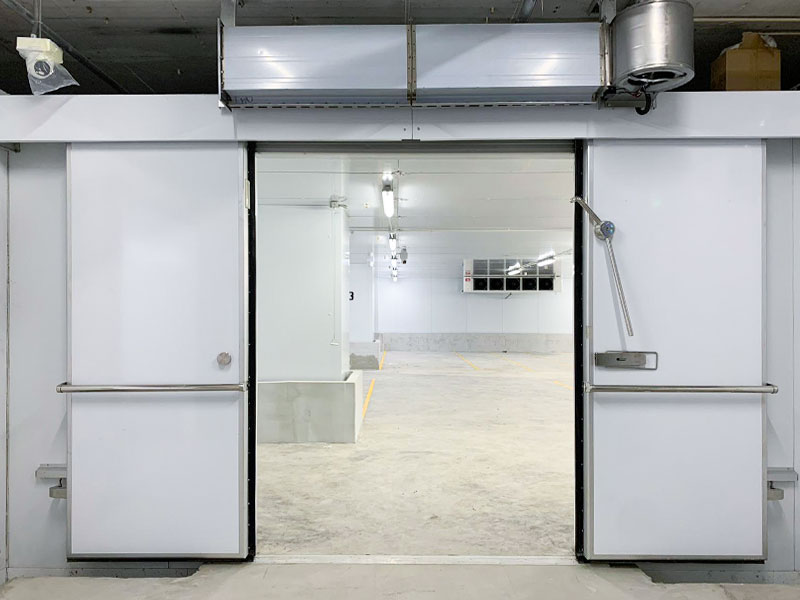
Every few minutes, forklifts entered and exited the freezer through a traditional sliding freezer door. Sometimes the door remained open while operators scanned pallets. Occasionally it stayed open because another forklift was only seconds behind.
No alarms.
No equipment failures.
Just a door that remained open far longer than anyone realized.
Although each opening lasted less than a minute, the cumulative effect over an entire day resulted in an enormous amount of cold air escaping from the freezer.
The refrigeration system was not inefficient.
It was simply compensating for energy that was continuously being lost through the doorway.
This experience is surprisingly common across cold storage warehouses, food processing plants, pharmaceutical distribution centers, seafood exporters, meat processing facilities, and logistics hubs worldwide.
Many operators invest hundreds of thousands of dollars in high-efficiency compressors, variable-frequency drives, and advanced refrigeration controls, while overlooking one of the largest sources of unnecessary energy loss—the freezer door itself.
Today, with electricity prices rising in almost every region of the world, the performance of a freezer door is no longer just a convenience issue. It has become a measurable factor affecting operating costs, product quality, employee safety, and equipment lifespan.
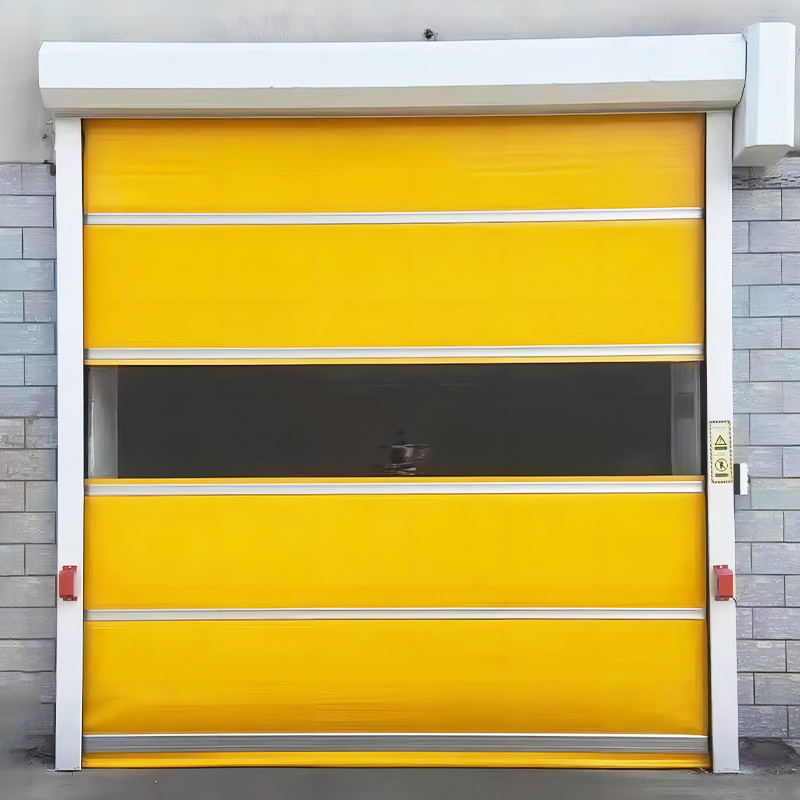
So the question is no longer whether a high speed freezer door can save energy.
The real question is:
How much energy can it actually save?
The answer depends on several variables, including traffic frequency, freezer temperature, door opening time, ambient conditions, and warehouse layout. However, after reviewing numerous cold storage projects across food manufacturing and logistics industries, one conclusion remains remarkably consistent:
In many facilities, upgrading from a conventional sliding freezer door to a high speed insulated freezer door reduces refrigeration energy consumption by 15% to 35%, with some high-traffic warehouses achieving even greater savings.
This article explains why.
More importantly, it explains the numbers behind those savings rather than relying on marketing claims.
Why Door Openings Matter More Than Most People Think
When discussing refrigeration efficiency, conversations usually focus on compressors.
People compare compressor brands.
They compare refrigerants.
They compare evaporators.
Rarely does anyone begin by discussing the door.
Ironically, the door is often where energy disappears the fastest.
Unlike insulated walls that remain sealed twenty-four hours a day, freezer doors are dynamic openings. Every cycle temporarily connects two environments with dramatically different temperatures.
Imagine a freezer maintained at −25°C (-13°F).
Outside the freezer, the warehouse operates at approximately 20°C (68°F).
The temperature difference exceeds 45°C (81°F).
Nature always attempts to equalize temperatures.
The moment the door opens, several things happen simultaneously.
Warm air enters the freezer.
Cold dense air spills outward.
Humidity enters the room.
Moisture condenses.
Ice begins forming around the doorway.
The refrigeration system immediately starts working harder to remove the additional heat load.
Most warehouse operators recognize this process, but very few appreciate how quickly it accumulates.
A door that remains open for thirty seconds may seem insignificant.
Multiply that by hundreds of daily forklift movements.
Then multiply that by 365 days.
The numbers become surprisingly large.
A Simple Observation From Daily Operations
One warehouse we evaluated handled frozen seafood exports.
Forklift traffic averaged approximately:
- 420 door cycles per day
- Average door opening time: 24 seconds
- Average forklift speed through doorway: 2.3 m/s
- Traditional sliding door closing delay: approximately 18 seconds
No one considered these numbers unusual.
However, after monitoring operations for three consecutive days, we discovered something unexpected.
The actual average open time was closer to 42 seconds.
Why?
Because operators frequently waited for incoming forklifts.
Sometimes pallets paused in the doorway.
Occasionally paperwork delayed movement.
Even short conversations between operators added several extra seconds.
These seemingly insignificant delays increased total daily open-door time from approximately:
420 × 24 seconds
to
420 × 42 seconds
That equals:
17,640 seconds
or
4.9 hours
The freezer was effectively open for almost five hours every day.
No refrigeration engineer can completely compensate for that amount of thermal exchange.
Understanding Where the Energy Really Goes
Many people assume cold air simply "leaks" out.
The reality is more complicated.
Several independent processes occur during every door opening.
1. Cold Air Spillage
Cold air is denser than warm air.
As soon as the doorway opens, heavy cold air flows outward along the floor while warmer air enters through the upper portion of the opening.
This natural air exchange occurs even when no forklift passes through the door.
Researchers studying industrial cold storage have repeatedly demonstrated that doorway air exchange can represent one of the largest heat loads within a freezer environment.
2. Moisture Infiltration
Warm ambient air carries moisture.
When humid air enters a freezer operating below freezing, water vapor rapidly condenses and freezes.
This creates several operational problems:
- Frost accumulation
- Ice formation
- Reduced evaporator efficiency
- Blocked airflow
- Increased defrost frequency
Every defrost cycle consumes additional energy while temporarily reducing refrigeration capacity.
3. Longer Compressor Runtime
Compressors respond to increased heat load.
Every kilogram of warm air entering the freezer eventually becomes additional work for the refrigeration system.
This means:
- Higher electricity consumption
- More compressor starts
- Longer operating hours
- Greater mechanical wear
Over several years, these factors contribute not only to higher utility bills but also to increased maintenance costs.
4. Product Temperature Fluctuation
Products located near frequently opened doors experience repeated temperature changes.
Although individual fluctuations may appear small, they gradually affect product quality, especially for frozen seafood, premium meat, pharmaceuticals, vaccines, and ice cream.
Temperature stability has become increasingly important as food safety regulations continue to tighten worldwide.
Measuring Energy Loss Instead of Guessing
One mistake I often see is estimating energy loss based only on monthly electricity bills.
That approach rarely identifies the true cause.
Instead, engineers typically evaluate several measurable factors:
Door Opening Frequency
How many cycles occur each day?
Average Opening Duration
How long does each opening remain fully open?
Door Size
Larger openings exchange more air.
Temperature Difference
Greater temperature differences create stronger air movement.
Relative Humidity
Higher humidity introduces additional latent heat.
Forklift Traffic Pattern
Continuous traffic produces very different energy profiles than occasional openings.
The Science Behind Freezer Door Energy Loss
When warehouse owners first hear that a freezer door can influence electricity consumption, many assume the savings are marginal.
After all, a door does not produce cooling. It simply opens and closes.
However, refrigeration engineers know that the doorway is actually one of the largest sources of uncontrolled heat gain inside a freezer.
The refrigeration system is designed to remove heat—not to prevent it from entering. Every second the door remains open, heat enters naturally, and the refrigeration plant must remove every single watt of that heat.
Over months and years, this continuous cycle becomes one of the largest operating expenses in a cold storage facility.
Instead of relying on assumptions, let's examine how these losses occur.
Where Does the Extra Heat Come From?
Every time a freezer door opens, the refrigeration system experiences four different types of heat load.
1. Sensible Heat Gain
Warm outside air immediately mixes with cold freezer air.
This raises the air temperature inside the room.
The refrigeration system must remove this heat before the room returns to its setpoint.
For example:
Outside temperature
20°C
Freezer temperature
-25°C
Temperature difference
45°C
The larger the temperature difference, the greater the heat transfer.
2. Latent Heat
This is often ignored.
Outside air contains moisture.
As humid air enters the freezer, water vapor condenses into frost.
Before becoming ice, the refrigeration system must remove enormous amounts of latent heat.
In many humid regions such as Southeast Asia, South America and coastal Europe, latent heat represents nearly half of the total doorway heat gain.
That means humidity can cost almost as much as temperature itself.
3. Product Heat Gain
Products stored near the entrance experience repeated warming.
Imagine frozen meat stored within five meters of the doorway.
Even if its core temperature remains acceptable, repeated surface warming forces the refrigeration system to remove additional heat every day.
Over time this increases compressor runtime.
4. Equipment Heat Gain
Forklifts entering freezers bring more than pallets.
They also bring:
- warm tires
- warm steel frames
- battery heat
- electric motor heat
Although each individual forklift contributes relatively little, hundreds of daily cycles create measurable additional cooling demand.
Why Traditional Sliding Doors Waste So Much Energy
Traditional freezer doors were designed decades ago.
Their primary objective was insulation.
Speed was never the priority.
Unfortunately, modern logistics operations have changed dramatically.
Warehouse throughput has increased.
Forklift traffic has doubled or tripled.
E-commerce requires faster loading.
Food distribution centers operate around the clock.
The door has become a traffic bottleneck.
A typical manual sliding freezer door may require:
Opening time
12–20 seconds
Operator waiting time
5–15 seconds
Closing time
15–25 seconds
Total exposure time
30–60 seconds
During this period, thousands of cubic meters of air exchange occur.
The refrigeration plant has no choice but to compensate.
What Makes High Speed Freezer Doors Different?
Unlike conventional doors, high-speed freezer doors are designed around one simple principle:
Reduce the amount of time that warm air and cold air can mix.
Instead of focusing only on insulation, modern freezer doors optimize the complete operating cycle.
Typical specifications include:
Opening speed
1.5–2.5 m/s
Closing speed
0.8–1.5 m/s
Automatic sensors
Motion detection
Self-closing timer
Adjustable
Insulated curtain thickness
100–200 mm
Air leakage
Extremely low
Most importantly, the total open time can often be reduced by more than half.
That is where the energy savings begin.
Comparing Two Typical Cold Storage Doors
| Feature | Traditional Sliding Door | High Speed Freezer Door |
|---|---|---|
| Opening Speed | Slow | Very Fast |
| Average Open Time | 35–60 sec | 8–15 sec |
| Forklift Waiting | High | Very Low |
| Air Exchange | High | Significantly Reduced |
| Frost Around Door | Frequent | Minimal |
| Ice Formation | Common | Rare |
| Maintenance | Moderate | Lower over time |
| Annual Energy Consumption | Higher | Lower |
| Warehouse Productivity | Lower | Higher |
Notice something interesting.
The insulation value of both doors may actually be similar when closed.
The real difference occurs while the door is operating.
That is exactly where most refrigeration energy is lost.
Case Study 1
Frozen Food Distribution Center
Location
Northern Europe
Products
Frozen vegetables
Frozen seafood
Storage Temperature
-25°C
Warehouse Area
4,800 m²
Door Size
3.5 m × 4.5 m
Forklift Traffic
Approximately 520 movements/day
Original Door
Manual sliding freezer door
The warehouse manager contacted us because annual electricity costs had increased despite installing new compressors two years earlier.
An energy audit began with continuous monitoring of forklift traffic.
The findings surprised everyone.
Average door cycles
518/day
Average open duration
39 seconds
Total open time
5.6 hours/day
Annual operating days
330
The doorway alone remained open for approximately:
5.6 × 330
= 1,848 hours every year.
That equals more than 77 full days.
No refrigeration engineer can ignore an opening that remains exposed for over two months each year.
Improvement Plan
The warehouse replaced the sliding door with a high-speed insulated freezer door.
After installation:
Average open time
12 seconds
Daily exposure
1.7 hours
Door opening reduced by
Approximately 70%
The refrigeration system itself remained unchanged.
No compressors were replaced.
No evaporators were upgraded.
Only the freezer door changed.
One Year Later
Electricity consumption was compared against weather-adjusted historical data.
Results:
Annual refrigeration electricity
Before
1,145,000 kWh
After
934,000 kWh
Annual Saving
211,000 kWh
Electricity price
€0.18/kWh
Annual cost reduction
€37,980
Door investment
€43,000
Simple payback period
Approximately
13.6 months
After that period, the energy savings became direct profit.
Looking Beyond Electricity
The warehouse initially justified the investment through energy savings.
However, after twelve months they discovered additional benefits.
Less Ice Formation
Forklift operators no longer needed to remove ice around the doorway every morning.
Winter maintenance time dropped by nearly 60%.
Reduced Compressor Wear
Maintenance records showed fewer compressor starts.
Oil temperature remained more stable.
Equipment vibration also decreased slightly.
Although these improvements were difficult to assign a direct monetary value, maintenance engineers believed they would extend compressor service life.
Improved Employee Safety
Slip accidents around the doorway declined significantly because ice accumulation became much less frequent.
Insurance companies increasingly recognize these improvements when evaluating warehouse safety.
Case Study 2
Meat Processing Facility
Location
Australia
Industry
Beef Export
Freezer Temperature
-30°C
Door Size
4 m × 5 m
Traffic
More than 700 forklift movements every day
Unlike the previous warehouse, this facility operated almost continuously.
Production shifts lasted twenty hours per day.
Forklifts entered the freezer almost every minute during peak production.
The biggest complaint was not electricity.
It was frost.
Every week, maintenance staff spent several hours removing ice buildup around the doorway.
The company estimated that manual ice removal consumed over 250 labor hours per year.
After installing high-speed insulated freezer doors:
- Frost accumulation reduced by nearly 80%
- Defrost cycles became less frequent
- Product loading became faster
- Forklift waiting time decreased by approximately 22%
- Overall refrigeration electricity dropped by 17%
Interestingly, warehouse productivity improved almost as much as energy efficiency.
The investment was no longer viewed simply as an energy-saving project.
It became an operational efficiency upgrade.
Why Traffic Volume Matters More Than Door Size
Many buyers assume that larger doors automatically produce larger savings.
In reality, traffic frequency is often the more important factor.
Consider two facilities:
Warehouse A
Door Size
5 × 5 meters
Traffic
80 cycles/day
Warehouse B
Door Size
3 × 4 meters
Traffic
700 cycles/day
Post time:Sep-25-2020
