

A Real Project from Australia: When a "Good Enough" Door Became an Expensive Mistake
In western Melbourne, one of Australia's largest logistics hubs supports supermarkets, food importers, and temperature-controlled distribution companies. Several years ago, a regional frozen food distributor expanded its warehouse to meet growing demand for imported seafood, frozen vegetables, and ready-made meals.
The new facility included:
- Storage temperature: -25°C
- Warehouse area: approximately 3,800 m²
- Daily truck movements: 70–90
- Forklift traffic: more than 500 door cycles every day
- Operating schedule: nearly 20 hours per day
The refrigeration equipment was modern.
The insulated panels exceeded Australian construction requirements.
LED lighting had been installed throughout the building.
Management expected electricity consumption to decrease compared with the previous warehouse.
Instead, the opposite happened.
Within three months, monthly electricity bills were consistently much higher than forecast.
The refrigeration contractor initially suspected compressor problems.
Engineers inspected the refrigeration system.
Pressure readings were normal.
Refrigerant charge was correct.
Evaporators operated within design specifications.
No significant mechanical fault could be found.
The compressors themselves were not the problem.
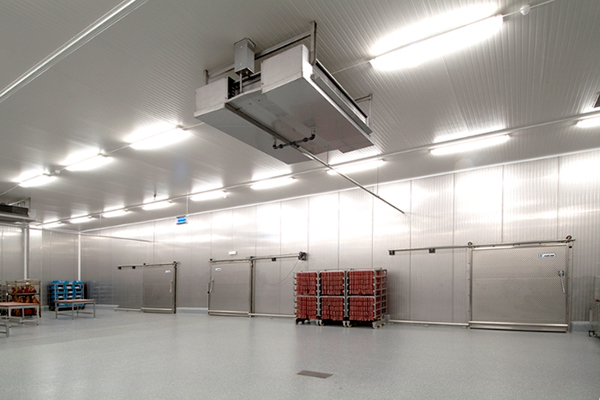
Looking Beyond the Refrigeration System
During a routine inspection, engineers decided to observe warehouse operations instead of testing equipment.
One loading dock immediately attracted attention.
Forklifts were moving continuously between the freezer and the dispatch area.
Every pallet movement required operators to stop, wait for a heavy sliding door to open, drive through, and wait again while the door slowly closed.
Because the door opening cycle felt slow during busy periods, operators had developed their own solution.
They simply left the door partially open.
Sometimes it remained open for ten minutes.
Sometimes twenty.
Occasionally nearly an hour during peak shipping periods.
Nobody considered it a serious issue.
It made work faster.
Unfortunately, physics had a different opinion.
Warm Australian air continuously entered the freezer.
Moisture condensed on ceilings.
Ice gradually accumulated around the doorway.
The evaporators required more frequent defrost cycles.
Forklift tires carried frost into working areas.
Employees occasionally stopped operations simply to remove accumulated ice.
The refrigeration system was performing exactly as designed.
The warehouse operation was not.
Measuring the Hidden Energy Loss
Rather than replacing expensive refrigeration equipment, engineers installed temporary monitoring equipment around the doorway.
Sensors recorded:
- Indoor temperature
- Outdoor temperature
- Relative humidity
- Door opening duration
- Compressor operating hours
- Defrost frequency
After monitoring operations for several weeks, the findings surprised everyone.
The doorway alone accounted for a significant portion of the warehouse's cooling load during working hours.
Although the insulated walls performed exceptionally well, repeated door openings allowed a continuous flow of warm, humid air into the freezer.
Each opening lasted only seconds.
However, hundreds of daily cycles created thousands of minutes of uncontrolled air exchange every month.
The cumulative effect was enormous.
Instead of fighting heat conducted through insulated panels, the refrigeration system spent much of its energy removing warm air entering through the doorway.
The Decision
Instead of replacing compressors, management upgraded the warehouse entrance.
The original manually operated insulated sliding door was replaced with a high-speed insulated freezer door designed specifically for high-cycle logistics operations.
Additional improvements included:
- Automatic radar activation
- Faster opening speed
- Faster closing speed
- Better perimeter sealing
- Heated door frame to reduce ice formation
- Improved safety sensors
No changes were made to the refrigeration system.
No additional insulation was installed.
No larger compressors were purchased.
The only major change was the warehouse door.
What Happened Six Months Later?
After six months of operation, engineers compared utility records with data from the previous season.
Several measurable improvements became evident.
Daily door-open time decreased dramatically because operators no longer needed to wait for slow door movement.
Ice accumulation around entrances became much less frequent.
Forklift traffic flowed more efficiently.
Employees spent less time removing frost from floor surfaces.
Perhaps most importantly, compressor running hours were noticeably reduced during normal warehouse operation.
Management estimated that the reduction in electricity consumption alone would allow the upgraded entrance system to recover its investment within only a few years, while maintenance costs also declined due to reduced ice-related wear.
The project demonstrated an important engineering principle that is often overlooked during warehouse design.
A refrigeration system can only maintain efficiency if the building envelope performs as intended.
And among every component of that envelope, no element experiences more daily stress than the warehouse door.
Why This Story Matters
Many warehouse owners assume that all insulated cold room doors perform similarly.
That assumption is understandable.
Most doors appear almost identical when closed.
The differences only become obvious after thousands of opening cycles.
A door that works perfectly in a small cold room may become a major source of energy loss in a busy distribution warehouse.
Likewise, a premium high-speed door may offer little additional value in a freezer that opens only a few times each day.
Selecting the best cold storage warehouse door is therefore not about choosing the most expensive product on the market.
It is about matching the door's design, operating speed, insulation performance, durability, and automation level to the actual demands of the facility.
In the next section, we will compare the most common cold storage warehouse door types, examine where each performs best, and analyze how different door designs influence energy consumption, operating costs, and long-term return on investment.
Understanding Heat Gain Through Door Openings
Heat enters a cold storage warehouse through several pathways:
| Heat Source | Typical Contribution |
|---|---|
| Door openings | 25–45% |
| Walls and roof | 15–30% |
| Product loading | 20–35% |
| Lighting and equipment | 5–10% |
| Personnel | Less than 5% |
In high-traffic logistics facilities, door openings frequently become the single largest source of cooling loss.
Unlike conductive heat transfer through insulated panels, infiltration occurs rapidly whenever warm outside air replaces colder indoor air.
For example:
Warehouse temperature: −25°C
Loading area temperature: 25°C
Temperature difference:
50°C
This temperature difference creates a strong driving force for air movement every time the doorway opens.
Warm air naturally enters the freezer.
Cold dense air flows outward.
The larger the doorway and the longer it remains open, the greater the energy loss.
Performance Comparison
The following comparison summarizes the strengths and limitations of each door type.
| Feature | Hinged | Sliding | High-Speed Freezer | Vertical Lift | Roll-Up |
|---|---|---|---|---|---|
| Thermal insulation | Excellent | Excellent | Excellent | Excellent | Moderate |
| Opening speed | Low | Medium | Very High | Medium | Very High |
| Forklift efficiency | Low | Good | Excellent | Excellent | Excellent |
| Suitable for heavy traffic | No | Moderate | Yes | Yes | Yes |
| Frost reduction | Moderate | Moderate | Excellent | Good | Moderate |
| Automation | Optional | Optional | Standard | Optional | Standard |
| Initial investment | Low | Medium | High | High | Medium |
No single door is perfect for every project.
The optimal choice depends on how the warehouse operates rather than simply comparing purchase prices.
Choosing the Right Door by Application
Frozen Food Distribution Centers
Typical characteristics:
- Heavy forklift traffic
- Frequent truck loading
- Continuous warehouse operation
- Large door openings
Recommended solution:
✔ High-speed insulated freezer door
Reason:
Fast opening and closing minimizes air exchange while maintaining efficient traffic flow.
Seafood Processing Plants
Typical characteristics:
- High humidity
- Frequent washdowns
- Corrosive environment
- Strict hygiene standards
Recommended solution:
✔ Stainless steel insulated sliding door
or
✔ High-speed insulated door with corrosion-resistant hardware
Important considerations:
- Marine-grade stainless steel
- Waterproof electrical components
- Easy cleaning design
Meat Processing Facilities
Typical characteristics:
- Strict hygiene regulations
- High worker movement
- Moderate forklift traffic
Recommended:
✔ High-speed hygienic insulated doors
Advantages:
- Reduced contamination risk
- Faster personnel movement
- Better temperature stability
Pharmaceutical Cold Storage
Typical characteristics:
- Stable temperatures
- Limited daily traffic
- Strict validation requirements
Recommended:
✔ Premium insulated hinged doors
or
✔ Automatic sliding doors
Here, thermal stability and reliability are often more important than opening speed.
Supermarket Distribution Warehouses
Typical characteristics:
- Continuous loading
- Multiple temperature zones
- High pallet movement
Recommended:
✔ High-speed freezer doors
combined with
✔ Dock sealing systems
This combination significantly reduces energy loss during loading operations.
Five Questions to Ask Before Buying
Before requesting quotations, warehouse owners should answer these five practical questions.
1. How Many Times Will the Door Open Each Day?
This is the single most important factor.
Approximate guideline:
- Less than 100 cycles/day → Hinged door
- 100–300 cycles/day → Sliding door
- More than 300 cycles/day → High-speed freezer door
Traffic frequency has a greater influence on lifetime operating cost than purchase price.
2. What Temperature Will the Warehouse Maintain?
Recommended door selection by temperature:
| Temperature | Suggested Door |
|---|---|
| 0°C to +10°C | Roll-up or sliding |
| -5°C to -18°C | Sliding insulated door |
| Below -18°C | High-speed insulated freezer door |
Lower temperatures require better sealing and moisture control.
3. Will Forklifts Use the Door?
Forklift traffic creates two major challenges:
- Increased opening frequency
- Longer door-open time
If forklifts operate continuously, automatic high-speed doors generally provide the best balance between efficiency and productivity.
4. What Is the Local Climate?
Climate has a direct influence on energy loss.
Examples:
Tropical climate
Examples:
- Indonesia
- Malaysia
- Thailand
- Vietnam
Characteristics:
- High humidity
- Large moisture load
Priority:
Excellent sealing and rapid closing speed.
Hot and Dry Climate
Examples:
- Interior Australia
- Middle East
Priority:
Reduce sensible heat gain.
Cold Climate
Examples:
- Northern Europe
- Canada
Priority:
Prevent icing around frames and maintain seal flexibility.
5. What Are the Long-Term Operating Costs?
Purchase price is only one part of the equation.
Also consider:
- Electricity consumption
- Maintenance
- Spare parts
- Downtime
- Labor efficiency
- Expected service life
- Availability of technical support
The most economical door over ten years is often not the least expensive one on the day it is installed.
Expert Checklist Before Ordering
Use this checklist during the planning stage:
✔ Storage temperature confirmed
✔ Door opening size determined
✔ Daily opening frequency estimated
✔ Forklift dimensions verified
✔ Traffic direction analyzed
✔ Automation requirements identified
✔ Local climate evaluated
✔ Energy-saving targets established
✔ Maintenance access considered
✔ Supplier service capability reviewed
Completing these steps helps reduce design changes and unexpected operating costs after installation.
Frequently Asked Questions (FAQ)
1. What is the best door for a cold storage warehouse?
There is no universal answer. For facilities with heavy daily traffic, an insulated high-speed freezer door is generally the best option because it minimizes air infiltration and improves operational efficiency. For smaller cold rooms with limited access, insulated hinged or sliding doors are often sufficient.
2. Are high-speed freezer doors worth the extra cost?
In high-cycle warehouses, they often are. Reduced door-open time lowers energy consumption, decreases frost formation, shortens compressor running hours, and improves forklift productivity. These operational savings can offset the higher initial investment over time.
3. Which door provides the best insulation?
Well-designed insulated hinged, sliding, and high-speed freezer doors can all achieve excellent thermal performance when properly installed. In practice, actual energy efficiency depends not only on insulation thickness but also on seal quality, installation accuracy, and how long the door remains open during daily operations.
4. How long should a cold storage warehouse door last?
Service life depends on usage, maintenance, and operating conditions. In many industrial applications, a properly maintained insulated door can remain in service for well over a decade. High-traffic doors may require periodic replacement of wear components such as seals, rollers, or sensors while the main structure continues to operate reliably.
5. What factors influence the total cost of ownership?
Beyond the purchase price, consider:
- Energy consumption
- Maintenance costs
- Door durability
- Downtime
- Productivity
- Availability of spare parts
- Technical support
- Expected operating life
Evaluating these factors provides a more accurate picture of long-term value than comparing quotations alone.
Post time:Sep-25-2020
