

Best Door for Cold Storage Warehouse: The Right Choice Depends on More Than Temperature
A cold storage door is often treated as a simple opening in an insulated wall.
In reality, it is one of the busiest and most thermally sensitive parts of a temperature-controlled warehouse.
Every time a cold room door opens, warm air enters. Moisture follows. The refrigeration system then has to remove that additional heat and moisture. In a busy warehouse, this process may happen hundreds or even thousands of times every day.
That is why the question is not simply:
“Which cold storage door is the cheapest?”
The better question is:
Which door is suitable for the temperature, traffic frequency, opening size, operating environment and long-term cost of this specific warehouse?
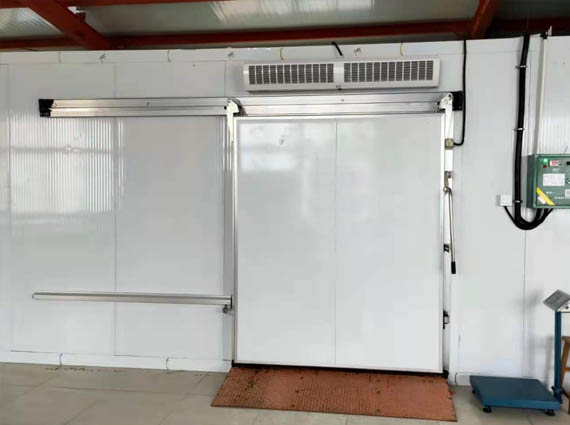
The answer may be a sliding freezer door for one facility, a hinged cold room door for another, and a high-speed insulated door combined with a sliding freezer door for a high-traffic distribution centre.
There is no single “best door” for every cold storage warehouse.
The best solution is the door that controls heat exchange without slowing down the operation
An Australian Cold Storage Example: Why the Door Became an Operational Issue
In Cairns, Queensland, temperature-controlled warehousing faces a particularly difficult operating environment.
The region is hot, humid and highly dependent on reliable refrigeration. A refrigerated distribution centre serving food and retail supply chains cannot treat its doors in the same way as a warehouse operating in a dry and cool climate.
One Australian cold storage project involved a refrigerated transport company operating a new facility in the Cairns area. The building needed to support the movement of temperature-sensitive goods in a hot and humid environment. The operational challenge was not only keeping the room cold. Vehicles, forklifts and warehouse staff needed to move through the facility repeatedly during normal operations.
A traditional insulated door could provide good thermal separation when closed. But if the door remained open for too long during loading and unloading, the thermal performance of the door itself became less important than the amount of time the opening remained exposed.
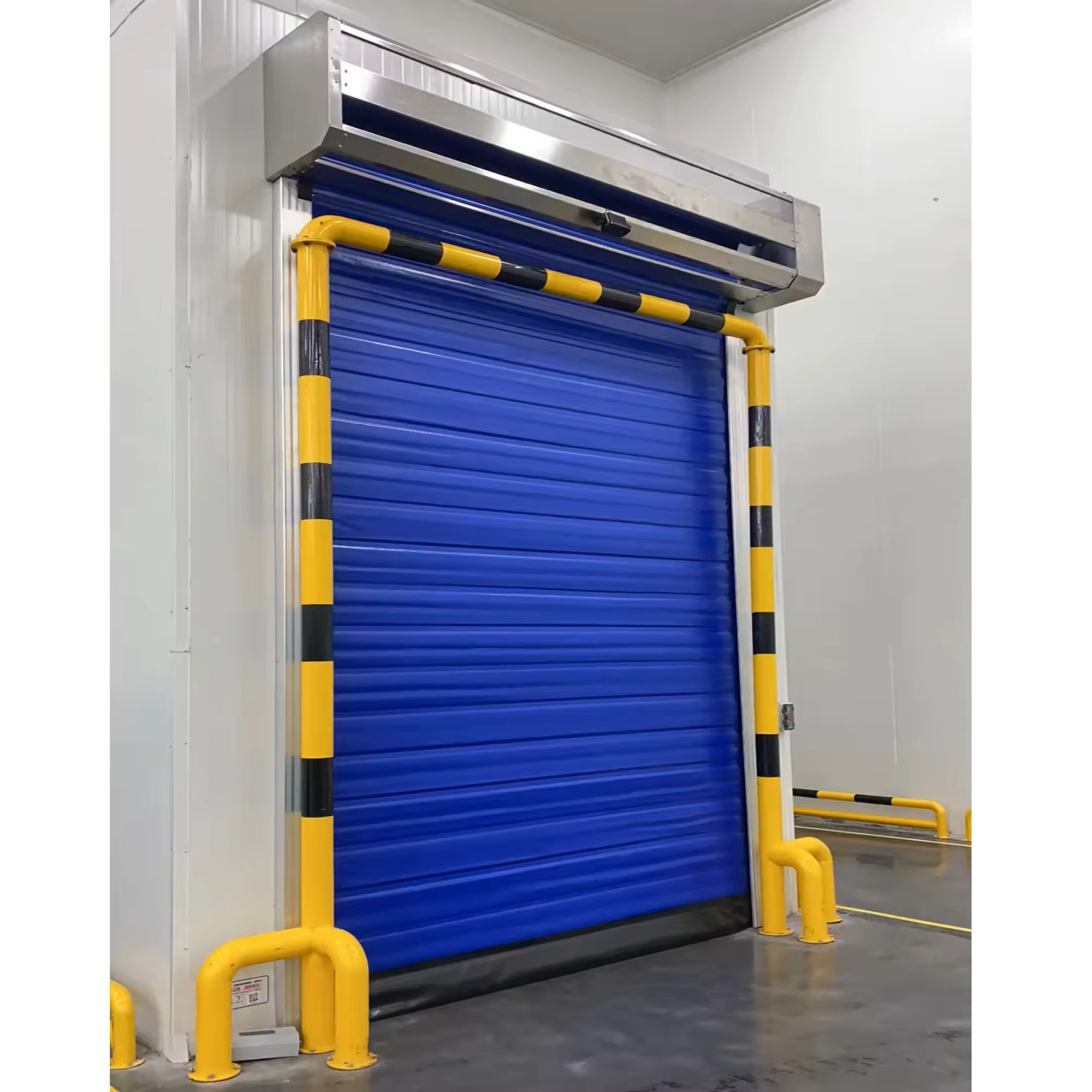
The project therefore used a combination of insulated high-speed doors for frequent traffic and insulated sectional doors in loading dock areas.
The principle behind the solution is simple:
- The door must match the traffic pattern.
- The door must match the temperature.
- The door must match the building structure.
- The door must be able to survive the actual working environment.
This is an important lesson for cold storage buyers. The door should not be selected only from a catalogue based on dimensions and panel thickness.
The same Australian industry experience also shows that energy performance in cold storage is often a system problem rather than a single-equipment problem. Australian government guidance notes that the average potential energy waste of refrigeration units can exceed 25%, while poor sealing and uncontrolled air infiltration can significantly increase the cooling load.
Why Choosing the Right Cold Storage Door Is So Difficult
Cold storage warehouses are not all operated in the same way.
A small restaurant freezer may be opened several times per day.
A frozen food distribution centre may have forklifts passing through a doorway continuously during peak shifts.
A pharmaceutical cold room may require strict temperature stability and controlled access.
A food processing facility may need a door that can withstand frequent washing, moisture and aggressive cleaning chemicals.
These applications require different door designs.
The most common mistake is to select a door based on one factor only:
- Lowest price
- Maximum insulation thickness
- Largest opening size
- Fastest opening speed
- Most popular product
But a door that performs well in one environment may be completely unsuitable in another.
For example:
A 150 mm insulated sliding freezer door may offer excellent thermal performance, but it may slow down a busy forklift route.
A high-speed door may dramatically improve traffic flow, but it may not replace a properly insulated freezer door in a deep-freeze room.
A basic hinged door may be economical for a small cold room, but unsuitable for a large warehouse entrance with continuous pallet traffic.
The correct decision requires a balance between thermal performance, traffic efficiency, safety, reliability and total cost of ownership.
The Main Industry Pain Points in Cold Storage Door Selection
1. Energy Loss Through Frequently Opened Doors
The refrigeration system is designed to maintain a controlled internal temperature.
However, when a door opens, the cold air inside the room interacts with the warmer air outside.
The actual heat gain depends on several factors:
- Internal and external temperature difference
- Door opening size
- Opening duration
- Humidity
- Air pressure difference
- Traffic frequency
- Wind and air movement
- Whether the opening is directly connected to another warm area
A freezer at -25°C located in a warm loading area experiences a significant temperature difference every time the door opens.
The longer the door stays open, the greater the air exchange.
This means that the speed of closing can sometimes be more important than the speed of opening.
Many buyers focus on how quickly a door opens because they want to improve logistics. But in energy terms, a door that opens quickly and closes slowly may still create unnecessary cold loss.
For high-frequency traffic, the complete door cycle matters:
Open → passage → close
A properly designed high-speed door can reduce the time during which the opening remains exposed.
2. Frost, Condensation and Ice Formation
Cold storage doors are also responsible for one of the most visible operational problems: ice buildup.
When warm, humid air enters a freezer, moisture can condense and freeze around:
- Door frames
- Bottom seals
- Tracks
- Floor areas
- Door panels
- Thresholds
Over time, this can create several problems:
- Difficult door movement
- Damaged seals
- Slippery floors
- Increased maintenance
- Reduced air tightness
- Higher refrigeration loads
This is particularly important in humid climates such as parts of Australia and Southeast Asia.
A door designed for a dry environment may not perform well in a high-humidity environment without appropriate heating, sealing and drainage arrangements.
3. Traffic Bottlenecks
The door is part of the warehouse workflow.
If forklifts must wait for a large sliding door to open and close every time they enter or leave a freezer, the result is not only slower logistics.
The warehouse may also experience:
- Increased labour time
- More forklift waiting
- Higher collision risk
- More frequent door damage
- More unnecessary door cycles
This is why many high-traffic warehouses use different doors for different stages of the operation.
For example:
Main freezer room: insulated sliding freezer door
High-frequency traffic route: high-speed door
Personnel access: insulated hinged door
Loading dock: sectional or high-speed insulated door
The best solution is often not one door, but a properly designed door system.
The Four Main Types of Cold Storage Warehouse Doors
1. Hinged Cold Room Doors
Hinged doors are commonly used for:
- Small cold rooms
- Walk-in freezers
- Personnel access
- Restaurants
- Small food processing rooms
- Low-frequency access points
Advantages
- Simple structure
- Lower initial cost
- Easy operation
- Suitable for small openings
- Easy to install
Limitations
- Not ideal for continuous forklift traffic
- Door leaf requires swing clearance
- Can become damaged in high-traffic areas
- Opening speed is limited
For a small cold room opened 10 or 20 times per day, a hinged door may be the most economical option.
For a busy distribution warehouse, it is usually not the best choice.
2. Sliding Cold Storage Doors
Sliding doors are widely used in commercial and industrial cold storage.
They are suitable for:
- Large openings
- Freezer rooms
- Food warehouses
- Pallet storage
- Industrial cold rooms
Advantages
- Large opening capability
- No swing clearance
- Good insulation potential
- Suitable for freezer applications
- Strong mechanical construction
Limitations
- Slower operation than high-speed doors
- Requires track space
- Can become inefficient when opened frequently
- Requires regular inspection of rollers, tracks and seals
For a large freezer room with relatively controlled access, a sliding door is often an excellent choice.
However, if the door is opened continuously throughout the day, the buyer should consider whether a secondary high-speed door would improve performance.
3. High-Speed Cold Storage Doors
High-speed doors are designed for frequent movement.
They are particularly useful for:
- Distribution centres
- Food processing facilities
- Loading areas
- High-volume warehouses
- Chilled and frozen logistics routes
The main advantage is not simply speed.
The real advantage is reducing the total time that the cold room opening remains exposed.
A high-speed door can help improve:
- Traffic flow
- Temperature stability
- Productivity
- Air separation
- Operational efficiency
However, not every high-speed door is suitable for deep-freeze applications.
Buyers should check:
- Rated temperature range
- Insulation structure
- Door curtain or panel design
- Bottom sealing system
- Anti-freeze features
- Heating requirements
- Control system
- Emergency operation
A standard industrial high-speed door should not automatically be used in a -25°C or -30°C freezer environment.
4. Insulated Sectional Doors
Sectional doors are commonly used at loading docks and larger warehouse entrances.
They are suitable for:
- Truck loading areas
- Dock openings
- Large industrial entrances
- Chilled warehouses
- Temperature-controlled distribution centres
They offer good insulation and can be integrated with dock equipment.
However, they may not be the most efficient choice for a doorway that requires extremely frequent cycles.
The selection depends heavily on the traffic pattern.
Data Analysis: Why Door Opening Frequency Matters
Consider a simplified example.
Assume a freezer door is opened:
- 100 times per day
- Each opening remains exposed for 60 seconds
- Total exposure time: approximately 100 minutes per day
Now consider a high-traffic operation where the door is opened:
- 300 times per day
- Each cycle exposes the opening for 30 seconds
- Total exposure time: approximately 150 minutes per day
Although the second door closes twice as fast, the total daily exposure time is still higher because of the greater traffic frequency.
This is why door selection should be based on daily operating behaviour, not just opening speed.
A buyer should ask:
- How many times is the door opened per hour?
- How many forklifts pass through?
- How long does each passage take?
- Is the door normally left open during loading?
- Is there a buffer area between the cold room and the outside environment?
- What is the temperature difference between both sides?
Australian government guidance specifically recommends automatic rapid-close doors for cold rooms requiring regular access, while strip curtains can also reduce heat gain through doorways.
This is a practical point that is often overlooked during procurement.
Common Mistakes Buyers Make When Purchasing Cold Storage Doors
Mistake 1: Choosing the Cheapest Door
The purchase price is visible.
The operating cost is not.
A cheaper door may have:
- Poor sealing
- Weak hardware
- Low-quality rollers
- Shorter service life
- Slow operation
- Difficult maintenance
If a door fails repeatedly, the actual cost may include:
- Repair costs
- Labour downtime
- Temperature loss
- Product risk
- Refrigeration energy consumption
The cheapest door is not always the lowest-cost door.
Mistake 2: Selecting the Door Only by Temperature
A buyer may say:
“My cold room is -18°C, so I need a -18°C door.”
That is not enough information.
The supplier also needs to know:
- Door size
- Traffic frequency
- Indoor or outdoor installation
- Humidity
- Cleaning method
- Floor condition
- Door frame structure
- Whether forklifts are involved
A door operating at -18°C with five openings per day is a completely different application from a door operating at -18°C with 300 forklift passages per day.
Mistake 3: Ignoring the Door Frame and Seal
Many projects focus heavily on the door panel.
But the seal is equally important.
A high-quality insulated panel cannot compensate for:
- Gaps around the frame
- Damaged gaskets
- Poor installation
- Uneven floors
- Incorrect door alignment
A cold storage door is a complete assembly.
The door leaf, frame, gasket, hardware and installation quality all affect the final performance.
Mistake 4: Buying a Standard High-Speed Door for a Freezer
This is a serious mistake.
A standard high-speed industrial door may be designed for:
- 0°C to +40°C
- Normal factory environments
- Dry conditions
A freezer may operate at:
- -18°C
- -25°C
- -30°C or lower
The door system must be specifically designed for the temperature.
Otherwise, the buyer may experience:
- Frozen seals
- Control failures
- Ice buildup
- Mechanical damage
- Poor closing performance
Mistake 5: Not Considering Future Traffic Growth
A warehouse may begin with 50 pallet movements per day.
Two years later, the same facility may process 200 pallet movements per day.
If the original door was selected only for the initial traffic volume, it may become a bottleneck.
For expanding logistics facilities, it is often better to consider the expected operating conditions over the next five to ten years.
How to Choose the Best Door for Your Cold Storage Warehouse
Step 1: Define the Temperature
Typical applications include:
| Application | Typical Temperature |
|---|---|
| Chilled storage | 0°C to +5°C |
| Fresh food storage | 0°C to +8°C |
| Frozen food storage | Around -18°C |
| Deep-freeze storage | -25°C to -40°C |
The exact door specification should be based on the actual operating conditions.
Step 2: Calculate Traffic Frequency
A practical classification is:
Low Traffic
Less than 20 openings per day.
Recommended:
- Hinged cold room door
- Sliding cold room door
Medium Traffic
20–100 openings per day.
Recommended:
- Sliding door
- Insulated sectional door
- High-speed door depending on the application
High Traffic
More than 100 openings per day.
Recommended:
- High-speed cold storage door
- High-speed door combined with insulated sliding door
- Automatic door control system
These are general guidelines, not universal engineering limits.
The actual choice should be based on the complete operating environment.
Step 3: Measure the Opening Size
Large doors require stronger construction.
Important dimensions include:
- Clear width
- Clear height
- Wall thickness
- Door panel thickness
- Available side space
- Available top space
- Floor level difference
A sliding door may require side space.
A sectional door requires headroom.
A hinged door requires swing clearance.
A high-speed door requires sufficient structural support for the guide system and motor.
Step 4: Consider the Product and Industry
Frozen Food
Priorities:
- Thermal insulation
- Reliable sealing
- Frost resistance
- Easy cleaning
Meat Processing
Priorities:
- Hygiene
- Corrosion resistance
- Washdown capability
- Impact resistance
Pharmaceutical Storage
Priorities:
- Temperature stability
- Controlled access
- Monitoring
- Reliable sealing
E-Commerce Cold Chain
Priorities:
- High cycle frequency
- Fast operation
- Low downtime
- Integration with warehouse logistics
The “best” door changes according to the application.
A Practical Comparison of Cold Storage Door Types
| Door Type | Best Application | Thermal Performance | Traffic Capacity | Initial Cost |
|---|---|---|---|---|
| Hinged Door | Small cold rooms | Good | Low | Low |
| Sliding Door | Freezer rooms | Very Good | Medium | Medium |
| High-Speed Door | Busy logistics routes | Good to Very Good | High | Medium–High |
| Sectional Door | Loading docks | Very Good | Medium | Medium–High |
The important point is that no single category wins in every situation.
For many modern warehouses, the best solution is a combination.
For example:
Main freezer access: insulated sliding freezer door
Frequent forklift traffic: high-speed insulated door
Personnel access: hinged cold room door
Loading dock: insulated sectional door
This approach separates different traffic patterns instead of forcing one door to handle every task.
What Should You Ask a Cold Storage Door Supplier Before Buying?
Before requesting a quotation, prepare the following information:
Basic Project Information
- Country and installation location
- Cold room temperature
- Door quantity
- Door dimensions
- Wall panel thickness
- Indoor or outdoor installation
Operational Information
- Daily opening frequency
- Forklift or pedestrian traffic
- Expected opening cycles
- Working hours
- Cleaning requirements
Technical Requirements
- Door type
- Panel thickness
- Insulation material
- Door frame material
- Seal type
- Heating requirements
- Control voltage
- Safety sensors
- Emergency release system
A professional supplier should ask questions before sending a price.
If a supplier quotes a door immediately without asking about temperature, dimensions or traffic frequency, the quotation may not be technically reliable.
FAQ: Best Door for Cold Storage Warehouse
What is the best door for a freezer warehouse?
For low-traffic freezer rooms, an insulated sliding freezer door is often a strong choice.
For high-traffic freezer warehouses, a high-speed freezer door or a combination of high-speed and sliding doors may provide better operational efficiency.
Are high-speed doors suitable for -18°C freezers?
Some are, but not all.
The door must be specifically designed and rated for low-temperature operation. Standard industrial high-speed doors may not be suitable for freezer environments.
Is a sliding door better than a hinged cold room door?
It depends on the application.
Sliding doors are generally better for larger openings and industrial freezer rooms. Hinged doors are often more economical for smaller rooms and lower traffic.Can one door be used for both forklifts and pedestrians?
