

Particularly for industries such as cold storage warehouses, food processing plants, logistics centers, laboratories, and pharmaceutical storage facilities, air leakage through cold storage doors is one of the most common underlying causes of energy waste.
Industry reports on cold storage airtightness show that reducing air leakage can yield significant energy savings. In one cold storage facility, halving the leakage rate is projected to save approximately 87,600 kWh of electricity annually. For large-scale cold storage buildings, the cost savings over their entire lifecycle can be substantial.
Finally, let’s explore why cold storage doors leak air. Generally, this is attributed to a variety of factors, including worn gaskets, misaligned door frames, frequent opening, pressure differentials, ice buildup, and improper installation.
This guide explains the primary causes of air leakage in cold storage doors, warning signs, energy impacts, and practical methods to prevent air leakage.
What Is Cold Storage Door Air Leakage?
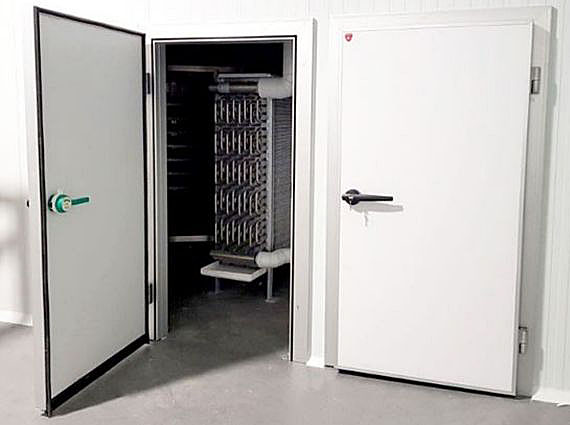
Cold storage door air leakage happens when warm outside air enters the refrigerated space while cold air escapes through gaps, damaged seals, or poorly sealed door edges.
It is also known as:
-
Air infiltration
-
Cold air loss
-
Warm air ingress
-
Thermal leakage
-
Door seal leakage
Cold rooms and freezer rooms operate with a large temperature difference between the inside and outside environment. Because of this difference, even a small opening around the door can allow continuous air movement.
The problem is more serious in:
-
Freezer rooms
-
Blast freezers
-
Refrigerated warehouses
-
Food storage facilities
-
Cold chain logistics centers
-
Pharmaceutical and laboratory storage areas
-
High-traffic loading zones
The colder the room, the more costly air leakage becomes.
Why Does a Cold Storage Door Leak Air?
In most cases, a cold storage door does not start leaking overnight. Leakage usually develops slowly due to daily use, wear and tear, impact damage, or poor maintenance.
Below are the most common reasons.
1. Damaged or Worn Door Seals
Door seals, also called gaskets, are the first barrier against air leakage. Once the gasket becomes damaged, the door can no longer close tightly against the frame.
Over time, cold room door seals may:
-
Crack
-
Harden
-
Tear
-
Shrink
-
Lose flexibility
-
Become compressed unevenly
-
Pull away from the door edge
Even a narrow gap can allow warm and humid air to enter the cold room.
Common Causes of Door Seal Failure
| Cause | How It Affects the Seal |
|---|---|
| Aging rubber | Reduces flexibility and sealing pressure |
| Ice buildup | Deforms the gasket and prevents full closure |
| Forklift impact | Tears or crushes the seal |
| Harsh cleaning chemicals | Causes rubber deterioration |
| Frequent opening cycles | Leads to compression fatigue |
A damaged gasket is one of the easiest problems to identify, but it is also one of the most commonly ignored. If frost appears around the door edge, the seal should be checked immediately.
2. Frequent Door Opening
Every time a cold storage door opens, warm air enters the room and cold air escapes. In a busy warehouse, this can happen hundreds of times per day.
Frequent door opening is common in:
-
Food distribution centers
-
Frozen storage warehouses
-
Loading docks
-
Processing areas
-
High-traffic logistics facilities
The longer the door stays open, the more heat and moisture enter the room. This increases the refrigeration load and makes the compressor work harder.
Estimated Energy Impact by Door Opening Time
| Door Open Time | Energy Loss Impact |
|---|---|
| 5 seconds | Low |
| 15 seconds | Moderate |
| 30 seconds | High |
| 60+ seconds | Very high |
A door that closes slowly or is left open during loading can quickly become one of the biggest energy loss points in the building.
3. Poor Door Alignment
A cold storage door must close evenly against the frame. If the door is misaligned, the gasket may only seal on one side while leaving small gaps on the other.
Door misalignment can be caused by:
-
Forklift collision
-
Loose hinges
-
Damaged tracks
-
Structural movement
-
Heavy door panels
-
Poor installation
-
Worn rollers or hardware
Common signs include:
-
Light visible around the door edge
-
Frost forming at one corner
-
Uneven gasket compression
-
Door dragging on the floor
-
Door requiring extra force to close
Even a high-quality insulated cold room door cannot perform well if it is not properly aligned.
4. Pressure Differences Between Rooms
Air naturally moves from high-pressure areas to low-pressure areas. In cold storage facilities, pressure imbalance often occurs between refrigerated rooms, corridors, loading docks, and processing areas.
This pressure difference may be caused by:
-
Temperature difference
-
Air handling systems
-
Ventilation systems
-
Stack effect
-
Open doors in nearby areas
-
Negative pressure inside the cold room
When pressure is not balanced, air can be pulled through even tiny openings around the door.
This is especially common in freezer rooms below 0°C, where warm air infiltration can quickly turn into frost and ice.
5. Ice Buildup Around the Door
Ice buildup is both a warning sign and a cause of air leakage.
When warm humid air enters a freezer room, the moisture condenses and freezes. Ice then forms around the door frame, gasket, threshold, or track.
Once ice builds up, the door may not close properly. This creates a larger gap, allowing even more warm air to enter. The cycle continues until the problem is repaired.
Areas Most Affected by Ice
| Location | Typical Problem |
|---|---|
| Bottom threshold | Ice blocks full door closure |
| Door frame corners | Frost collects around gaps |
| Gasket edges | Seal becomes frozen or deformed |
| Sliding track | Door movement becomes restricted |
If ice keeps coming back after cleaning, the real issue is usually air leakage, not just humidity.
6. Faulty Door Frame Heaters
Many freezer doors use heating systems around the frame, threshold, or gasket area. These heaters help prevent condensation and ice formation.
If the heater fails, moisture can freeze quickly around the sealing area.
This may lead to:
-
Frozen gaskets
-
Ice around the frame
-
Door closure problems
-
Increased air leakage
-
Damage to hardware and seals
Door heater problems are often overlooked until frost becomes obvious. Regular heater checks can prevent more expensive repairs later.
7. Wrong Door Type for the Application
Not every cold storage door is suitable for high-traffic use.
For example, a manual hinged door may work well for a small cold room with limited access, but it may not be suitable for a busy logistics warehouse where forklifts pass through all day.
Cold Storage Door Type Comparison
| Door Type | Air Leakage Risk | Best Use |
|---|---|---|
| Manual hinged cold room door | High | Low-traffic cold rooms |
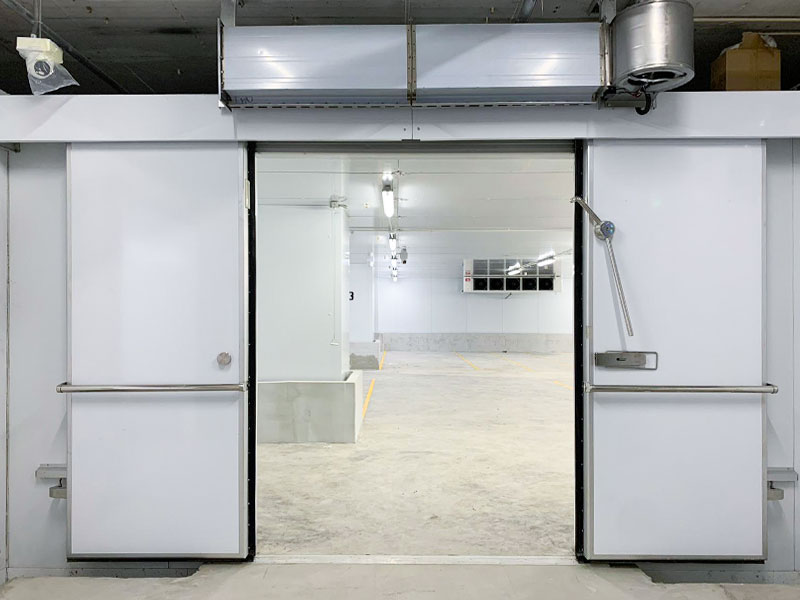
| Sliding cold storage door | Medium | Medium-traffic storage areas |
| High-speed freezer door | Low | Busy warehouse entrances |
| Air curtain system | Supportive | Frequently opened doorways |
| PVC strip curtain | Supportive | Loading and processing areas |
For high-cycle areas, high-speed cold storage doors can reduce open time and help limit warm air infiltration.
8. Improper Installation
Even the best cold storage door can leak air if it is installed incorrectly.
Common installation issues include:
-
Uneven door frame
-
Incorrect gasket pressure
-
Poor threshold leveling
-
Gaps around panels
-
Weak vapor sealing
-
Poor insulation connection
-
Door not square with the opening
Installation quality directly affects airtightness. A small construction gap may not look serious at first, but in a freezer environment, it can lead to frost, condensation, and energy loss over time.
How Air Leakage Affects Cold Storage Performance
Cold storage door leakage does not only waste energy. It can affect the entire operation of the facility.
1. Higher Energy Consumption
When warm air enters the cold room, the refrigeration system must remove the extra heat. This increases compressor runtime and electricity use.
Estimated Energy Cost Increase from Air Leakage
| Leakage Level | Possible Energy Cost Increase |
|---|---|
| Minor leakage | 5–10% |
| Moderate leakage | 10–25% |
| Severe leakage | 25–40%+ |
For a large refrigerated warehouse, this can mean thousands of dollars in additional operating cost every month.
2. Frost and Ice Formation
Warm air contains moisture. When it enters a freezer, that moisture freezes.
This can cause:
-
Ice on floors
-
Frost on evaporators
-
Frozen door tracks
-
Slippery working areas
-
More frequent defrost cycles
Excess frost makes the refrigeration system less efficient and can create safety risks for workers.
3. Temperature Instability
Cold storage facilities need stable temperatures to protect stored goods.
Air leakage can lead to:
-
Temperature fluctuations
-
Uneven cooling
-
Longer recovery time after door opening
-
Product quality concerns
-
Higher risk of non-compliance in controlled storage areas
For food, laboratory materials, healthcare supplies, and other temperature-sensitive products, stable storage conditions are essential.
4. Compressor Overload
Air leakage increases the cooling load. As a result, compressors run longer and harder.
Over time, this may cause:
-
More wear on refrigeration equipment
-
Higher maintenance costs
-
Shorter equipment lifespan
-
Increased risk of breakdowns
A leaking cold storage door may seem like a door problem, but it can quickly become a refrigeration system problem.
5. Condensation and Mold Risk
In cooler rooms above freezing, warm humid air may not freeze immediately. Instead, it can create condensation on walls, ceilings, shelves, packaging, and door frames.
Condensation can lead to:
-
Mold risk
-
Wet packaging
-
Corrosion
-
Hygiene concerns
-
Poor working conditions
This is especially important in food processing and clean storage environments.
Warning Signs Your Cold Storage Door Is Leaking Air
Cold storage door leakage often leaves visible clues. Facility managers and maintenance teams should check these signs regularly.
Common Air Leakage Indicators
| Warning Sign | Possible Cause |
|---|---|
| Frost near door edges | Warm air entering through gaps |
| Condensation around frame | Poor sealing or heater failure |
| Ice on the floor | Humid air infiltration |
| Rising electricity bills | Refrigeration system running longer |
| Door hard to close | Ice buildup or misalignment |
| Temperature fluctuation | Excessive warm air ingress |
| Whistling sound | Air passing through small gaps |
| Visible light around door | Gasket or alignment problem |
If several of these signs appear at the same time, the door should be inspected as soon as possible.
How to Test a Cold Storage Door for Air Leakage
You do not always need complex equipment to detect a leaking cold room door. Several simple inspection methods can help.
1. Visual Inspection
Check for:
-
Cracked seals
-
Gaps around the frame
-
Ice buildup
-
Loose hardware
-
Bent panels
-
Uneven gasket contact
This should be part of routine cold room maintenance.
2. Flashlight Test
Place a flashlight inside the cold room and close the door.
If light is visible from the outside, the door is not sealing properly.
This is a simple but useful test for obvious gaps.
3. Smoke Test
A smoke pen or vapor generator can show where air is moving around the door edge.
If the smoke is pulled toward a gap, there is air leakage.
4. Thermal Imaging
Infrared cameras can detect heat transfer around cold storage doors, walls, and frames. This method is especially useful for larger facilities or hidden leakage points.
Thermal imaging can help identify:
-
Failed gaskets
-
Poor insulation
-
Warm air paths
-
Weak spots around the frame
How to Prevent Cold Storage Door Air Leakage
Most air leakage problems can be reduced with proper door selection, installation, and maintenance.
1. Replace Damaged Door Seals
Door gaskets should be checked regularly and replaced before they become badly cracked or deformed.
A good seal should be:
-
Flexible
-
Clean
-
Properly compressed
-
Post time:Sep-25-2020
RELATED NEWS
- Why Cold Storage Facilities Lose Energy | Hidden Causes & Energy-Saving Solution 26-07-10
- How to Choose Cold Room Panels 26-03-10
- Cold Storage Maintenance Cost Guide: Complete Breakdown for Warehouse Owners and 26-03-16
- How to Replacement / Repair Cold Storage Door Gasket 26-02-04
- How to Choose the Right Cold Storage Air Curtain 26-01-30
Send Your Message
Feel free to contact with us. We are ready to assist you.
